
The development of the Project to establish Tri An Ward marks not only an administrative adjustment but also the beginning of a new phase of growth filled with expectations. With distinctive advantages in forest and lake resources, Tri An is gradually shaping itself into a dynamic and modern eco-urban area, contributing to a new growth pole for Dong Nai Province.
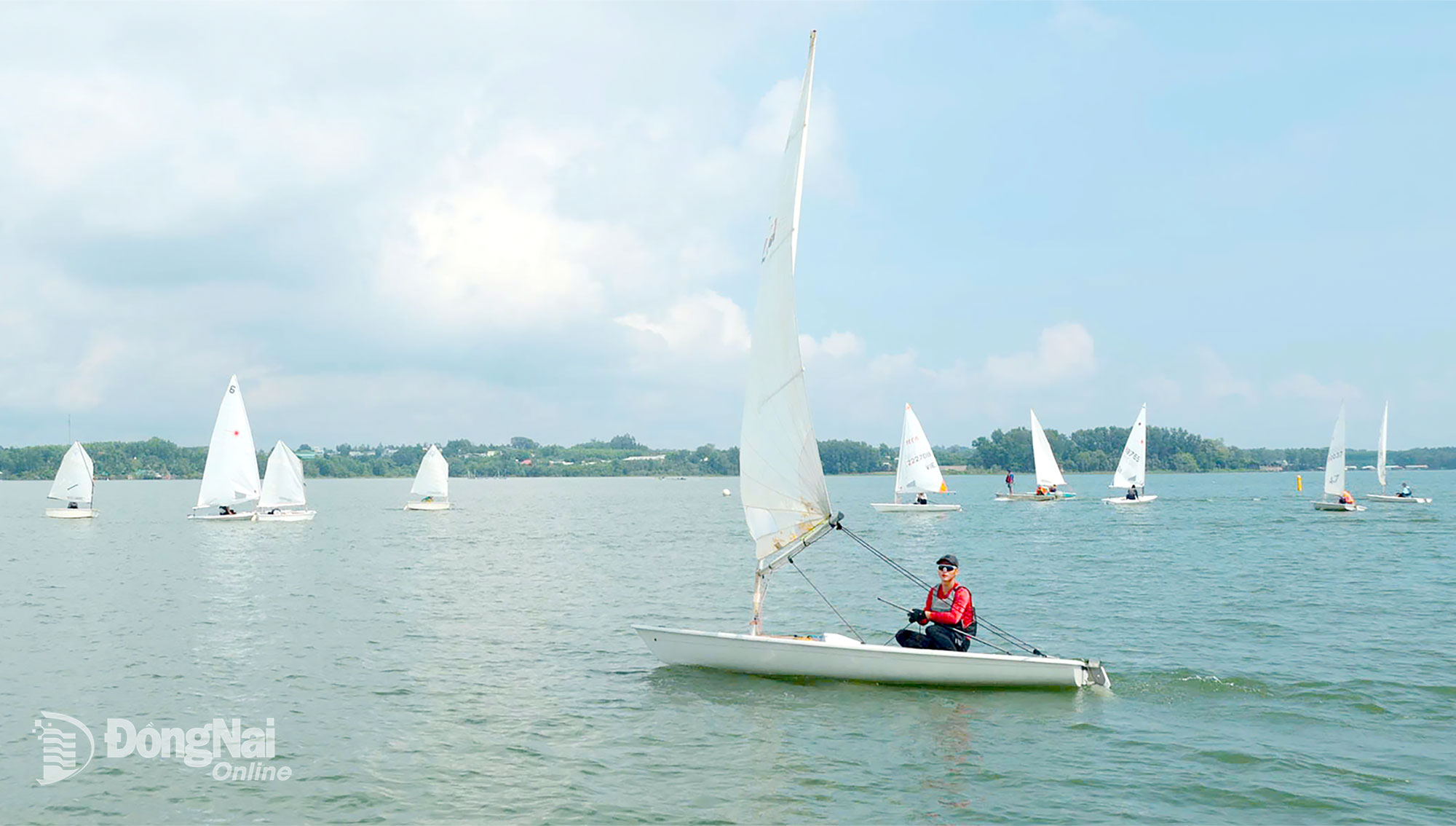 |
| Tri An has many advantages in forests and lakes for developing eco-tourism. Photo: Quang Huy |
The Provincial People’s Council’s approval of the policy to establish Tri An Ward from the existing commune is of significant importance, not only for the locality but also for the broader provincial development strategy. This transformation is not merely a change in administrative designation but a major political, economic, and social turning point that opens up new development space for Tri An.
Opening a new development phase
This policy helps Tri An define a clear long-term development orientation toward an eco-tourism urban model. Amid rapid urbanization, upgrading to ward status will enable Tri An to better access investment resources and gradually complete technical and social infrastructure in line with urban standards.
This endeavor is also an important driving force promoting a positive shift in economic structure. While agriculture previously played a central role, trade and services, tourism, high-tech agriculture, and industry are expected to become the main pillars in the coming period. This transformation will not only create more jobs but also raise incomes and improve living standards.
Discussing this issue, Nguyen Thi Dung, Deputy Secretary of the Party Committee, Chairwoman of Tri An Commune People's Committee, emphasized: "When Tri An becomes a ward, it is not just a change in administrative unit but an important turning point for the locality to develop comprehensively. This occasion is an opportunity to restructure the development space into an eco-urban area, mobilize investment resources, and improve the quality of infrastructure and people's lives. We are determined to build a service-oriented government, putting people and businesses at the center."
Tri An has a distinctive ecosystem with more than 45,000 hectares of forest and nearly 13,000 hectares of water surface of Tri An Lake. These are rare advantages that create ideal conditions for the development of eco-tourism, resort services, organic agriculture, and the green economy. In addition, this area plays an important role in ensuring national energy security through the Tri An Hydropower Plant, while also supplying water to the downstream area.
Tri An also serves as a gateway to the Dong Nai Culture and Nature Reserve, a UNESCO World Biosphere Reserve. This feature provides an important foundation for Tri An to develop into an eco-urban area focused on biodiversity conservation.
Geographically, Tri An lies on a key transport axis linking Dong Nai with Ho Chi Minh City and neighboring localities through major routes such as DT.761, DT.762, DT.767, and DT.768. In the near future, once infrastructure projects, including the Ma Da Bridge, Hieu Liem 2 Bridge, and Ring Road 4 of Ho Chi Minh City, are completed, Tri An will become a strategic hub in the inter-regional transport network.
Tri An has a population of more than 51,700, an urbanization rate of over 60%, a non-agricultural labor force accounting for about 71%, and an average income of VND 87 million per person per year, fully meeting the criteria for ward establishment.
The policy of upgrading the commune to a ward is receiving strong public support. Nguyen Thi Thu Van, a resident of group 8, Vinh An 3 hamlet, shared: "Hearing that Tri An is about to become a ward, the people are very happy. In recent years, infrastructure has been invested in, roads are more spacious, and business is more convenient. When it becomes a ward, the locality will certainly develop more strongly, and people's lives will also improve day by day."
Nguyen Duc Toan, residing in Cay Sung hamlet, expressed: "We strongly support the policy of becoming a ward, and at the same time hope that the government will pay more attention to practical issues such as: traffic, environment, clean water, healthcare, education... An urban area must not only be beautiful but also livable, safe, and convenient for its residents."
Towards a green, smart urban area
Upon upgrading into a ward, Tri An will transition from rural management to modern urban governance, with higher requirements for planning, construction order, environmental protection, and public service provision.
The locality has clearly identified its pillars of governance, including: data digitalization and digital transformation; urban planning and order management; improving the quality of human resources; ensuring security and order; effective financial management; and building social consensus. Of these, digital transformation has been identified as a central, breakthrough task. The digitalization of population and land data, the rollout of online public services, and the development of e-government toward digital government will help improve management efficiency and better serve the people.
At the same time, measures such as installing security camera systems, establishing community self-management groups, and setting up online channels for interaction between authorities and residents will help promptly address emerging issues, maintain security and order, and build a safe, civilized living environment.
In its long-term development orientation, Tri An aims to become an ecological urban area under a green - smart - distinctive model. The locality will prioritize the development of urban spaces in harmony with nature, limit concretization, and preserve forest and lake ecosystems. Functional zones will be planned rationally, with a focus on developing lake experience tourism, forest tourism, and high-tech agriculture linked with eco-tourism. The internal transport system will be oriented toward environmental friendliness, with the development of green transport such as electric vehicles, bicycles, and lakeside walking paths.
Amid the strong urbanization trend in Dong Nai Province, Tri An is poised for breakthrough development. The establishment of the ward is not only an inevitable requirement but also a strategic step to effectively tap its potential, improve people's quality of life, and contribute to the province's overall development.
With a natural area of over 660 square kilometers, a population of over 51,700 people, an urbanization rate of over 60%, an average per capita income of VND 87 million per year, and economic growth of around 10% annually, Tri An meets 5 out of 5 criteria for ward establishment.
By An Nhon – Translated by Mai Nga, Minho


Thông tin bạn đọc
Đóng Lưu thông tin