
Part 1: New vision paves the way for development
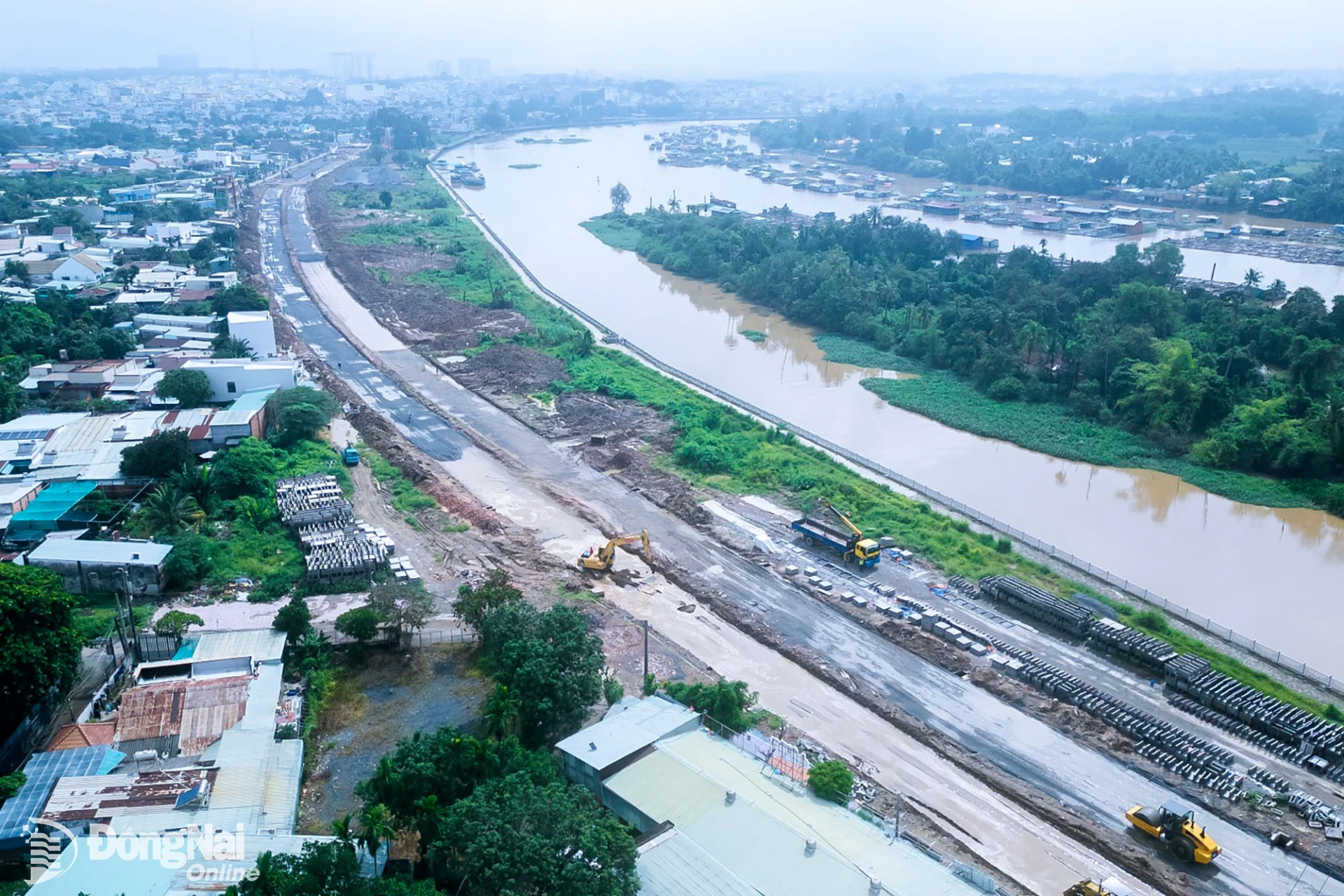
Dong Nai City is poised to seize major development opportunities. Long Thanh Airport, an extensive expressway network, deep-water seaports, economic corridors, and a large industrial base offer development potential that few other localities possess. However, these advantages will not automatically generate development momentum. The key lies in effectively connecting, organizing and turning these advantages into new drivers of growth.
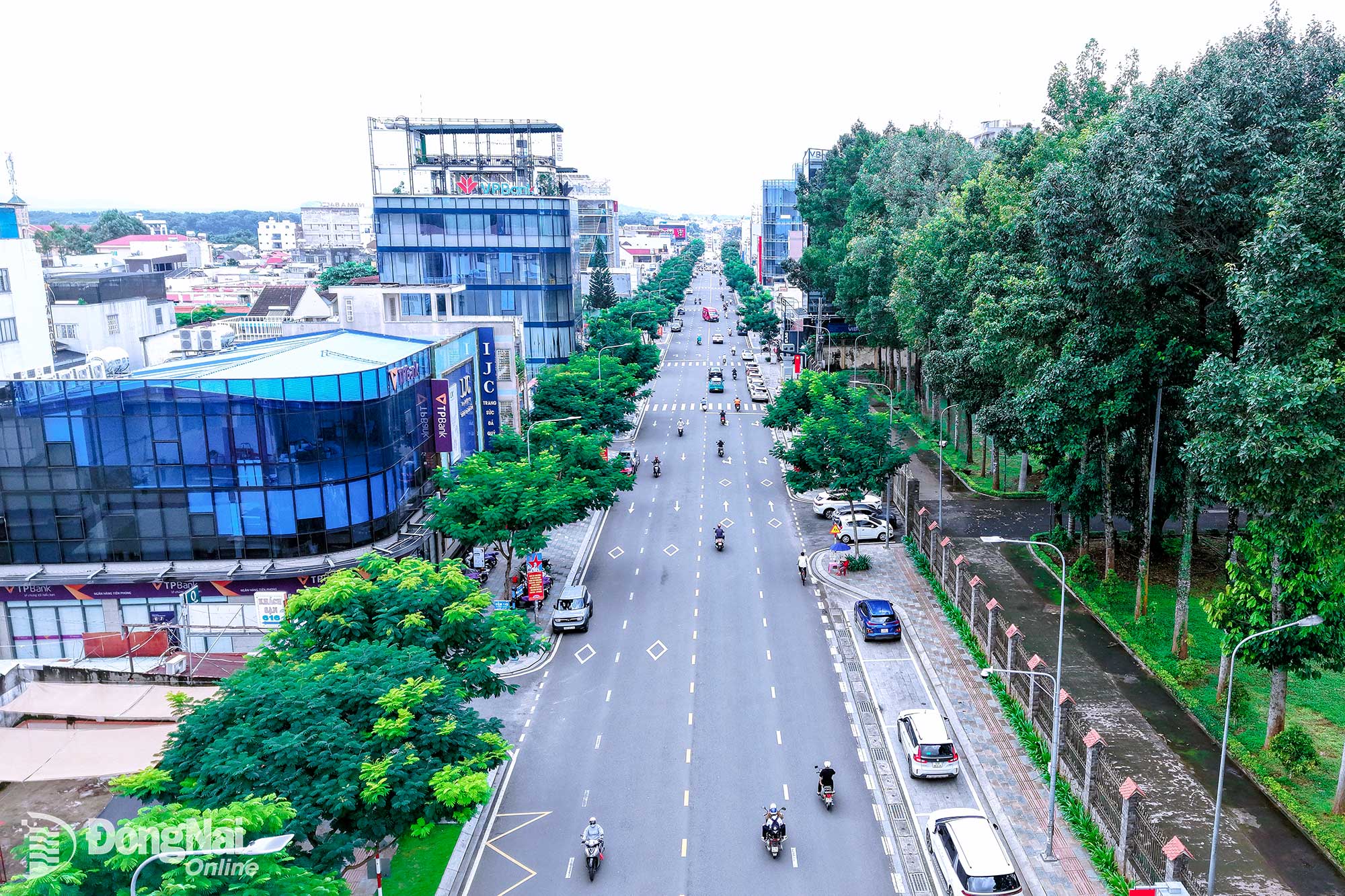 |
| Long Khanh urban area features modern, green surroundings thanks to systematic planning and well-maintained urban landscapes. Photo: Cong Nghia |
Politburo Resolution No. 16-NQ/TW, issued on July 21, 2026, on building and developing Dong Nai City through 2035, with a vision to 2065 (referred to as Resolution No. 16), was introduced at this pivotal juncture. Rather than merely setting higher targets, the resolution set out a new vision for Dong Nai: developing the city into an international airport metropolis, a strategic growth pole, and a major connectivity hub at the national, regional, and international levels, while promoting science, technology, innovation, digital transformation, and new growth drivers.
The question, therefore, is not simply what advantages Dong Nai possesses or how rapidly it can develop, but, more importantly, what approach should guide the mobilization of these advantages to generate new development momentum. At this turning point, the Party's leadership role is demonstrated first and foremost through its ability to look beyond immediate advantages, accurately identify existing limitations, establish strategic directions, and open up a new development trajectory.
Recognizing reality to advance further
Guiding development must begin with an accurate assessment of existing conditions. Dong Nai has a large-scale industrial base established at an early stage, a strategic geographical position, a well-invested infrastructure system, and numerous advantages in regional connectivity. However, its considerable potential also entails higher development requirements. The quality of growth, technological content, innovation, human resources, urban development, and the efficient use of resources remain pressing issues. Resolution No. 16 also clearly identifies shortcomings in value added, technological intensity, infrastructure, urban development, innovation capacity, and workforce quality. Accurately identifying these limitations provides the foundation for determining a new development direction.
At the national conference of the Government and local administrations on January 8, 2026, Party General Secretary and State President To Lam emphasized that, as traditional growth drivers decline and outdated approaches can no longer meet new requirements, the coming period demands fundamental changes in development thinking, governance methods, and resource allocation.
In this spirit, Resolution No. 16 not only raises Dong Nai's development targets but also introduces a new perspective on the city itself. Dong Nai is being reoriented from a locality primarily characterized by its industrial strengths toward an airport-centered, polycentric, green, and smart urban development model, with an emphasis on high-tech industries, the aviation economy, logistics, the digital and green economies, and innovation.
The new point lies not merely in the scale of the targets but, more importantly, in a fundamental shift in development thinking: from exploiting existing advantages to proactively creating new advantages for the future.
Over the past years, the Dong Nai City Party Committee has maintained a profound understanding of the city’s development path, correctly identified and consistently pursued it, while gradually translating its orientations into concrete, decisive actions, laying the foundation for Dong Nai to achieve breakthroughs, advance further, and reach new heights.
From separate advantages to combined strength
Viewed in isolation, Long Thanh Airport is merely an aviation project. The Dong Nai River, if considered on its own, is simply a natural advantage. Expressways, deep-water seaports, industrial parks, and border gates, if not properly integrated, would struggle to generate sufficient collective strength.
However, when integrated into a unified development framework, these resources can form a new ecosystem. The airport connects with logistics, transportation, and services; urban areas are closely linked with industry and commerce; transportation corridors expand regional connectivity; and science, technology, innovation, and high-quality human resources provide additional momentum for growth.
What needs to be changed, therefore, is not only planning landscape but, first and foremost, the leadership mindset guiding development. This requires a shift from fragmentation to integration, from exploiting existing advantages to creating new ones, and from growth heavily dependent on capital, land, and labor to growth increasingly driven by knowledge, technology, and innovation.
Throughout this process, the Party's leadership role is reflected in its ability to look beyond immediate advantages, establish appropriate directions, identify key breakthroughs, and build unity in implementation.
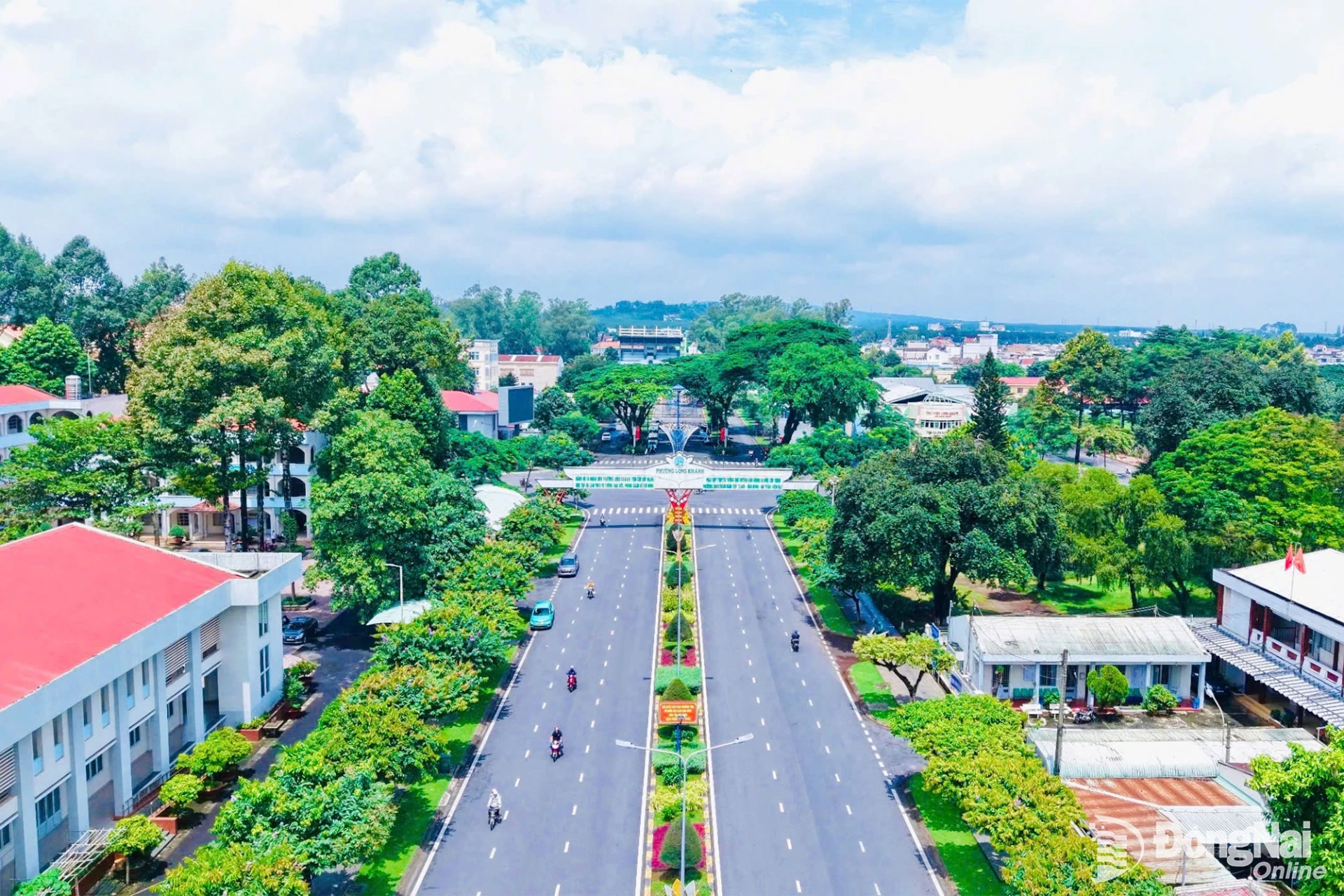 |
| Transportation and urban infrastructure in Long Khanh Ward, Dong Nai City. Photo: Cong Nghia |
Turning vision into concrete results
A sound vision is only the starting point. Translating strategic orientations into tangible development outcomes depends on the ability to translate the orientations into concrete programs and organize their implementation.
In line with the Party's guidelines and the directives of General Secretary and State President To Lam, Resolution No. 05-NQ/TU, issued by the Dong Nai City Party Committee’s Executive Board on May 1, 2026, on the special 500-day-and-night emulation campaign themed “Unity – Discipline – Efficiency – Breakthrough, building a civilized and modern Dong Nai,” calls for substantive and measurable progress in discipline and order, as well as operational efficiency of the political system, and socio-economic development outcomes. The requirement is clear: visions must be translated into programs, programs into specific tasks, and tasks into concrete products and measurable results.
Dong Nai faces tremendous opportunities, but chances alone cannot generate development momentum. A large-scale airport does not automatically create an airport city, just as modern infrastructure does not, by itself, establish a growth pole. Nor can existing advantages automatically combine to create collective strength. All these outcomes require a far-sighted vision and strong implementation capacity.
The Party's leadership role begins with setting the right direction, opening up new development space, and mobilizing collective strength to transform today's potential into tomorrow's Dong Nai.
By Dr. Ta Van Soat, Dr. Nguyen Van Phuong – Translated by Minh Hong, Thu Ha
Part 2: Innovating leadership methods, turning vision into action
Thông tin bạn đọc
Đóng Lưu thông tin