
International tariff policy fluctuations are putting pressure on business costs, orders and competitiveness. At the same time, green production requirements are increasingly becoming an urgent condition for participation in global supply chains.
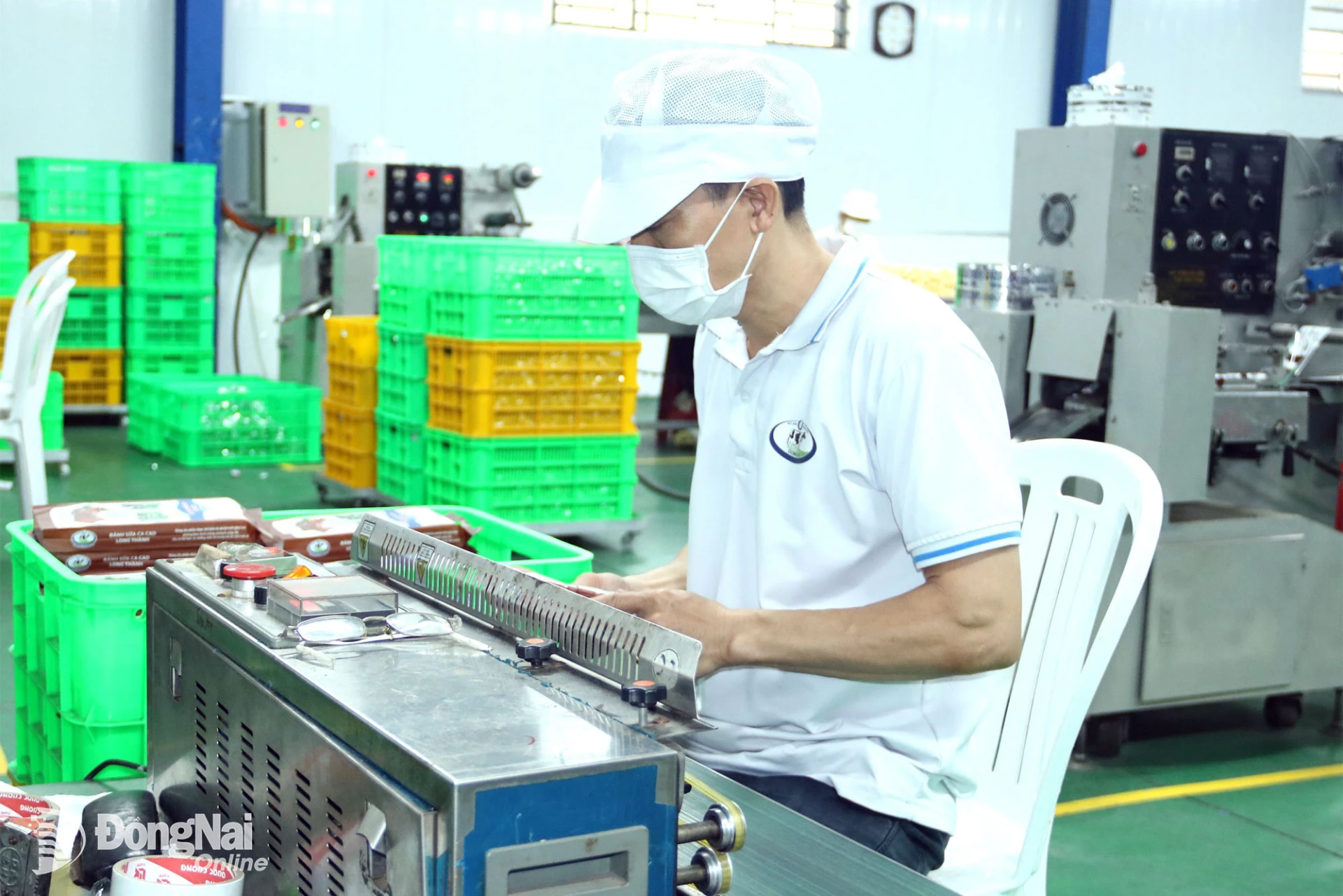 |
| Production at a business in An Phuoc Commune. |
Amid these changes, businesses need to proactively respond to trade risks while seeking resources to invest in technology, reduce costs and meet new market standards.
Proactively responding to changes
Adjustments in the trade policies of major markets, particularly the United States, can affect selling prices, profit margins and ordering plans. When import costs rise, buyers may ask suppliers to share the burden by reducing prices, adjusting orders or renegotiating delivery terms.
This pressure is particularly significant for key export sectors such as wood and wood products, textiles and garments, footwear, mechanical engineering and supporting industries. For businesses that rely heavily on a single market, tariff fluctuations can also affect production plans, labor utilization and cash-flow management.
According to Dang Ngoc Canh, Senior Director of Economic Analysis and Market Research at Vietnam Technological and Commercial Joint Stock Bank (Techcombank), the global economy remains capable of adapting, but uncertainty remains high due to geopolitical conflicts, trade competition, tariff policy fluctuations and supply chain shifts.
In Vietnam, exports, public investment, foreign direct investment (FDI) inflows and policies to develop the private sector will continue to be growth drivers in 2026. However, fluctuations in international markets, along with pressure from interest rates, exchange rates and input costs, require businesses to be more cautious when developing production and business plans.
In this situation, businesses need to monitor tariff policies for each market and product code; accurately determine the applicable tariff rates; review contract terms; and calculate the efficiency of each order. Market diversification must go hand in hand with improving product quality, ensuring rules of origin and meeting technical standards and traceability requirements of partners. These are practical solutions to minimize risks and maintain competitive advantages.
In addition to international tariffs, businesses also need to control risks arising from changes in domestic tax policies. Vo Hiep Van An, Deputy General Director of Deloitte Vietnam Co., Ltd. (Hanoi), said that Vietnam's tax landscape is undergoing many changes. As tax authorities increasingly apply data in tax administration, businesses need to strengthen internal controls, proactively identify risks and ensure compliance.
For businesses with related-party transactions, transfer pricing documentation, internal transactions and financial agreements need to be carefully reviewed. Maintaining complete records and ensuring a reasonable commercial basis for transactions will help businesses reduce risks when subject to tax inspections.
Green finance paves the way for long-term investment
Alongside responding to tariff fluctuations and controlling financial risks, businesses also need to prepare resources for the green transition. International customers are increasingly concerned about emissions, energy use and environmental responsibility throughout supply chains. Therefore, the ability to meet these standards directly affects businesses' opportunities to maintain orders and expand their markets.
For manufacturing businesses, the green transition can begin with practical measures such as replacing equipment that consumes large amounts of electricity, improving production lines, saving and reusing water, controlling waste, or using suitable renewable energy. These investments not only help reduce operating costs but also support businesses in meeting the requirements of export partners.
However, access to capital remains one of the obstacles for small and medium-sized enterprises (SMEs). Although green credit, defined as funding provided by banks and financial institutions to support projects that bring environmental benefits, is growing rapidly in Vietnam, SMEs still face difficulties in accessing such capital. A lack of information about credit programs, unfeasible investment plans or an inability to demonstrate environmental effectiveness can all become barriers.
According to Chairman of the City Business Federation Dang Van Diem, the business community hopes that relevant agencies will soon complete the legal framework, expand green credit programs and introduce more mechanisms to encourage investment in environmentally friendly technologies. These are necessary conditions for businesses to reduce emissions and improve their competitiveness.
With its industrial economic structure and developed export activities, Dong Nai needs to pay greater attention to supporting businesses in adapting to changes in international trade. Competitiveness in the coming period will depend not only on production costs or scale, but also on risk management capabilities, the ability to meet market standards and technological innovation. These are decisive factors in maintaining orders, expanding markets and achieving sustainable development.
Businesses need to receive timely updates on tariff policies and rules of origin for each market, while also receiving advice on tax management, risk control and the selection of appropriate production plans. For the green transition, businesses need to be connected with banks and technology consulting firms and receive support in identifying priority investment areas, assessing effectiveness and completing loan applications. This will help businesses improve their access to resources, reduce costs and maintain competitiveness.
By Vuong The - Translated by Diec Quyen, Thu Ha



Thông tin bạn đọc
Đóng Lưu thông tin