
A network of free trade agreements (FTAs) is expanding export opportunities for Vietnamese goods, from traditional markets in Asia to Europe, North America, and the Middle East. For Dong Nai City, these agreements offer important opportunities for enterprises to expand their sales channels and diversify export markets.
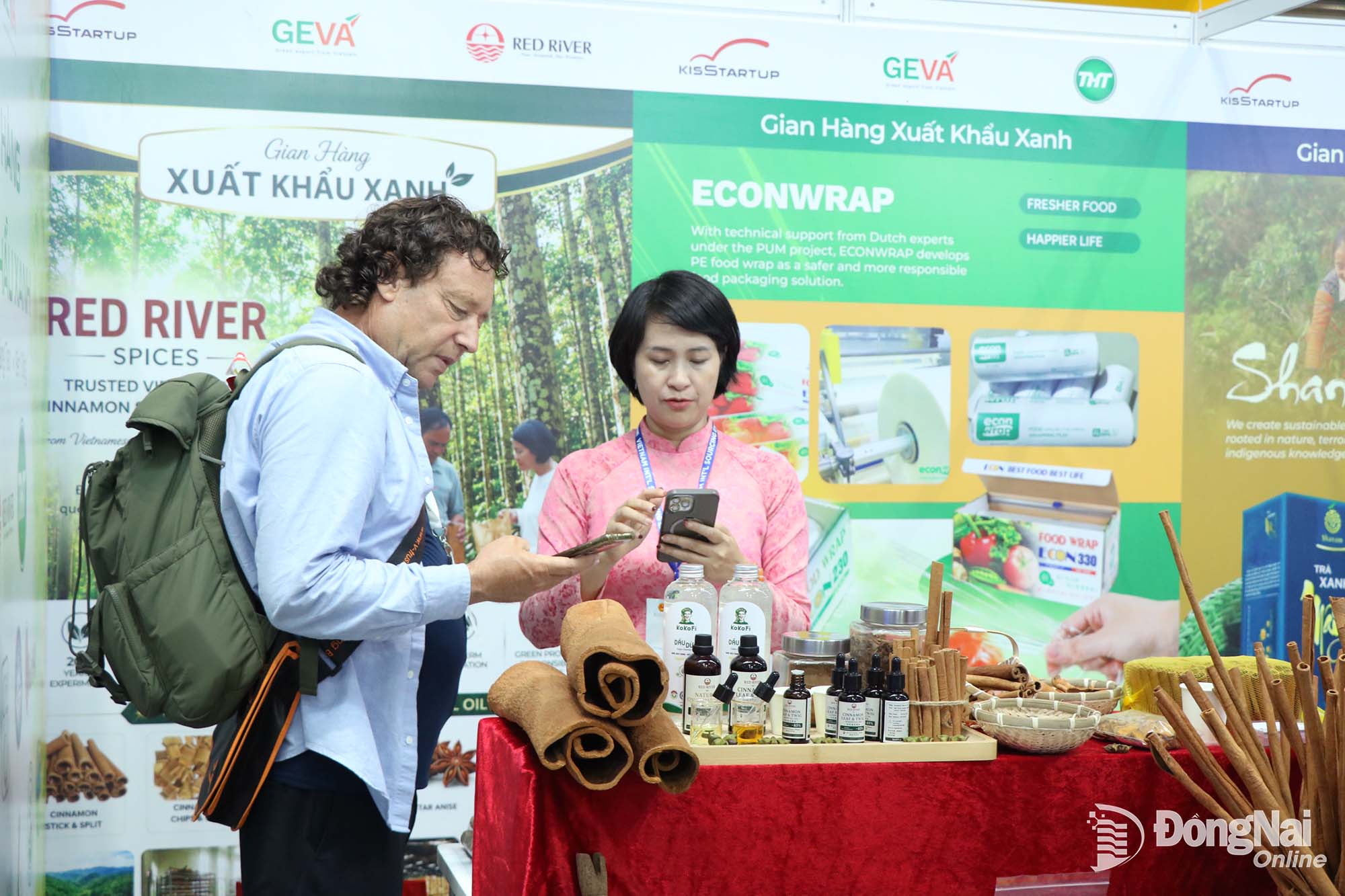 |
| A visitor explores products at the Vietnam International Sourcing Expo 2026, held in early September in Ho Chi Minh City. |
Along with these opportunities, rapid changes in global trade require enterprises and the economy as a whole to proactively adapt to new standards and trade regulations to make effective use of FTAs.
Expanding markets and opportunities for Vietnamese goods
After years of international economic integration, Vietnam has established a network of 17 FTAs currently in force, linking the country to many major economies and trading blocs. From ASEAN, China, Japan, and the Republic of Korea to member markets of the Comprehensive and Progressive Agreement for Trans-Pacific Partnership (CPTPP) and markets in Europe, Vietnamese products now have more opportunities to reach consumers and become more deeply integrated into global supply chains.
One of the most readily apparent benefits of FTAs is preferential tariffs. As import tariffs are reduced according to agreed schedules, Vietnamese goods gain an additional competitive advantage in terms of price. However, the impact of FTAs extends beyond tariff reductions.
According to economic experts, FTAs still offer considerable untapped potential. Opportunities have yet to be fully tapped, as the preferential tariff utilization rate among Vietnamese enterprises currently stands at only around 37%. An FTA delivers real benefits only when products meet the rules of origin and the regulations of importing markets. Enterprises that fail to meet these requirements can still export their goods but will not qualify for preferential tariff rates.
The EU-Vietnam Free Trade Agreement (EVFTA) provides access to 27 European countries, while the CPTPP connects Vietnam with many economies characterized by high standards and substantial purchasing power. The Regional Comprehensive Economic Partnership (RCEP) creates a vast trading area in Asia. Meanwhile, the UK-Vietnam Free Trade Agreement (UKVFTA) maintains preferential trade arrangements with the United Kingdom, and the Vietnam-Israel Free Trade Agreement (VIFTA) opens a gateway to the Israeli market.
In 2026, the Vietnam-UAE Comprehensive Economic Partnership Agreement (CEPA) continues to open up new opportunities. The United Arab Emirates (UAE) is not only a consumer market but also a major trade, logistics, and distribution hub for the Middle East. Therefore, the opportunities offered by CEPA extend beyond boosting exports to the UAE, as the agreement could also enable Vietnamese enterprises to gain broader access to the Middle Eastern market.
The growing network of FTAs enables enterprises to diversify export markets, expand their customer bases, and reduce dependence on individual markets. In Dong Nai, key competitive industries, including machinery and equipment, wood products, textiles and garments, footwear, agricultural products, and processed foods, continue to gain new opportunities for market expansion. Notably, Dong Nai was among five provinces and cities, alongside Tuyen Quang, Ho Chi Minh City, Hanoi, and Hai Phong, to receive certificates of merit from the Government for outstanding achievements in implementing FTAs in 2025.
According to Nguyen Kim Long, Member of the Standing Committee of the Dong Nai City Party Committee and Permanent Vice Chairman of the City People's Committee, Dong Nai considers the proactive and vigorous implementation of new-generation FTAs a key strategic task aimed at expanding development opportunities, enhancing competitiveness, promoting sustainable growth, and deepening international economic integration.
Proactively adapting to new requirements
While tariff reductions were once the main attraction of FTAs for enterprises, the issues businesses must consider now extend far beyond tariffs. Importing markets are imposing increasingly stringent requirements concerning product quality, traceability, environmental protection, labor standards, and sustainable development.
These requirements present major challenges for enterprises and manufacturing industries alike. In the wood industry, requirements for legally sourced raw materials, traceability, and environmental standards are becoming increasingly important. Textile, garment, and footwear enterprises must pay close attention to their sources of raw and auxiliary materials to comply with rules of origin. For agricultural products, the key concerns are growing areas, food safety, traceability, and consistent product quality. For industrial products, technical standards and the ability to participate in supply chains have become decisive factors in determining competitiveness.
These requirements show that FTAs are putting pressure on enterprises to upgrade their operations. Enterprises need to invest in technology, standardize production processes, improve product quality, save energy, strengthen control over raw materials, and establish traceability systems. At the same time, they need to develop their brands and gradually shift from contract manufacturing to producing higher value-added products.
Vo Quang Hieu, Deputy General Director of Thuan Loi Rubber Co., Ltd. in Thuan Loi Commune, said the company was working to bring processed rubber latex products to international markets. Forest Stewardship Council (FSC) certification is a mandatory requirement for overcoming technical barriers and exporting to major markets such as the EU, the United States, and Japan. The company currently has 3,500 hectares of FSC-certified rubber-growing areas.
According to local enterprises, these requirements are particularly evident in Dong Nai, where manufacturing is heavily geared toward exports. The city's strengths in industrial production, transport infrastructure, geographical location and connectivity, and its network of industrial parks provide a foundation for its products to reach broader markets. However, these advantages can be fully realized only if enterprises simultaneously improve product quality, upgrade technology, and strengthen their ability to meet international standards.
FTAs have opened numerous new markets for Vietnamese goods. Amid volatility in global trade, the issue is no longer a lack of markets but whether enterprises can enter them and maintain a firm foothold. Proactively adapting to new requirements, improving product quality, and diversifying markets are essential for enterprises to translate the advantages offered by trade agreements into actual orders, greater market shares, and tangible added value.
By Vuong The – Translated by Minh Hong, Minho



Thông tin bạn đọc
Đóng Lưu thông tin