
Article 41 of the Urban Development Law specifies mechanisms for investment and management of regional connectivity and development projects and special urban region connectivity and development projects. The provisions aim to ensure consistency among localities in proposing and organizing project implementation, allocating state budget resources, and defining the rights and responsibilities of the localities involved.
Standardizing mechanisms for implementing connectivity projects
 |
| Ground is broken for the Cat Lai Bridge project, connecting Dong Nai City with Ho Chi Minh City, in early 2026. Photo: Perspective of Cat Lai Bridge |
Accordingly, the proposal and implementation of regional connectivity and development projects and special urban region connectivity and development projects are based on consensus among the city and relevant localities.
The City People's Committee and relevant localities are responsible for reporting to their respective People's Councils to seek review and consensus on project implementation. This step ensures that participating localities reach agreement on the policy before connectivity projects are launched. Once consensus is reached, the City People's Committee and participating localities will jointly select a provincial-level People's Committee to serve as the managing agency or competent authority for the project.
This regulation establishes a concerted mechanism for cases in which a connectivity project involves multiple localities. Instead of each locality handling its tasks separately, the parties agree to designate a provincial-level agency to act as the lead managing body or competent authority responsible for implementing the project.
For projects using the state budget, Article 41 clearly stipulates the allocation of capital from both the central and local budgets. Specifically, the central budget is prioritized for regional connectivity and development projects and special urban region connectivity and development projects. At the same time, increased central budget revenue is prioritized to ensure investment in these projects ahead of other programs, tasks, and projects. Central-funded support is carried out according to the list of projects decided by the Prime Minister based on the proposal of the municipal People's Committee.
Expanding investment participation rights, establishing a regional development fund
 |
| Long Thanh High-Tech Industrial Park prioritizes attracting investment in industries with high scientific and technological content, as well as new and environmentally friendly technologies. Photo: Vuong The |
Article 41 defines the rights of localities participating in the implementation of regional connectivity and development projects and special urban region connectivity and development projects.
Accordingly, localities participating in projects are permitted to apply the provisions of the Urban Development Law and its implementing documents to prepare, appraise, approve, and implement regional connectivity and development projects and special urban region connectivity and development projects in accordance with resolutions of their respective provincial-level People's Councils, following consensus with the municipal People's Councils.
This regulation allows participating localities to apply the provisions of the Urban Development Law and its implementing guidelines to carry out project stages based on resolutions of their provincial-level People's Councils and consensus with the municipal People's Councils.
Another stipulated right is that localities may use their own budgets to invest directly in special urban region connectivity and development projects located within the territory of another locality in the special urban region. This direct investment aims to resolve issues related to transport infrastructure, the environment, clean water supply, drainage, and other works that serve common interests.
This provision allows the budget of one locality to be used to invest in works and projects located in another locality when such projects fall within the scope of collaboration and serve the common interests of the special urban region.
Article 41 also stipulates that localities participating in projects are entitled to investment incentives under Clause 2, Article 39 of the Urban Development Law for projects in the fields of the environment and climate change response, as well as for food safety projects of a regional nature.
Along with the rights of localities, Article 41 provides for the establishment and operation of the Special Urban Region Development Fund. Accordingly, the Special Urban Region Development Fund is an off-budget state financial fund established by the City People's Council based on consensus with the provincial-level People's Councils of localities within the special urban region.
The fund's financial resources come from the central budget, the budgets of localities within the special urban region, support, grants, and other legal sources.
The fund is used to invest in special urban region connectivity and development projects. Priority is given to projects concerning transport, critical infrastructure, environmental pollution treatment, mineral exploitation, disaster and incident management, and regional disease control.
The fund's operating regulations are issued by the City People's Committee based on consensus with the provincial-level People's Committees of localities within the special urban region.
Defining responsibilities and jointly addressing inter-regional issues
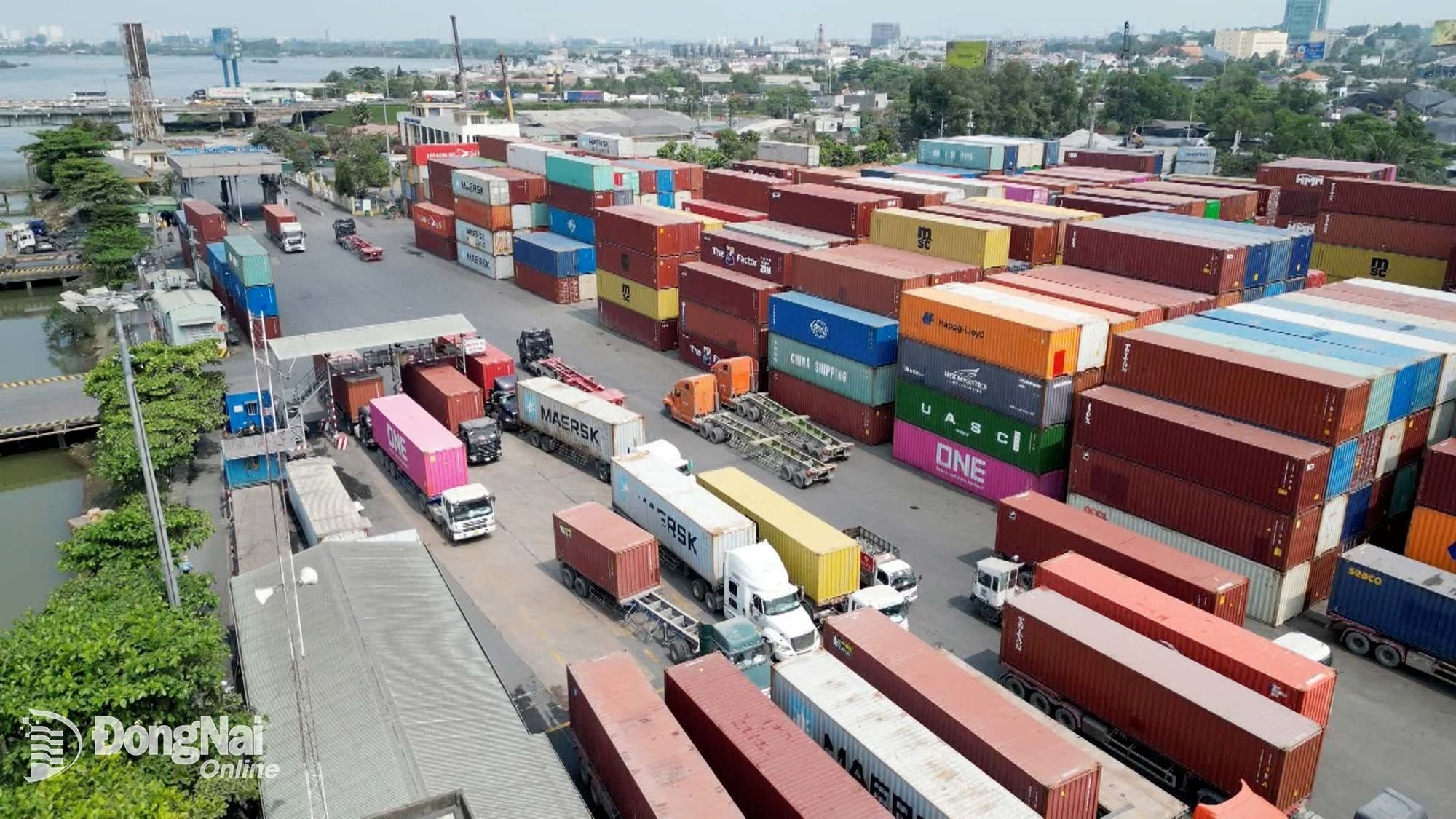 |
| Import and export activities at Dong Nai Port. Photo: Ngoc Lien |
To ensure the coordinated implementation of regional connectivity and development, Article 41 specifically defines the responsibilities of localities engaged in regional connectivity and development activities within the special urban region.
First and foremost, localities are responsible for coordinating with the city in developing and organizing the implementation of regional connectivity and development programs, plans and projects. In addition, localities must balance their local budget funds to carry out projects within their territories. For infrastructure works located within their jurisdictions, localities are responsible for allocating funds for management, maintenance, repair, and operation.
This regulation links responsibility for local resources with the implementation and maintenance of infrastructure works within each locality. In addition to participating in investment, localities must ensure funding for the management, maintenance, repair, and operation of works under their jurisdiction.
Regarding environmental issues, localities are responsible for sharing environmental costs, including those for controlling, mitigating, and remediating related environmental pollution. This is a specific provision within the group of responsibilities of participating localities, aimed at defining cost-sharing for environmental issues related to the scope of regional connectivity and development.
Localities are also responsible for providing information and data to serve regional connectivity and development and for coordinating to resolve issues that arise. Sharing information and data is one of the components supporting the coordination process between the city and localities. Article 41 not only requires the provision of information and data for collaboration but also establishes responsibility for coordinating the resolution of issues arising during implementation.
Furthermore, localities are responsible for coordinating the supervision, inspection, and auditing of the implementation of regulations on regional connectivity and development.
Article 41 simultaneously establishes a coordination mechanism between the city and localities throughout the entire collaboration process, from project proposals, consensus on the managing agency, and resource allocation to implementation and supervision.
For projects using the state budget, priority is given to allocating funding from the central budget; increased central budget revenue is also prioritized to ensure investment in regional connectivity and development projects ahead of other programs, tasks, and projects. The Prime Minister decides on the list of projects to receive central budget support based on the proposal of the City People's Committee.
Along with budget resources, the Special Urban Region Development Fund mechanism creates an additional financial channel for connectivity projects. The fund is sourced from the central budget, the budgets of localities in the region, support, grants, and other legal sources.
The regulations on the rights and responsibilities of localities are also established in parallel. A locality has the right to use its budget to invest directly in connectivity projects located in another locality within the special urban region to serve common interests. At the same time, it must balance its own funds to implement projects within its territory and ensure funding for the management, maintenance, repair, and operation of infrastructure works under its jurisdiction.
From the consensus mechanism for project proposals and implementation to regulations on capital sources, the regional development fund, and the responsibilities of each locality, Article 41 sets out the key provisions for organizing regional connectivity and development and for developing the special urban region. In this process, coordination between the city and localities, resource allocation, and the sharing of responsibilities are regulated throughout to serve inter-regional projects and issues.
By Hai Thanh – Translated by Minh Hong, Thu Ha


Thông tin bạn đọc
Đóng Lưu thông tin