
Amid deepening integration, high-value export activities face competitive risks, along with increasingly frequent investigations and the application of trade remedies (TR) by foreign countries.
 |
| Import and export goods are transported at Phuoc An Port (Phuoc An Commune). Photo: Hai Quan |
To integrate and mitigate TR-related risks, enterprises need to proactively equip themselves with basic knowledge of TR, regularly monitor and exchange information with associations, exporters, and regulatory agencies, and establish complete and transparent management, legal, and accounting systems.
Facing many challenges
Against the backdrop of rapid changes in the global economy and Vietnam's increasingly deep integration through the signing and implementation of new-generation free trade agreements (FTAs), the country's import and export activities in general and those of Dong Nai City in particular have achieved many outstanding results.
However, significant challenges accompany major opportunities. Trade protectionism is on the rise worldwide. Importing countries are increasingly applying TR measures with greater frequency and on a larger scale, including anti-dumping, anti-subsidy, safeguard, and anti-circumvention investigations against goods exported from Vietnam.
At the training conference to strengthen capacity to respond to TR and provide early warnings in 2026, organized by the Dong Nai Department of Industry and Trade and the Trade Remedies Authority of Vietnam (Ministry of Industry and Trade) in July 2026, Deputy Director General of the Trade Remedies Authority of Vietnam Chu Thang Trung said that amid continued global trade protectionism, TR measures are increasingly being used by many countries with greater frequency and complexity.
According to data from the Trade Remedies Authority of Vietnam, as of the end of May 2026, there were 321 TR investigations against Vietnamese exports, with anti-dumping and safeguard investigations accounting for the highest proportion. Anti-subsidy investigations accounted for a smaller proportion but were increasing rapidly due to the complexity of the cases and new protectionist trends. In addition, investigations into the circumvention of TR duties were on the rise.
This situation creates an urgent need for Vietnamese enterprises to enhance their risk management capacity, proactively monitor warning signals, and prepare resources to effectively respond to investigations, protect production and export activities, and maintain competitiveness in the international market.
According to many experts, Dong Nai City is one of the country's major industrial hubs, with its import-export turnover consistently ranking among the leaders. Consequently, enterprises in the city face a high risk of TR lawsuits from abroad. Products with high export turnover, such as footwear and wood products, are particularly susceptible to TR-related issues.
Enterprises need to proactively respond
Reality shows that enterprises that do not fully understand international rules, fail to proactively prepare response capabilities, and lack early warning information on TR could face significant legal risks, considerably affecting export activities.
Recently, to raise awareness and provide local enterprises with information and knowledge on TR response, relevant departments and agencies in Dong Nai have implemented numerous activities and training programs for businesses.
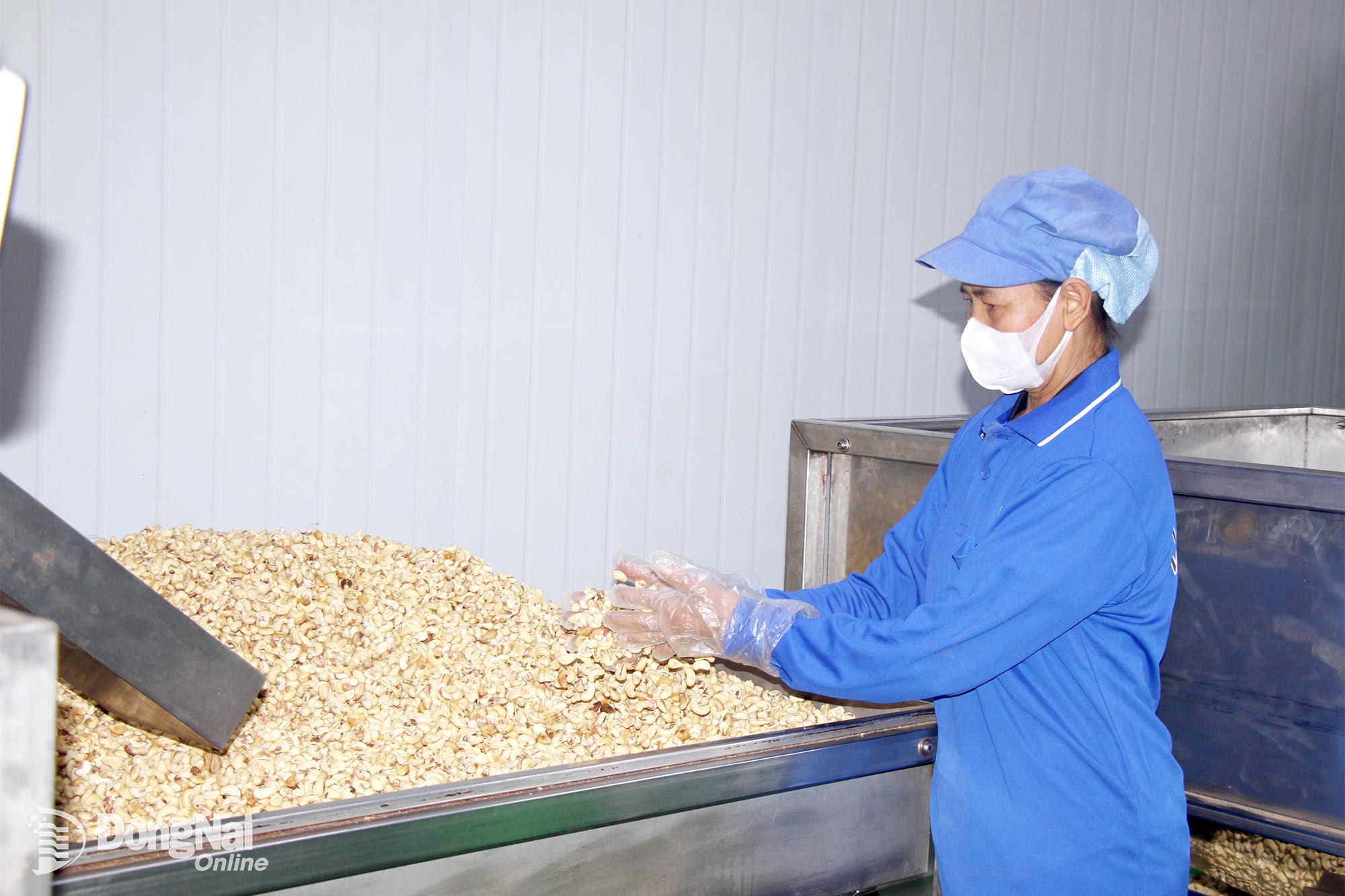 |
| Cashew nuts are produced at an enterprise in Xuan Hoa Commune, Dong Nai City. |
The training programs focus on issues of concern to enterprises, including the context and trends of TR investigations worldwide; risks to Vietnamese exports; risks when exporting to key markets; early warning mechanisms in TR; and methods for using export data to identify investigation risks at an early stage.
Director of Nhu Hoang Agricultural Trade and Service Cooperative (Tho Son Commune, Dong Nai City) Truong Van Thanh said the unit always proactively updates its knowledge of TR, as well as information on intellectual property and trademark registration, to ensure compliance with legal requirements for its products, especially in the context of increasingly deep international integration.
At the training conference to strengthen capacity to respond to TR and provide early warnings in 2026, held in July 2026, enterprises in Dong Nai heard experts analyze the causes and trends of investigations, as well as lessons learned from practice. On that basis, experts guided enterprises in preparing dossiers and data and strengthening coordination with state management agencies during the handling of TR cases, helping to minimize risks and protect the legitimate rights and interests of enterprises.
Deputy Director of the Department of Industry and Trade Tran Duong Hung said the organization of training to enhance TR response capacity aims at the core objective of equipping state management agencies, industry associations, and especially the city's business community with practical knowledge and updates on global TR investigation trends. The training also provides detailed guidance on the processes and procedures for preparing dossiers to help enterprises protect themselves in both domestic and international markets.
The Trade Remedies Authority of Vietnam (Ministry of Industry and Trade) has developed and operates an early warning system for TR. Through this system, enterprises can proactively monitor the export trends of each product, promptly identify signs of risk, and thereby adjust production, business, and market strategies before investigations are initiated.
By Lam Phuong – Translated by Minh Hong, Minho


Thông tin bạn đọc
Đóng Lưu thông tin