
With its rich ecological, environmental, cultural and landscape values, the Dong Nai River is set to become a strategic spatial axis for Dong Nai City.
The Dong Nai River corridor and the urban area surrounding Long Thanh International Airport have been identified as two new growth drivers for the city.
The city's “front door”
The Dong Nai River stretches for more than 200km through Dong Nai City, passing through several major urban areas. Beyond its ecological and waterway transport significance, the river is also deeply intertwined with the history and heritage of the region and the nation's Southward expansion.
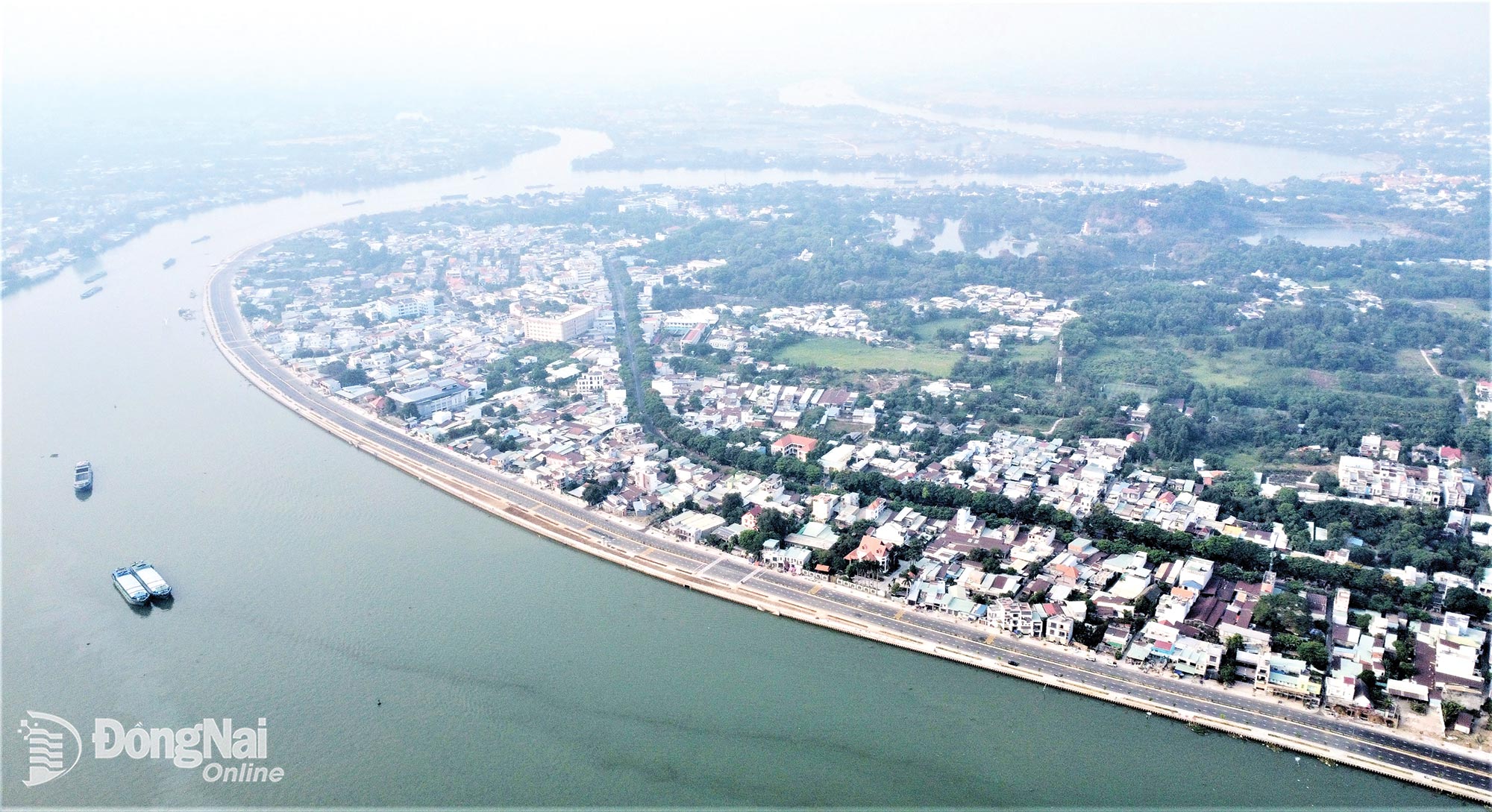 |
| The Dong Nai riverside road, a key transport infrastructure project along the river corridor in Tran Bien ward, has been completed. |
Tran Quang Toai, Chairman of the Dong Nai Association of Historical Sciences, said the Dong Nai River is closely linked to the nearly 330-year history of the Tran Bien-Dong Nai region. Throughout the 17th and 18th centuries, the river was associated with a number of important historical events, including the mission of Marquis Nguyen Huu Canh, who was sent to the South to expand the nation’s territory and establish an administrative system. Today, a number of nationally recognized historical and cultural sites remain along the river, including Ong Pagoda, Dai Giac Pagoda, the Nguyen Huu Canh Temple and Tran Bien Temple of Literature.
As Dong Nai and the country continue to develop, the river is playing an increasingly important role in shaping the city's urban landscape and development.
Architect Khuong Nguyen Duc Chuong, Chairman of the city's Association of Architects, said the Dong Nai River should not merely serve as a source of water but should become a key landscape and economic axis for the city. The river corridor should be planned and developed as the city's “front door.”
According to Chuong, the Dong Nai River corridor should be planned and developed as an “open” space, with a network of interconnected riverside parks and priority given to public areas. Green belts along the river would serve as a natural means of adapting to climate change. At the same time, historical and cultural relic sites and traditional craft villages along the Dong Nai River should be regarded as the “backbone” of the city's identity. Urban spaces surrounding these sites should be designed to create “cultural squares” that are accessible to residents.
Maximizing the river's potential
Politburo Resolution No. 16-NQ/TW on the building and development of Dong Nai City to 2035, with a vision to 2065, sets the goal of developing the Dong Nai River as a strategic spatial axis, with a central role in ecology, culture, landscape and urban development. It also calls for more effective use of the river's waterway transport potential, stronger links among growth poles, and sustainable development of the economy, services and tourism.
However, development in recent years has shown that the potential of the Dong Nai riverside space remains largely untapped, with comprehensive planning still lacking.
Against this backdrop, the city has identified the Dong Nai River corridor as a new growth-driving area. Redeveloping urban spaces along the river has been identified as a breakthrough task of strategic importance in the city's new development phase.
Resolution No. 16-NQ/TW sets the goal that by 2035, Dong Nai will develop into a green and smart urban area characterized by an airport-city model, a riverside urban model and a multi-centered, multi-functional structure. It is expected to become a center for high-tech manufacturing, aerospace, aviation and an international-standard aviation economy, with high-income residents and a civilized, safe and happy society.
Nguyen Van Ut, Deputy Secretary of the City Party Committee (CPC) and Chairman of the Dong Nai People's Committee, said the city would review and revise plans for the development of the Dong Nai River and lakes across the city. Accordingly, the city will review and replan its port system. Dong Nai currently has a number of ports along its rivers, but under the new development context, their roles and locations will be reassessed. Ports that remain suitable and serve the city's development needs will be retained, while those deemed incompatible will be relocated. “Dong Nai must be a livable city and a green, clean urban area,” Ut said.
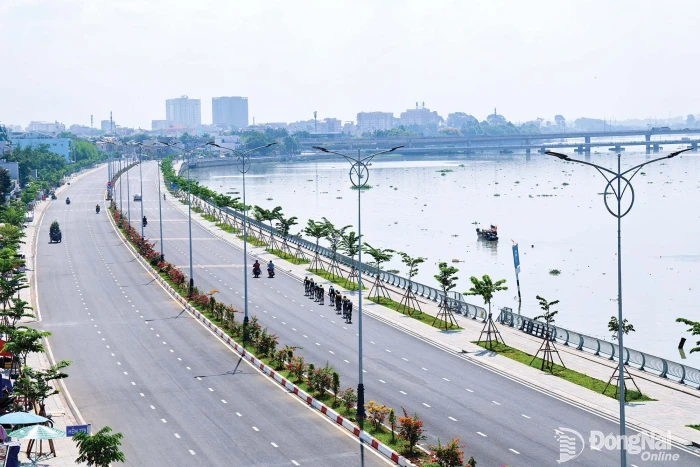
In recent years, the development orientation towards eco-urban areas along the Dong Nai River corridor has spurred investment in a number of urban projects, contributing to a more modern and well-planned urban landscape. Meanwhile, riverside infrastructure projects, including Nguyen Huu Canh Boulevard and bridges across the Dong Nai River connecting Dong Nai with Ho Chi Minh City, have been built. The city is also studying plans to develop an eight- to 10-lane road along the Dong Nai River, which is expected to become a major spatial development axis along the river.
By P.Tung – Translated by M.Nguyet, Thu Ha


Thông tin bạn đọc
Đóng Lưu thông tin