
 |
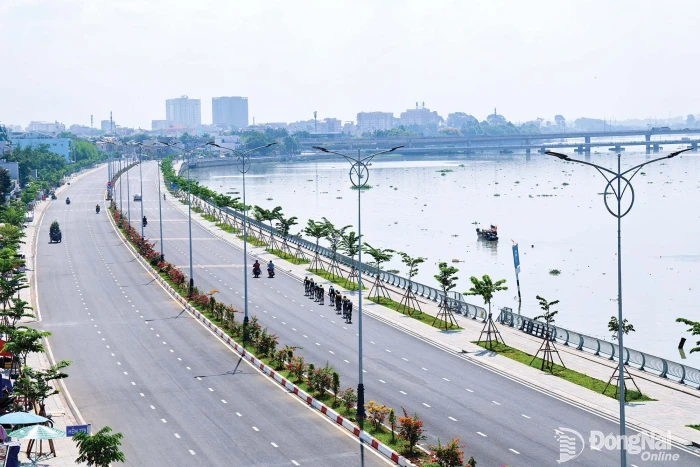
Dong Nai City is entering a new stage of development. A series of strategic infrastructure projects are being implemented, including the Long Thanh International Airport, expressways, ring roads, seaports, urban developments and industrial zones. Accordingly, achieving double-digit economic growth is no longer simply an aspiration but has become a central development objective for Dong Nai in 2026 and the years ahead.
Despite its decades-long industrial development, Dong Nai has preserved more than 370,000 hectares of forest land, placing it among the localities with the largest forest resources in Vietnam. Its natural forests stretch from Cat Tien National Park and the Dong Nai Nature and Culture Reserve to Bu Gia Map National Park. These forests are not only regarded as the “green lungs” of the Southeast region but also play a vital role in preserving biodiversity across Southern Vietnam and the country as a whole.
Nearly three decades ago, Dong Nai adopted a policy banning the exploitation of natural forests. Consequently, while many localities have had to invest substantial resources in reforestation and forest restoration in recent years, Dong Nai has retained a vast and relatively intact forest reserve. This represents a significant advantage as the city pursues green growth in the future.
For many years, Dong Nai has consistently adhered to the principle of not sacrificing the environment for economic growth. This approach has not always been easy to maintain, particularly amid rapid urbanization. Nevertheless, the city has remained committed to preserving its forests as a foundation for sustainable development. In 2025, climate-related disasters and extreme weather events caused more than US$220 billion in losses worldwide. In Vietnam alone, damages were estimated at nearly US$4 billion. Therefore, Vietnam, along with many other countries, has been committed to pursuing greener development pathways. One of the most effective measures for slowing the adverse impacts of climate change and promoting sustainable development is protecting and expanding forest resources, which help regulate the climate, preserve biodiversity and maintain ecological balance.
According to economic experts, the value of forests is increasingly being enhanced through conservation and sustainable utilization, including activities such as ecotourism development and the collection of forest environmental service fees. Over the past several years, carbon markets have expanded rapidly around the world, while Vietnam has begun piloting carbon credit trading mechanisms. This development presents a valuable opportunity for localities with extensive forest resources, such as Dong Nai, to participate in carbon credit markets and generate additional funding for forest protection and development.
However, opportunities can only become sustainable resources when accompanied by effective management. In recent years, ecotourism has been viewed as a highly promising sector. However, without strict oversight, unplanned construction and excessive commercial exploitation could undermine ecosystems that have taken decades, even centuries, to form.
Therefore, the key issue is not how much economic value can be extracted from forests, but how much of their ecological value can be preserved while that value is being utilized. This is also why Dong Nai’s development plans consistently prioritize maintaining forest coverage, conserving biodiversity and strictly enforcing regulations on compensatory afforestation whenever forest land is converted to other purposes.
As Dong Nai pursues its goal of achieving double-digit economic growth, the city will undoubtedly require new sources of development momentum. Yet its more than 370,000 hectares of forest land should be viewed not only as a conservation asset but also as a strategic resource that, if managed sustainably, can generate long-term value for economic, environmental and social development.
By K.Minh – Translated by M.Nguyet, Thu Ha


Thông tin bạn đọc
Đóng Lưu thông tin