
Phu Lam commune (Dong Nai province) was formed by merging five communes, including Phu Son, Phu Trung, Thanh Son, Phu Binh, and Phu Lam from the former Tan Phu district, with a population of nearly 63,000 and a total area of more than 6,736 hectares.
 |
| Beautiful, tranquil scenery at Da Ton Lake (Phu Lam commune). Photo: Doan Phu |
Building on this foundation, Phu Lam commune is orienting its socio-economic development toward trade and services, while simultaneously restructuring toward high-value crops and gradually unlocking its eco-tourism potential. Notable sites, including Da Ton Lake, the Hung Kings Ancestral Temple, and the Hoa Binh Waterfall – Linh Phu Pagoda complex, are forming the “framework” for this development direction.
Da Ton Lake – a distinctive local landscape
Covering approximately 350 hectares, Da Ton Lake serves not only as a key irrigation project supplying water for local agriculture and surrounding areas, but also as a defining landscape feature of Phu Lam. Around the breezy dam, golden rice fields interwoven with lush orchards stretch across the foothills, forming a rural scene at once peaceful and vibrant.
Da Ton hamlet, located near the lake, spans over 932 hectares, including 466 hectares of rice fields, fruit orchards, and industrial crops. The hamlet is covered with planted forests across undulating hills. Recalling his early years in the area, Bui Van Phuong (76, residing in Group 4), who arrived in 1978, shared that upon settling, his family and other households cleared land on the opposite side of the dam to cultivate rice and crops. However, when the Da Ton irrigation project became operational in 1987, that land was submerged and returned to the project management authority. His current 1.3-hectare garden, comprising durian, bananas, a pond, rambutan, coconut, and rice fields, was later acquired from residents who had lived near Phuong Lam market (in Phu Lam commune) before 1975.
Following the construction of the irrigation dam, the residential area, home to nearly 510 households, including Bui Van Phuong's, became valley-like. Benefiting from alluvial soil accumulation and abundant irrigation water, the area now supports three rice crops annually alongside thriving agricultural production. At the same time, the lives of residents have been steadily revitalized, as Phu Lam commune continues to invest in infrastructure, including electricity, schools, transport networks, and cultural facilities, alongside access to credit, science and technology, and education through new rural development programs. As a result, the area has become increasingly bright, green, clean, and civilized.
Pham Van Thanh, Head of the Fatherland Front Working Committee of Da Ton hamlet, expressed his optimism regarding the Da Ton Lake eco-tourism project, for which the locality is actively “rolling out the red carpet” to attract investment. According to him, the hamlet has already been incorporated into the project’s planning, with residents proactively renovating houses, gardens, and surrounding landscapes in readiness to welcome new opportunities alongside local authorities.
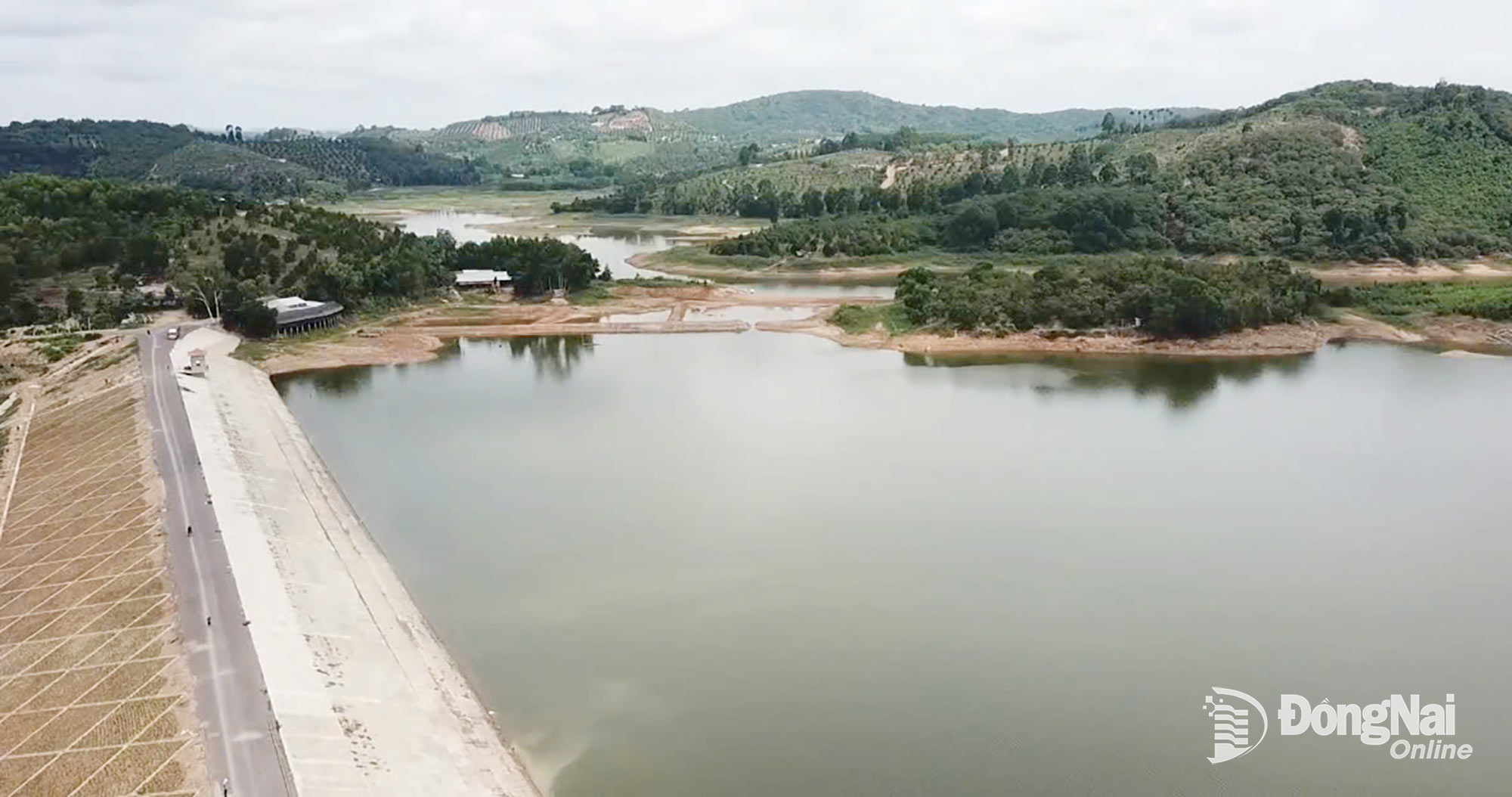 |
| Da Ton Lake – a highlight of eco-tourism development in Phu Lam commune. |
 |
| Many farmers in Phu Lam commune are developing fruit orchards that welcome visitors year-round. Photo: Doan Phu |
Opening pathways for eco-tourism development
In line with the commune’s planning orientation, Da Ton hamlet has been selected as a focal point for the Da Ton Lake eco-tourism development project. According to Do Xuan Hoa, Vice Chairman of the Phu Lam commune People’s Committee, the project covers an area of approximately 1,100 hectares in the northwest of the commune. Characterized mainly by low hills surrounding the lake, the area is well connected via key routes such as Phu Lam – Thanh Son and Phu Xuan – Phu An, linking to National Highway 20 and the Dau Giay – Tan Phu Expressway access road. Such connectivity makes it highly suitable for investment in resort tourism combined with trade and service development.
The local administration has been implementing coordinated and decisive measures, closely aligned with practical conditions, in accordance with the Resolution of the first Congress of the Phu Lam Commune Party Committee for the 2025-2030 term. The overarching goal is to fully leverage local potential and advantages, strengthening trade and services, expanding industry and cottage industry, thereby creating a solid foundation for the effective development of sustainable, organic, and high-tech agriculture.
Pham Thanh Hai, Chairman of the Phu Lam Commune People’s Committee
In addition, the Hung Kings Ancestral Temple area, spanning over 90 hectares, and the Hoa Binh Waterfall – Linh Phu Pagoda scenic complex, covering more than 30 hectares in the northeast of the commune, are strategically located along National Highway 20 and connected to the expressway access road. These areas are well-suited for “return-to-the-roots” tourism, eco-tourism, and services.
Do Xuan Hoa, Vice Chairman of the Phu Lam commune People’s Committee, shared that Phu Lam commune is also proactively creating a foundational space for tourism through large-scale agricultural development. Currently, the commune has established more than 4,000 hectares of fruit crops (including durian, orange, and mandarin) and industrial crops (such as coffee, pepper, and agarwood), along with nearly 2,200 hectares of three-crop rice fields, many of which are associated with scenic landscapes in hamlets such as Da Ton, Thanh Trung, Phu Hop B, and Thanh Tho 3.
Discussing the commune’s eco-tourism development orientation, Pham Thanh Hai, Chairman of the Phu Lam commune People’s Committee, emphasized that Phu Lam commune is actively “rolling out the red carpet” to attract investors and businesses to tap into its existing potential. The locality also clearly identifies that tourism development must go hand in hand with agricultural development, with both sectors supporting and enhancing each other. Accordingly, tourism products will be diversified along ecological, experiential, culinary, and cultural lines. Efforts will also be made to accelerate digital transformation, including the development of digital tourism maps and the promotion of the locality’s image across online platforms.
Residents, particularly those in Da Ton hamlet, hope that their land, orchards, and rice fields will not only generate higher income but also welcome visitors from across Vietnam and abroad, offering them the chance to enjoy the scenery, taste local specialties, and experience the hospitality of the people.
Nguyen Xuan Thanh (Da Ton hamlet, Phu Lam commune)
By Doan Phu – Translated by Minh Hong, Minho


Thông tin bạn đọc
Đóng Lưu thông tin