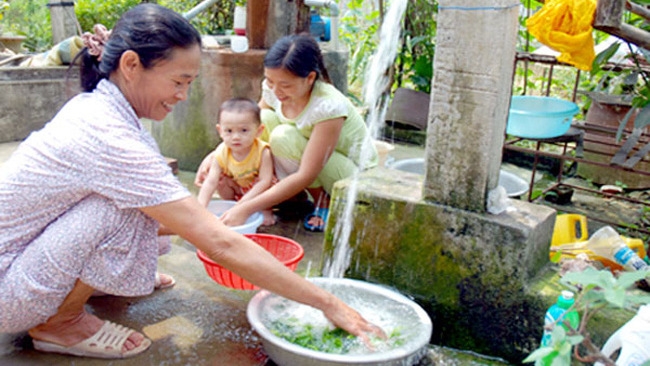
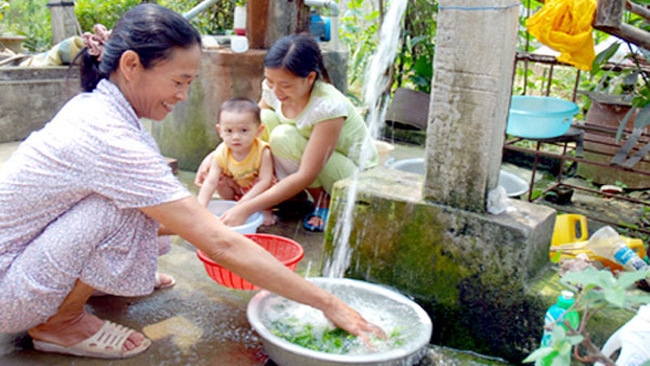
Vietnam aims to have 95% of its total population to gain access to improved and protected water sources and 55% of its population to have access to clean water by 2020.
Vietnam aims to have 95% of its total population to gain access to improved and protected water sources and 55% of its population to have access to clean water by 2020.
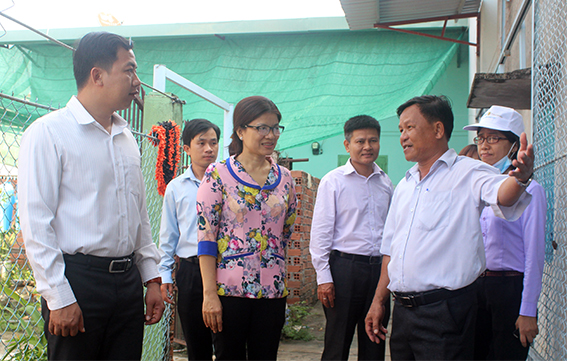
The information was released by Do Van Thanh, Director of the Department of Water Resources Management and Rural Water Supply under the Directorate of Water Resources at a seminar held in Hanoi on May 5.
 |
The seminar on building a clean water supply orientation for rural areas in the 2016-2020 period also saw the participation of First Secretary of the Australian Embassy in Hanoi Andrew Shepherd and Deputy Minister of Agriculture and Rural Development Hoang Van Thang.
According to Do Van Thanh, it is necessary to increase investment from the State budget and mobilise other resources to achieve the set target in addition to promoting co-operation and calling for financial support from international organisations. At the same time, commercial banks should provide loans with preferential interest rates for enterprises and private investors to carry out projects related to water supply for rural areas.
Thanh also emphasised the importance of technology transfers, the transfer of environmentally friendly technology, automated water quality control, and the application of simple technology with reduced price and easy to repair.
Director of the National Centre for Rural Water Supply and Environmental Sanitation Luong Van Anh said that local people in rural and remote areas have limited access to hygienic and clean water sources as it is hard to call on investment in these areas. Thus, it is necessary to promote investment from private agencies and enterprises to increase the number of water supply facilities in these areas.
Deputy Minister of Agriculture and Rural Development Hoang Van Thang said that clean water and sanitation in rural areas are facing many challenges due to climate change and the impacts of upstream water resources, requiring a new approach to deal with.
He noted that this seminar aimed to evaluate the results achieved in the past and to find solutions to shortcomings including the pollution of water resources and ineffective management of water resources in mountainous areas and in the Central Highlands.
In 2016, 87.5% of the population had access to improved water sources. Big provinces and cities like Da Nang, Ho Chi Minh City, Dong Nai and Ba Ria–Vung Tau reported 100% of population having access to improved water sources.
(Source:Nhan Dan)