
The Digital Literacy for All movement is taking shape through flexible approaches at the grassroots level, adapted to the needs and circumstances of different groups.
Mass digital literacy efforts begin with people helping those around them and focus on practical skills that can be applied to learning, work, production and everyday activities.
Starting with those closest to the community
At Hoa Binh Secondary School in Ta Lai commune, teachers, students, parents and school officials have actively joined the digital literacy movement. The school has drawn on the strengths of Party members and teachers with digital skills, incorporating practical guidance into professional meetings, extracurricular activities and experiential learning sessions.
 |
| Youth union members and young people in Tam Phuoc ward help residents install and use useful digital applications. Photo: Hai Quan |
“We follow the principle of having those with more knowledge guide those with less. Instructions are integrated into professional meetings, breaks and Party cell meetings, allowing everyone time to practice and discuss any difficulties they encounter,” said Tran Van Thuan, Secretary of Party Cell 2 and Vice Principal of Hoa Binh Secondary School.
The school's second campus, located about 3 kilometers from the main site, has 570 students out of a total enrollment of more than 2,000. Thuan said many students there come from ethnic minority groups or disadvantaged families. Teaching and learning conditions remain challenging due to limited equipment and internet access. With 16 Party members, Party Cell 2 has mobilized young members and technology-savvy teachers to take the lead in the initiative. Party members also take part in digital activities held on Saturdays and Sundays, helping teachers, students and parents access digital platforms and learn how artificial intelligence can be applied in teaching and learning.
“The school has also launched a School Digital Ambassadors initiative, encouraging students to apply their newly acquired skills in everyday life and help their grandparents and parents use essential digital services,” Thuan said.
Other localities have also adopted flexible, hands-on approaches to meet local needs. Phu Hoa commune has maintained its “One-on-One Guidance” model and “Digital Literacy for All Evening Sessions,” enabling officials, Party members and residents to learn outside regular working hours. Tan Khai ward has introduced a “15 Minutes a Day” approach, combining regular learning with practical assistance for residents with limited digital skills. In Dong Xoai ward, the movement is being advanced through a model that designates each civil servant as a digital skills mentor, alongside the involvement of mass organizations and community digital technology teams in all five residential quarters.
Bringing digital skills into daily life and work
The An Vien commune Farmers’ Association has also tailored its digital literacy activities to the needs of its members. Since most are farmers, training starts with basic smartphone skills and practical digital applications relevant to their daily lives and agricultural activities.
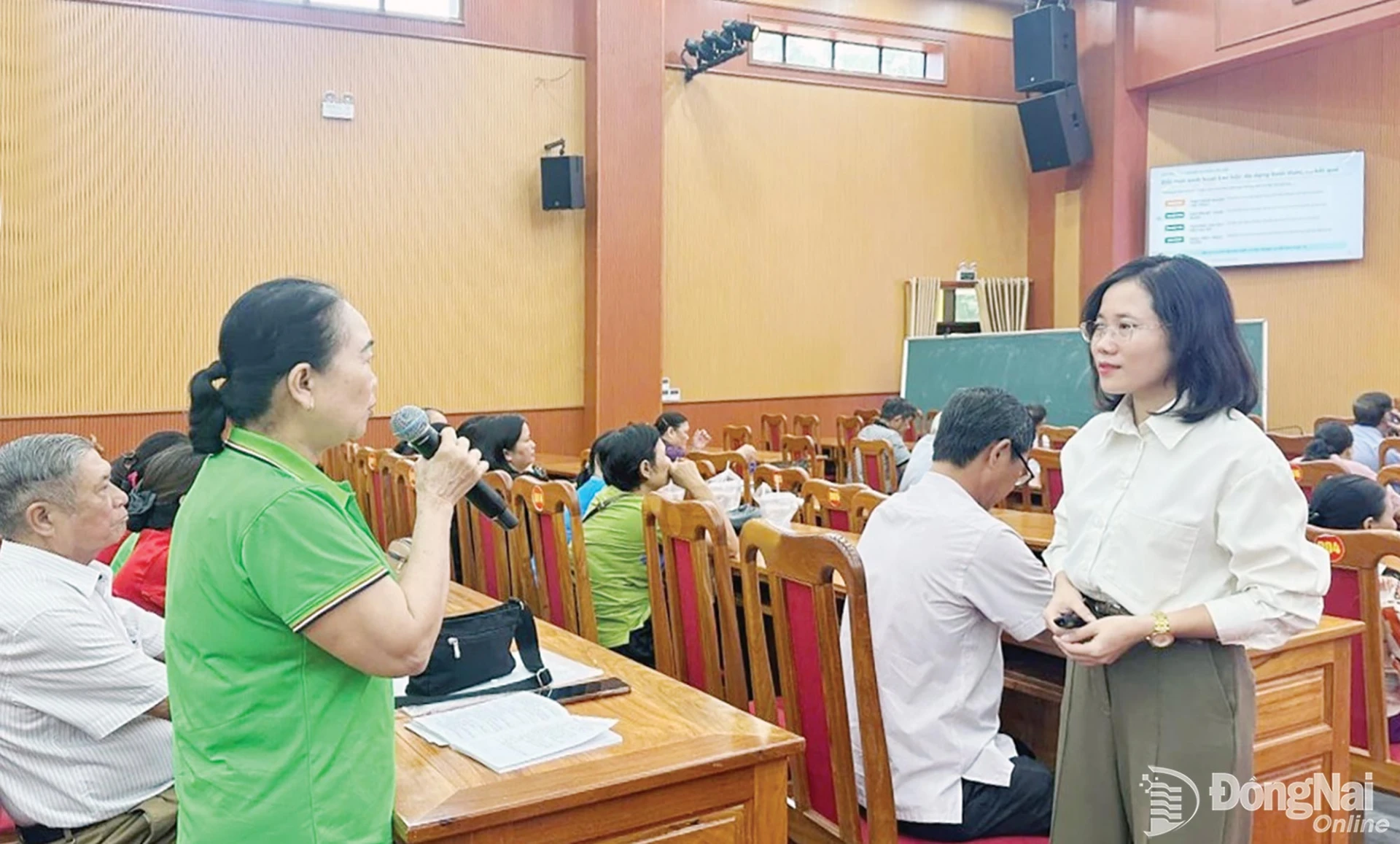 |
| Local farmers’ association officials and members discuss AI applications and digital skills to support their work and assist members with representatives of the city Farmers’ Association in Binh Phuoc ward. |
Doan Thi Mai, Chairwoman of the An Vien commune Farmers’ Association, said the association has approximately 1,300 members, most of whom are aged 50 or older. Many of them face difficulties using smartphones and accessing digital applications.
After developing its implementation plan, the association organized digital technology and transformation training for officials and members. Working with community digital technology teams, it helped members install and use the Vietnam Farmers and VNeID applications, as well as access online administrative services and make cashless payments. The association also taught members how to find information on agricultural products and farming techniques, and organized visits to trade fairs and exhibitions to introduce them to new technologies and production methods. To encourage continued learning, it established a Farmers' Club for Digital Transformation, where members can exchange ideas, practice their skills and share experiences in using digital services.
Several localities have also focused on reaching specific groups by bringing digital skills training directly to them. In Xuan Hoa commune, support teams have worked with companies employing a large number of workers to help employees install and use digital applications for work and learning. This approach reaches workers who may be unable to attend training sessions at residential areas because of their work schedules. Chon Thanh ward has organized teams to provide practical digital skills training for officials and farmers' association members, while maintaining a support desk at the ward's Public Administrative Service Center.
Ha Anh Dung, Standing Vice Chairman of the city's Vietnam Fatherland Front Committee, said digital literacy efforts should enable residents to use digital services independently rather than depend on officials to do things for them. He emphasized the importance of mobilizing young people, individuals with digital expertise and mass organizations to guide residents and help them develop practical skills.
A progress report from the City Party Committee’s Commission for Information and Education showed that, as of October 28, more than 26,200 participants across the city had completed all 29 modules in the first phase of the Digital Literacy for All movement, accounting for 80.8% of those enrolled. Across the city's 95 communes and wards, more than 14,600 participants had completed the modules, equivalent to a completion rate of 83.2%. In the second phase, more than 8,500 eligible participants have so far been identified across 46 of the city's 95 communes and wards. Local authorities are continuing to provide guidance and encourage them to take part in the program.
Dong Nai's 100-day peak campaign to promote digital literacy runs from September 17 to December 25, 2026. Its effectiveness is assessed not only through implementation progress and learning outcomes but also by how well digital skills are applied, work processes improved and tasks handled more efficiently.
Alongside online learning, localities continue to integrate digital skills training into meetings and activities at government agencies, mass organizations and residential communities. The Vietnam Fatherland Front and socio-political organizations are also working to encourage and guide their members and residents in using essential digital services. Sustaining approaches tailored to different groups will help embed the Digital Literacy for All movement in everyday community activities and ensure that it continues to meet practical needs at the grassroots level.
By H.Thao – Translated by M.Nguyet, Thu Ha





Thông tin bạn đọc
Đóng Lưu thông tin