(ĐN)- A ceremony to commemorate the 100th birth anniversary of military commander and poet Huynh Van Nghe death anniversary and 37th anniversary of his birth was held in Binh Duong province's Tan Uyen district on February 15.
(ĐN)- A ceremony to commemorate the 100th birth anniversary of military commander and poet Huynh Van Nghe death anniversary and 37th anniversary of his birth was held in Binh Duong province’s Tan Uyen district on February 15.
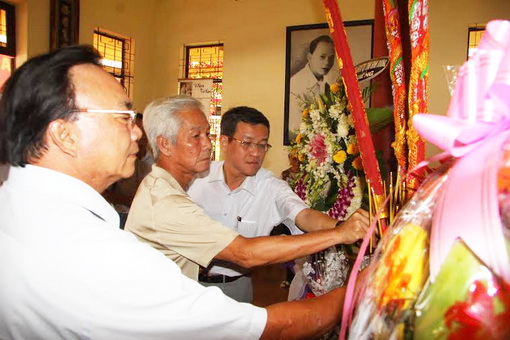 |
Attending the ceremony was Deputy Secretary of Dong Nai provincial Party Committee Le Hong Phuong, Chairman Dinh Quoc Thai of the provincial People’s Committee, Head of Department of Propaganda and Training Huynh Van Toi as well as leaders and people from other provinces and cities.
In his speech, Chairman Huynh Van Nhi of Binh Duong provincial Fatherland Front Committee recalled meaningful memories of great contribution to the national revolution of the late military commander and poet, affirming that Huynh Van Nghe is always admired as a talented military officer and loved as a patriotic poet by friends, colleagues and people.
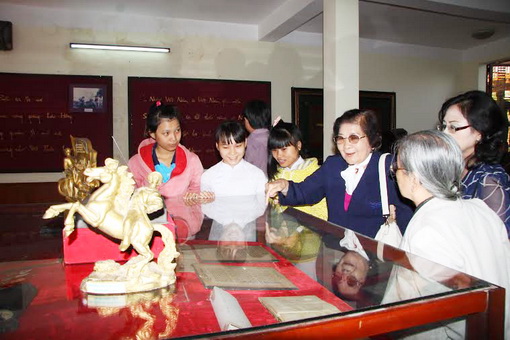 |
Also at the ceremony, 45 studious poor students from the schools named after Huynh Van Nghe were awarded scholarships valued at VND1 million each, funded by his Huynh Van Nghe’s family.
Nghe (1914-1977) came from a poor family and had a very difficult childhood. However, he studied tenaciously and was the only student of My Loc Junior High School in Binh Duong Province to receive a scholarship to enter the famous Petrus Ky High School in the former Sai Gon.
After graduating from high school, he took part in revolutionary activities against French and Japanese colonialism.
Nghe demonstrated his talent as a commander in calling on people to take part in a mission in eastern South Vietnam and changed Tan Uyen District, Binh Duong Province into a stable base during the struggle against French colonialism. He became known as the “Tiger of the eastern region.”
People also called the military commander the “Forest Poetic General” because of his hundreds of poems and writings.
Reported by C.N