
With nearly 330 years of formation and development, Dong Nai has established itself as a dynamic economic hub and a place where diverse cultural values converge and interact.
Throughout this journey, journalists in Dong Nai have quietly documented stories about the region’s people, landscapes, heritage, and cultural life through authentic and emotionally engaging perspectives, helping foster local pride and strengthen public awareness of preserving cultural identity.
Articles that extend cultural narratives
Every land has its own stories, shaped by history, people, and cultural values accumulated over generations. In Dong Nai, these stories are reflected in historical relic sites, festivals, traditional craft villages, customs, and the everyday lives of local residents. From artisans who quietly preserve traditional crafts to efforts to safeguard tangible and intangible cultural heritage, journalists have documented these stories vividly and authentically.
 |
| A reporter from Dong Nai Newspaper and Radio, Television interviews an artist about Dong Nai’s cultural and artistic life in 2026. |
Reporter Van Anh from the Features Department of Dong Nai Newspaper and Radio, Television said that writing about culture requires patience, careful observation, and deep understanding. “Writing about culture cannot be rushed. It takes time to listen to, learn, and truly understand the deeper meanings behind each story. Sometimes a custom, a personal memory, or an ordinary moment contains cultural values that deserve to be preserved,” Anh explained.
Sharing an example, Van Anh noted: “When we tell stories about the gong culture of the Choro people or the ups and downs of Bien Hoa pottery, the important thing is not merely to report a cultural feature but to convey the dedication of those who are preserving those values. Through that, readers, viewers, and listeners feel a deeper love for their homeland and a sense of pride in the land of Dong Nai.”
Since July 1, 2025, when Binh Phuoc was merged into Dong Nai, the cultural space of the new Dong Nai has become broader, richer, and more diverse. This includes historical relic sites, intangible cultural heritage in ethnic minority and border areas, traditional craft villages, and stories of young people striving to preserve the legacies left by previous generations. This diversity has created new opportunities for journalists while also requiring broader yet deeper perspectives to portray a unified cultural identity amid diversity and to fully reflect the richness of the expanded region.
Reporter Ly Na from the News Department of the Dong Nai Newspaper and Radio, Television remarked that as the administrative boundaries expanded, the cultural narrative became much broader. Ly Na shared: "Beyond familiar values, local journalists now have more opportunities to access new lands and communities with unique customs, traditions, festivals, and traditional crafts. Every field trip and every encounter with a character helps us gain a deeper understanding of the land and people of Dong Nai today."
Beyond reporting, journalism also helps connect communities with the cultural values that continue to exist in everyday life. Each journalistic work serves as a piece of a larger mosaic depicting present-day Dong Nai—a locality that is developing rapidly while preserving its traditions. Through these journalistic works, seemingly ordinary stories are documented, shared, and transformed into bridges linking the past and the present.
A bridge spreading the beauty of Dong Nai's land and people
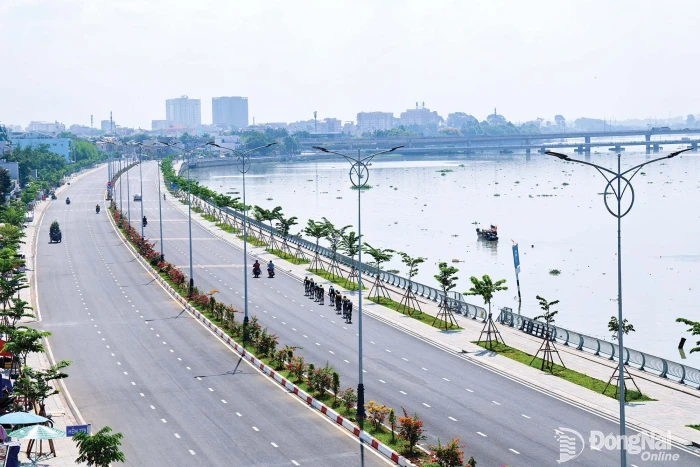
Reporter Hoang Anh, a VietNamNet resident reporter in Dong Nai, recently won third prize at the Dong Nai Moments 2026 Photography Contest with his work The Green Silk Ribbon of Tri An Lake. According to Hoang Anh, every trip to write about culture, tourism, or capture beautiful moments of Dong Nai leaves a lasting impression because behind every landscape, structure, and everyday story are cultural values that have been formed and preserved over time.
“There are places I have visited many times, yet each return reveals a new story. Tri An Lake is not merely an engineering project or a scenic attraction; it is intertwined with local livelihoods, memories, and the ongoing transformation of the region. Journalists need to find the right perspective so these stories can be told in an authentic and relatable way,” Anh said.
For Thuy Anh, who works at the General Service Center in Tran Bien Ward, cultural stories have always been a unique source of inspiration. The appeal of such topics lies not only in the cultural narratives accumulated over generations but also in how those values continue to manifest themselves through people, places, and community development.
Meanwhile, Dong Nai Newspaper and Radio, Television continues to innovate and expand the use of digital technologies while integrating multiple forms of journalism. Numerous cultural stories are now distributed through social media platforms such as Facebook, YouTube, TikTok, and Zalo, helping cultural values reach wider audiences.
In an era of rapid digital development, the way stories of Dong Nai’s culture are told has also evolved. Alongside print editions, digital products such as electronic newspapers, radio, television, short videos, podcasts, and infographics are opening up many new approaches. This helps cultural values resonate more widely across all social strata, particularly with the younger generation.
Through professional dedication and a deep love for their homeland, journalists in Dong Nai continue to document the region’s development through compelling cultural stories. Every article and image not only reflects contemporary life but also serves as a bridge connecting communities, helping promote, preserve, and enhance Dong Nai’s distinctive cultural heritage as the city advances and integrates with the nation’s broader development.
By Cam Thanh - Translated by Mai Nga, Thu Ha


Thông tin bạn đọc
Đóng Lưu thông tin