
Long Thanh International Airport is expected to begin operations in December 2026. Plans to connect the airport with Ho Chi Minh City are therefore being assessed and proposed to ensure efficient airport operations.
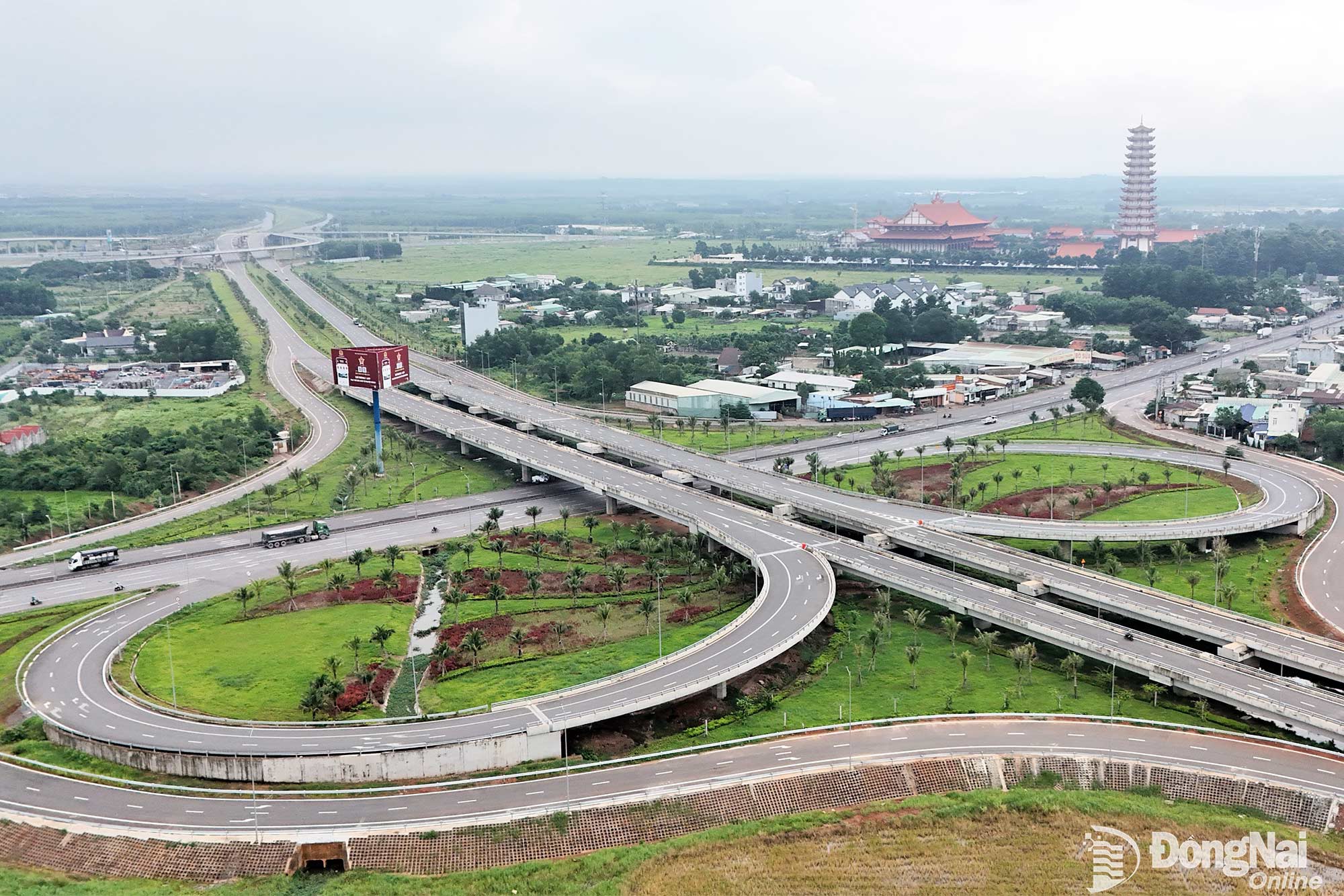 |
| The intersection of Route T1 with National Highway 51, connecting to Road 25C, is the main access route to Long Thanh Airport. Photo: Pham Tung |
Transport connectivity between Ho Chi Minh City and Long Thanh Airport is considered one of the key factors determining how efficiently the airport operates during its initial phase.
Connecting the two airports via the expressway network
During its initial operating phase, Long Thanh Airport is expected to handle up to 366 flights per week, including 322 domestic flights and 44 international flights.
According to Airports Corporation of Vietnam (ACV), most passengers using international routes at Long Thanh Airport are expected to travel to or from Ho Chi Minh City and surrounding areas. Ensuring smooth, convenient and reliable transport connections is therefore particularly important to passenger service quality and the airport’s overall operational capacity.
In the initial phase, before connecting railway lines become operational, passenger transport between Ho Chi Minh City and Long Thanh Airport will rely primarily on the road network. Two main routes are expected to provide access to the airport. The first runs via the Ho Chi Minh City–Long Thanh–Dau Giay Expressway, Nhon Trach Bridge, Ho Chi Minh City Ring Road 3 and Road 25C. The second runs via the Ho Chi Minh City–Long Thanh–Dau Giay Expressway and the Bien Hoa–Vung Tau Expressway, leading to the interchange providing access to Long Thanh Airport.
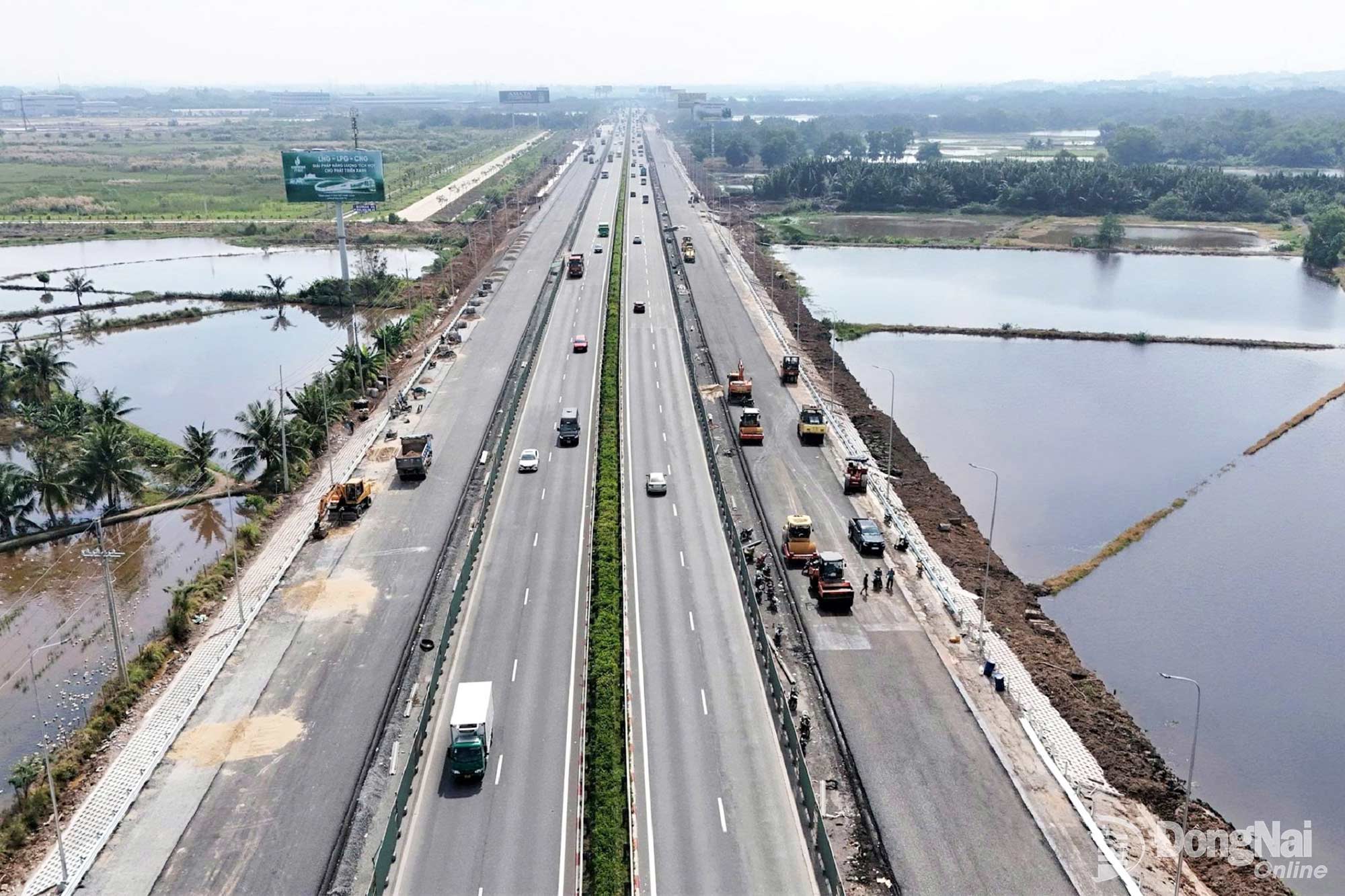 |
| Construction is underway on the Ho Chi Minh City–Long Thanh Expressway Expansion Project, a key transport link during the airport’s initial operating phase. |
Along both access routes, most projects to build, upgrade and expand roads connecting to Long Thanh Airport are being accelerated, with completion targeted for 2026.
Pham Thanh Hai, Director of the Southern Expressway Project Management Unit (SEPMU), which represents the project investor for the Ho Chi Minh City–Long Thanh Expressway Expansion Project, said construction progress had reached approximately 80% of the contract value. Contractors are making every effort to complete the project in December 2026 as scheduled. The Long Thanh Bridge component is expected to be completed in the first quarter of 2027.
Meanwhile, work on the Road 25C Construction Project, covering the section from National Highway 51 to Huong Lo 19, is also being fast-tracked. Nguyen Linh, Deputy Director of the City Traffic Construction Investment Project Management Board, said the project is expected to be completed in November 2026.
According to ACV, relevant authorities, transport infrastructure agencies and local governments are coordinating to study integrated traffic management solutions for the two main airport access routes. They are also working to develop high-capacity public transport services, strengthen connectivity between different transport modes and regulate traffic flows farther from the airport. These measures aim to ensure passengers can reach the airport conveniently and safely, with greater certainty over journey times. One of the key solutions is to establish direct transport services between Tan Son Nhat International Airport and Long Thanh Airport via the existing expressway network. This would facilitate passenger transfers and optimize the transition of operations between the two airports.
Proposing priority traffic arrangements
To improve transport connectivity and make travel easier for passengers during Long Thanh Airport’s initial operating phase, ACV has proposed studying priority measures for transport services connecting the airport, particularly along major corridors between Ho Chi Minh City and Long Thanh.
Specifically, ACV has proposed considering priority traffic arrangements for buses and inter-airport shuttle services at key intersections and along major connecting routes. According to the corporation, these measures would help ensure more predictable journey times and improve the reliability of transport services for air passengers.
To ensure passenger transport is organized efficiently, conveniently and safely from the outset of airport operations, ACV is developing a traffic flow management plan and allocating designated areas for different types of vehicles at Long Thanh Airport.
ACV has also proposed establishing fixed pick-up and drop-off points, with consistent signage and identification, in central urban areas, at transport hubs and in locations with high passenger concentrations. A dedicated network of these points would make airport transport services easier for passengers to access, while also supporting traffic management and improving service quality.
For passengers transferring between Tan Son Nhat and Long Thanh airports, ACV said the top priority is to ensure that connecting journeys are convenient, seamless and completed on time. Relevant units will therefore coordinate to develop dedicated transport arrangements between the two airports, using direct shuttle services with flexible frequencies and schedules aligned with flight operations. Particular attention will be paid to peak periods to optimize passengers’ travel times.
By Pham Tung – Translated by Mai Nga, Minho



Thông tin bạn đọc
Đóng Lưu thông tin