
Honey beekeeping is a nomadic occupation, with beekeepers constantly on the move in search of flowering plants. They transport their colonies from one place to another, setting up apiaries in orchards and gardens where nectar is abundant.
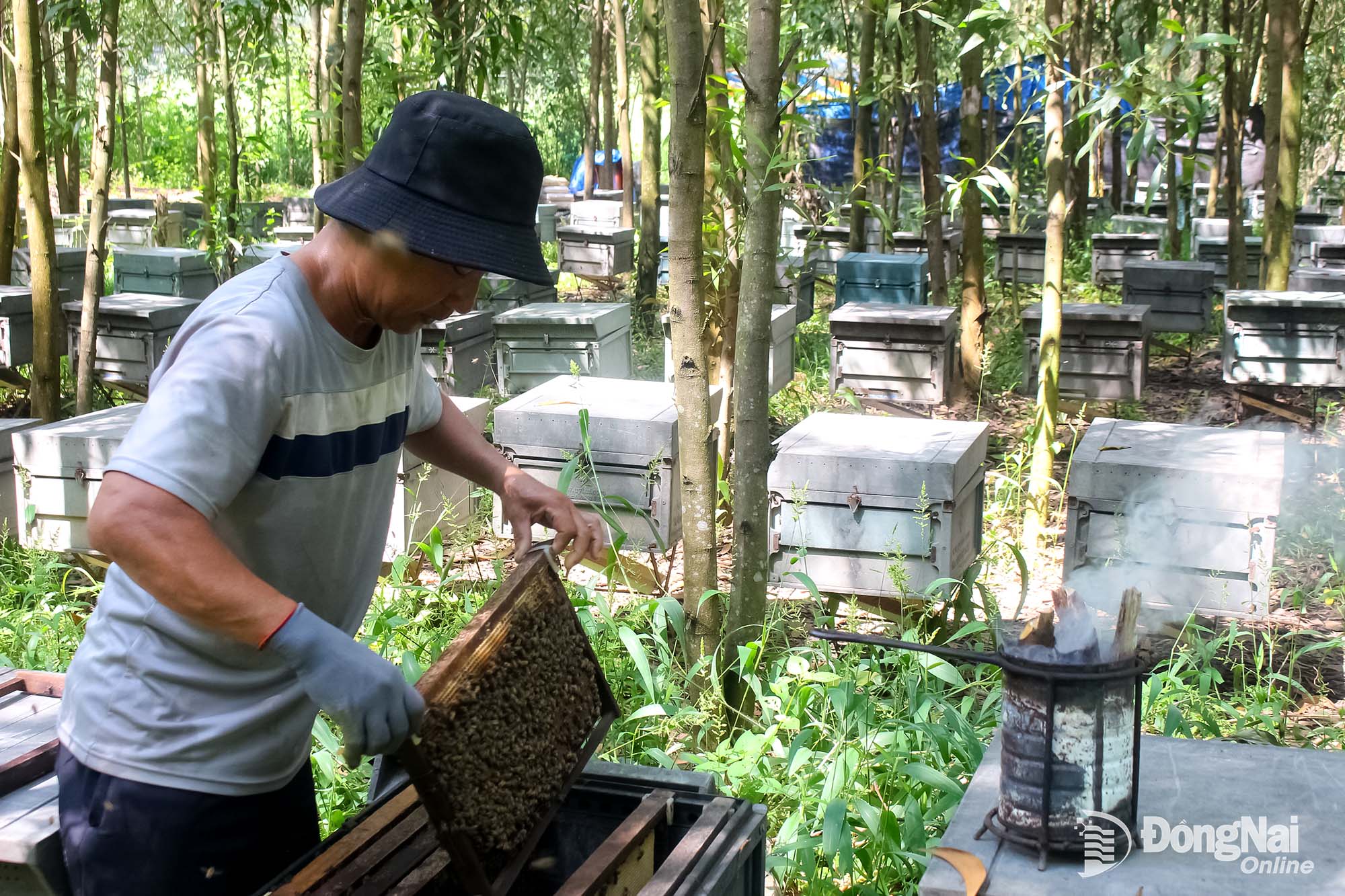 |
| Tu Xuan checks his beehives in Vinh An 2 Quarter, Tri An Ward. Photo: Doan Phu |
Moving bee colonies requires careful planning, from finding suitable flowering areas to arranging transport and ensuring the safety of both the bees and their keepers.
Following the flowers
A soft tune sounds from the phone in Nguyen Van Hai’s pocket. Known locally as Nam Hai, he is from Gia Kiem Commune and is currently tending his bees in Xuan Tien Hamlet, Xuan Que Commune. White smoke drifts from a bee smoker as he and his son work among their 400 hives. The scene may look peaceful, but keeping the colonies healthy requires constant attention.
“Honey beekeepers are constantly on the move, spending much of the year away from their families. Their bees are their livelihood. If they fail to care for their colonies properly, they risk falling into debt and putting their families under financial strain.”
Nguyen Van Nga, a beekeeper from Tay Ninh Province who has placed his hives in Xuan Thanh Commune, Dong Nai City
“After breakfast and a cup of coffee, my son and I spend the day tending the bees. We provide supplemental feed and inspect each hive to make sure the colonies are healthy,” Nam Hai said.
After nearly two months in Xuan Tien Hamlet, Hai and his son plan to stay for just over another month before moving to Duc Trong Commune in Lam Dong Province, where coffee, cashew and rubber trees provide abundant nectar. They will prepare for the main honey-harvesting season, which lasts from December through July or August of the following year.
Whenever they relocate their colonies to an area with new nectar sources, Hai and his son must contact landowners and local authorities and arrange transport. The move costs more than VND10 million, depending on the distance. Because the bees need constant care, the two take turns going home to visit their families so that someone is always on hand to tend the apiary.
Deep inside a melaleuca forest along Road 768 in Vinh An 2 Quarter, Tri An Ward, the air is filled with the buzzing of bees. The apiary belongs to Pham Minh Xuan, known as Tu Xuan, who is from Gia Kiem Commune and keeps 300 hives there. Xuan began traveling with his father on beekeeping trips through the Central Highlands, southeastern Viet Nam and central Viet Nam at the age of 17. Five years later, his father gave him 200 hives to start his own operation. Since then, Xuan has continued to move from place to place with his bees. Now 50 and unmarried, he has devoted much of his life to the nomadic trade.
“Bees need flowering plants to collect nectar, so beekeepers cannot stay in one place permanently. They must move their apiaries to wherever flowers are in bloom, living alongside local residents and adapting to the trees, the weather and the changing seasons,” Xuan said.
Life on the move with the bees
Tu Xuan once dreamed of owning an eight-hectare farm in Bao Lam 5 Commune, Lam Dong Province, but the plan never materialized. Instead, he has continued moving his 300 hives from place to place in search of flowering crops and a steady income. Even during Tet and other holidays, he stays in the fields to care for his bees.
Meanwhile, Phung Van Dung, known as Bay Dung and originally from Xuan Dinh Commune, has moved his 400 hives to Hieu Liem Quarter, Tri An Ward. He plans to keep the colonies there until late November or early December to allow them to recover and grow stronger before moving them to rubber-growing areas in the northern communes of Dong Nai, which were formerly part of Binh Phuoc Province.
“Beekeepers in Dong Nai seek out areas with abundant flowering plants to place their hives. The trade provides an income and a way to make a living, while also helping them forge friendships with people far from home.”
Nam Hai, a beekeeper from Gia Kiem Commune
Bay Dung said that although bees benefit crops, not all orchard owners welcome beekeepers setting up their hives nearby. Some are wary of people they do not know or fear that inappropriate behavior could lead to disputes with local residents.
Nguyen Van Nga, from Tay Ninh Province, currently keeps his hives in Xuan Thanh Commune, Dong Nai. He said he has spent more than 20 years moving his bee colonies across provinces and cities throughout Viet Nam. Whenever he selects a new site, Nga spends an entire week contacting landowners, completing the necessary procedures, signing a rental agreement, and carefully checking how farmers within a one-kilometer radius spray pesticides to prevent crop diseases. Only then does he decide to move his bees there. This approach allows his 350 hives to remain at a site for extended periods, helps keep his bee colonies healthy and minimizes the risk of incidents that could force him to relocate, resulting in additional costs.
After the storms and heavy rains typical of October, longer sunny spells begin to dry out orchards and fields, and many plants start flowering again. The changing weather signals a favorable time for beekeepers to move their colonies to new locations. Returning to places where they are already known and trusted by landowners brings particular satisfaction after months on the road with their bees.
By D. Phu – Translated by M.Nguyet, Minho





Thông tin bạn đọc
Đóng Lưu thông tin