
The EU Deforestation Regulation (EUDR) introduces new requirements for the origin of raw materials and supply chain transparency.
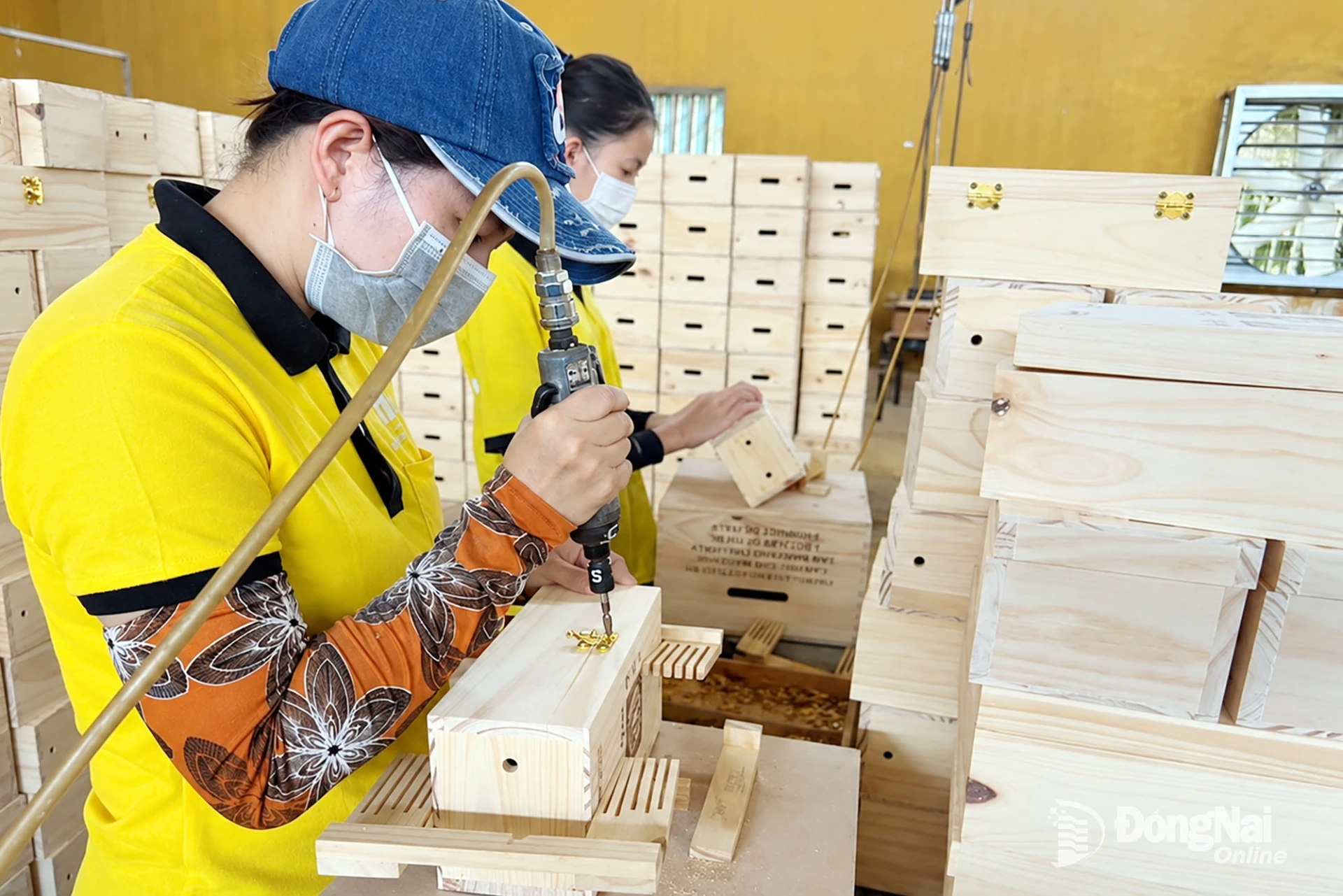 |
| Workers at Hoang Tan Hoa Co., Ltd. in Long Binh Ward. Photo: Vuong The |
For Vietnam’s wood processing and export industry, complying with the regulation not only helps businesses maintain their market access but also encourages them to upgrade their technology, develop sustainable raw material supply areas and enhance their competitiveness.
Proving timber origins key to retaining orders
For wood exporters, the EUDR is more than a documentation requirement. It affects raw material sourcing, production management and their ability to retain orders. Buyers may require evidence tracing timber back to the specific plots where it was harvested, meaning gaps in supply chain information can jeopardize entire shipments.
This presents a significant challenge for many businesses producing wooden products and furniture for international markets. Under the EUDR, products covered by the regulation must be proven not to be linked to deforestation after December 31, 2020, comply with the relevant laws of the country of production and meet applicable due diligence requirements. Geolocation data identifying raw material sourcing areas is essential for verifying the origin of these products.
Huynh Thanh Van, Chairman of the Board of S Furniture Joint Stock Company (JSC) in Ho Chi Minh City, said supply chains involving multiple intermediaries posed a major challenge. Information about plantations, harvesting areas and supporting documents did not always pass fully from one link to the next. Although processing companies needed to verify their raw material inputs, they often lacked the means to validate information at source. Without adequate evidence of timber origins, shipments could be delayed or orders lost.
Nguyen Cong An, Director of Eco Technology 2A JSC in Tran Bien Ward, which provides manufacturing consultancy and solutions, said technology was essential to helping exporters meet EUDR requirements. Businesses need to geolocate raw material production areas, cross-check the data against forest maps, maintain supporting records and trace materials throughout the supply chain. These tasks can add significantly to compliance costs, particularly for small businesses and smallholder producers.
Dr. Truong Tat Do, an expert from the Department of Forestry and Forest Protection under the Ministry of Agriculture and Environment, said businesses needed to distinguish between a plantation database and a traceability system. A plantation database contains basic information about each plot, such as its location, boundaries, identification code and legal documents. A traceability system, by contrast, follows raw materials through harvesting, transportation, preliminary processing, manufacturing and export. The two systems must be linked to match raw material sources with individual batches of finished products.
Linking raw material sources and promoting green production
The challenges facing the wood industry extend beyond technology to data reliability and coordination across the supply chain. Incomplete land records, inconsistent plot boundaries and missing documentation can all drive up compliance costs. Software alone cannot resolve these problems unless businesses also standardize their procurement and raw material management procedures.
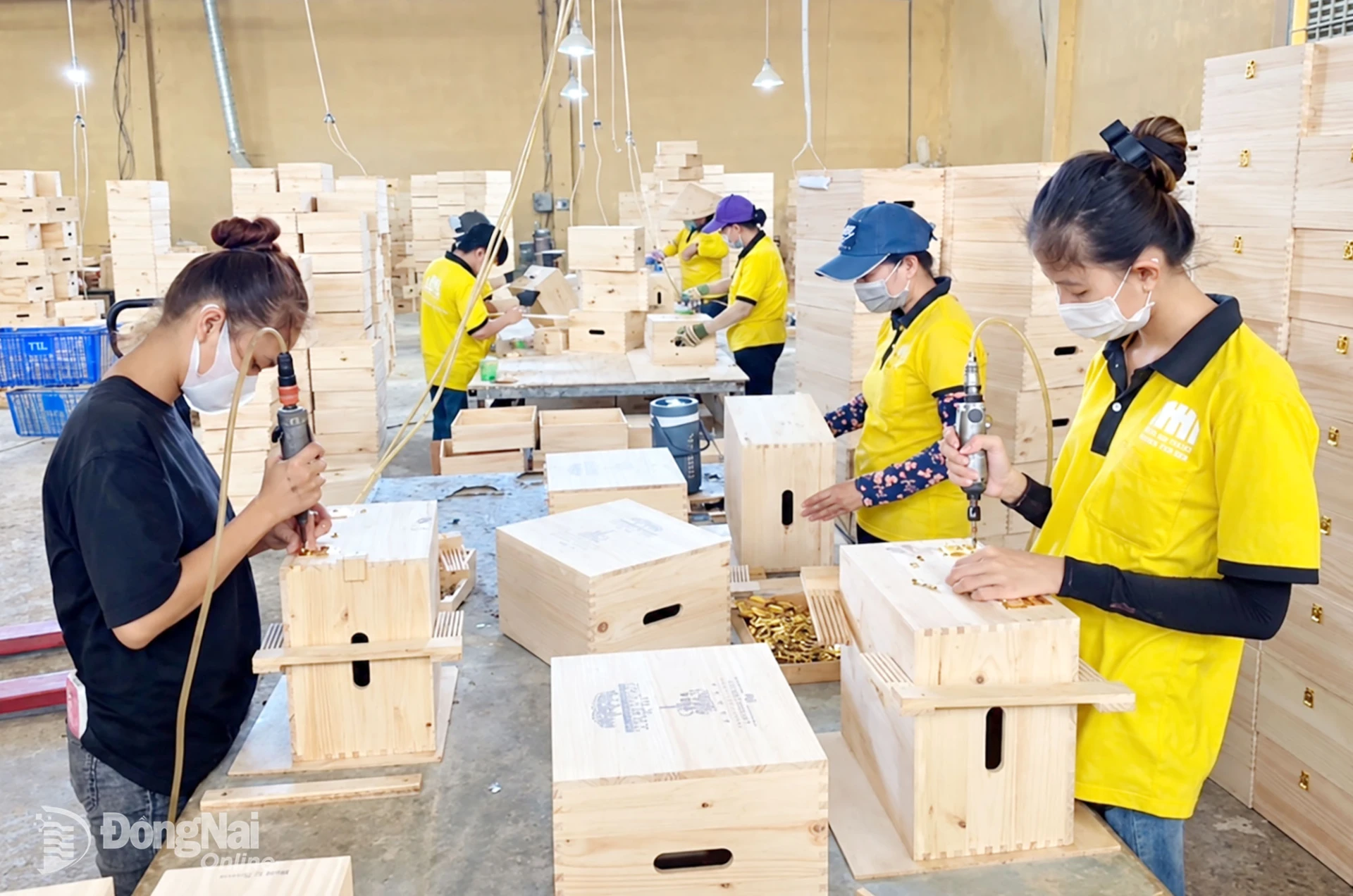 |
| Workers at Hoang Tan Hoa Company in Long Binh Ward. Photo: Vuong The |
Dong Nai needs to strengthen links between wood-processing businesses, forest owners, forest plantation households, preliminary processing facilities and timber buyers. Efforts to identify the coordinates of raw material production areas, review legal documentation, cross-check forest maps and retain supporting documents should be undertaken from the outset of the supply chain. Plantation identification codes and certifications issued by the Forest Stewardship Council (FSC), which aim to ensure responsible and sustainable forest management, or the Programme for the Endorsement of Forest Certification (PEFC), the world's largest sustainable forest management certification system, can help standardize raw material sourcing but do not replace due diligence obligations under the EUDR.
Businesses should first identify which products fall within the EUDR’s scope, classify their suppliers and flag raw material sources with missing data. They should then fill documentation gaps, establish batch identification procedures and ensure that raw materials can be matched with finished products. A phased approach would help businesses prioritize technology investments and avoid spreading resources too thinly.
Nguyen Phuong, Chairman of the Dong Nai Wood and Handicraft Association, said the association would continue to support businesses, particularly small and medium-sized enterprises, through training, guidance on preparing documentation and facilitating the exchange of information on raw material sourcing areas. Businesses also need to keep track of new EU guidance, as their specific obligations depend on the type of product, their role and the regulations currently in force.
Meeting EUDR requirements is only one aspect of the wood industry’s transition to greener production. Businesses also need to improve energy efficiency, reduce raw material waste, upgrade kiln-drying technology, make better use of by-products and strengthen waste management. Phasing in green investments can help manufacturers meet environmental requirements while preserving operational efficiency and price competitiveness. Closer cooperation among businesses, suppliers and regulators to improve supply chain transparency could turn EUDR compliance into a catalyst for a more resource-efficient and sustainable wood industry.
Under the current implementation schedule, the EUDR is expected to apply to large and medium-sized operators from December 30, 2026, and to most micro and small businesses from June 30, 2027, depending on the business category and the scope of its obligations. Vietnam is classified by the EU as a low-risk country under the regulation, but this classification does not exempt businesses from their obligations to demonstrate the origin of their products and conduct due diligence.
By V. The – Translated by M.Nguyet, Minho



Thông tin bạn đọc
Đóng Lưu thông tin