
On April 9, Nguyen Kim Long, Member of the Provincial Party Standing Committee, Standing Vice Chairman of the Dong Nai People’s Committee, and Head of the Provincial Steering Committee for the 2026 Economic Census, had a working session with a central inspection delegation led by Nguyen Thi Huong, Director General of the National Statistics Office under the Ministry of Finance and member of the Central Steering Committee for the 2026 Economic Census, to review the implementation of the census in the province.
 |
| Delegates attend the working session. Photo: Huy Anh |
In organizing the implementation, the Provincial People’s Committee and the Provincial Statistics Office have issued a comprehensive and timely system of directives and guidelines, ensuring a solid legal framework and unified management throughout the census process.
The province has completed the listing of villages and residential clusters, as well as the delineation of survey areas for household businesses in line with central regulations. As a result, Dong Nai has identified 1,772 villages and residential groups, 2,214 enumeration areas, and 222,988 household production and business establishments.
The recruitment and training of enumerators, supervisors, and team leaders have been given due attention. In addition, the compilation of lists covering household production and business establishments, as well as religious and belief establishments, along with inspection, supervision, and communication efforts at both provincial and grassroots levels, have been carried out in a coordinated and effective manner.
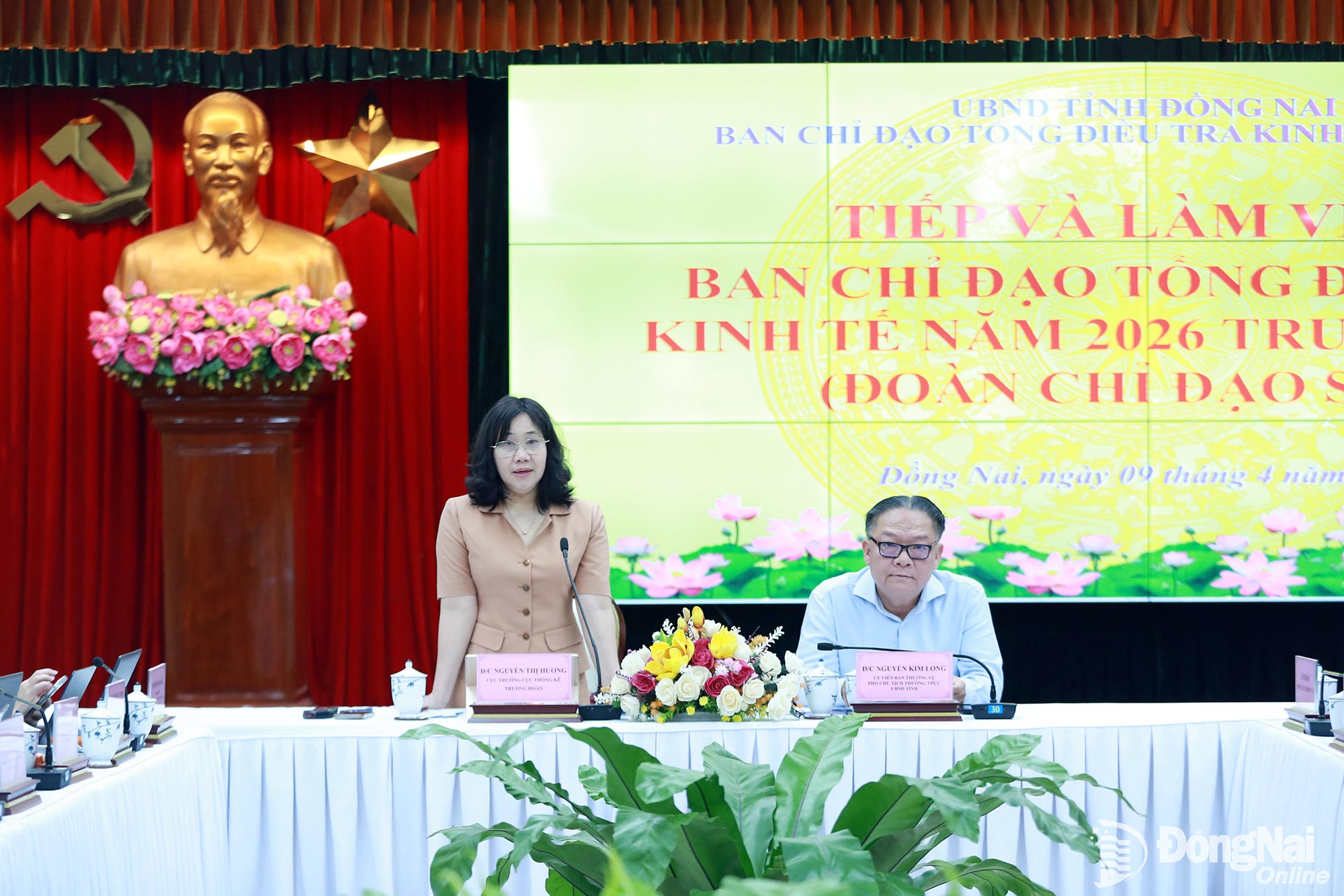 |
| Nguyen Thi Huong, Director General of the National Statistics Office, works with Dong Nai authorities. Photo: Huy Anh |
Regarding Phase 1 data collection, as of March 10, 2026, Dong Nai had completed all survey forms, reaching 100 percent. Data review, verification, and cleaning are currently underway.
Moving into Phase 2, the province has completed a review of enterprises, recording approximately 51,300 businesses. Of these, 49,182 are operational, while 2,118 have dissolved, are pending dissolution, or could not be located. The province also has 366 non-public service units and 365 associations currently in operation. During this phase, communication efforts continue to be intensified through diverse and flexible channels. Meanwhile, the Provincial Steering Committee is strengthening inspection and supervision of surveys covering enterprises, public service units, and associations through digital platforms, alongside scheduled field inspections.
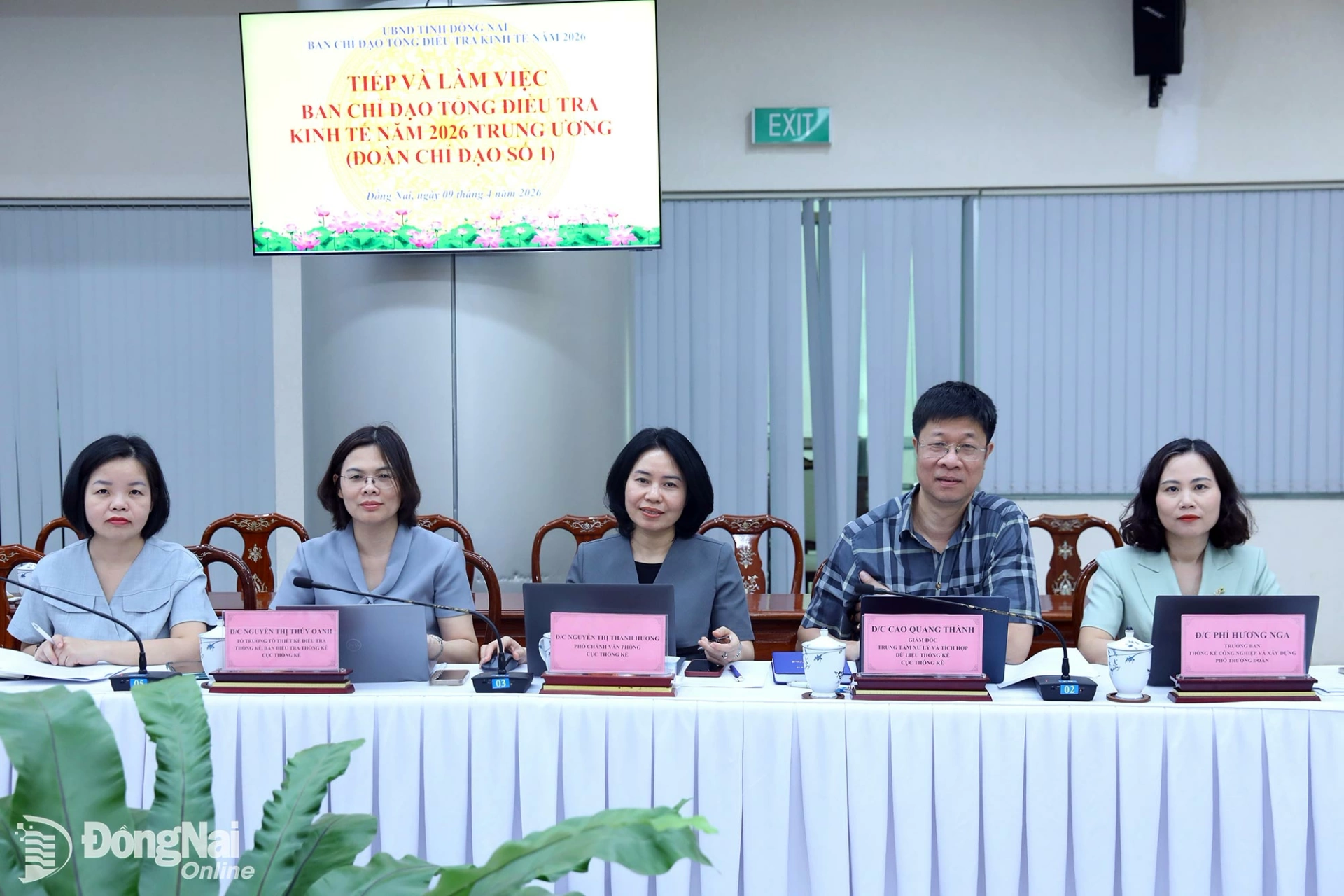 |
| The central delegation works in Dong Nai. Photo: Huy Anh |
Nguyen Thi Huong highly appreciated Dong Nai’s results, while emphasizing that in Phase 2, members of the Provincial Steering Committee should be assigned to closely follow sectors, departments, and communes, and maintain direct engagement at the grassroots level. She stressed the importance of close coordination between provincial and commune-level steering committees, based on the principle of clear personnel, clear tasks, and clear outputs.
Furthermore, local units should promptly update information and report any difficulties in data collection for timely resolution. Specific responsibilities should be assigned to each member, locality, and sector involved in the census. Once data are finalized, the provincial statistics office must produce a comprehensive report reviewing 2025 outcomes, using the data as a basis for planning in 2026 and subsequent periods.
 |
| Nguyen Kim Long, Standing Vice Chairman of the Dong Nai People’s Committee, speaks at the meeting. Photo: Huy Anh |
For his part, Standing Vice Chairman Nguyen Kim Long affirmed that Dong Nai considers the 2026 Economic Census a key task and has directed its implementation in a determined manner to meet central targets. The census is expected to generate the largest national database following the implementation of the two-tier local government model. This will serve as a foundation for assessing the “health” of Dong Nai’s economy and reflecting its overall strength.
He therefore called on members of the Steering Committee to enhance inspection, supervision, and oversight of each commune and ward to ensure the most accurate and reliable data collection.
By Binh Nguyen – Translated by M.Nguyet, Thu Ha


Thông tin bạn đọc
Đóng Lưu thông tin