
Dong Nai is striving to become a logistics hub of southern Vietnam and a key international trade gateway. Especially, as Long Thanh International Airport comes into operation and infrastructure becomes increasingly synchronized, logistics is expected to emerge as a critical pillar of economic development.
 |
| Phuoc An Port, the largest seaport in Dong Nai, an important logistics center in the region. |
To align with global trends and enhance service competitiveness, both local authorities and businesses are accelerating efforts to develop modern, green logistics.
Toward a national logistics hub
Currently, Dong Nai spans over 12,700 square kilometers and has a population of nearly 4.5 million. The province holds rare advantages, including Long Thanh International Airport as a global aviation gateway; Phuoc An Port, a deep-water seaport directly connected to the Cai Mep–Thi Vai port system; as well as a well-established network of inter-regional expressways and seaports with large cargo-handling capacity. Along with that is the Hoa Lu international border gate system and main and sub-border gates with Cambodia, creating favorable conditions for the formation of cross-border trade corridors.
Alongside its transport infrastructure, Dong Nai boasts a robust industrial base with dozens of industrial parks among the largest nationwide. In 2026, several new industrial zones—spanning thousands of hectares and located near Long Thanh Airport—are expected to be put into operation. This is an important foundation for forming a multimodal connection network, creating room for logistics to develop in depth, instead of merely functioning as transportation.
At the national level, logistics is increasingly viewed as a strategic component, with a target of reducing logistics costs to 12–15% of GDP by 2035 and establishing logistics centers of international scale. This presents a major opportunity for infrastructure-rich localities like Dong Nai, which aims to become a major southern transshipment gateway by 2030, supported by a dynamic, comprehensive, and flexible infrastructure system including road, rail, air, inland waterway, and maritime transport.
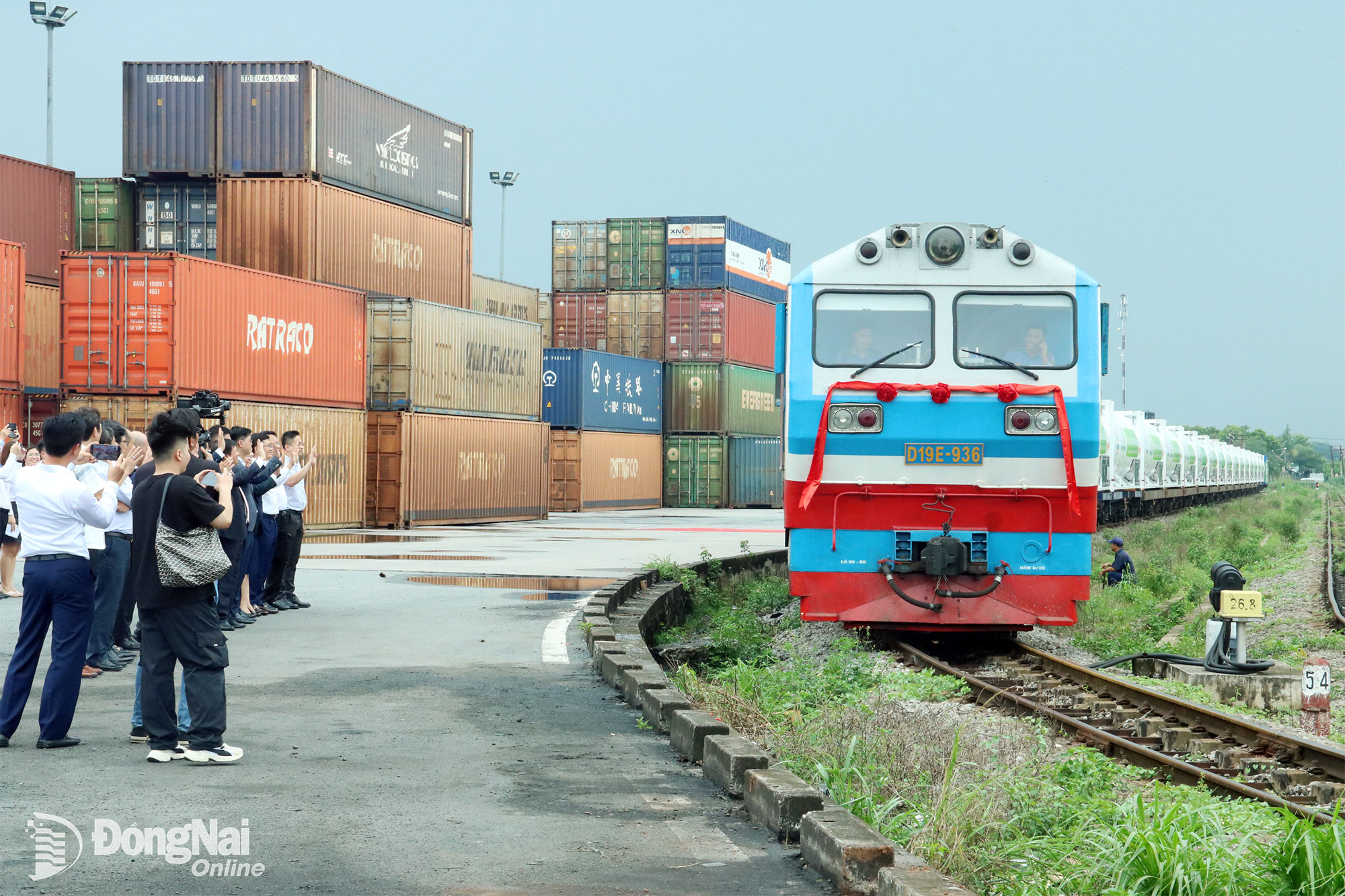 |
| Trang Bom Railway Station - an important station for freight transportation by rail. Photo: Vuong The |
As Dong Nai prepares for its transition to a centrally governed city, it is repositioning itself within the Southeast region’s development structure. In this process, Dong Nai’s logistics sector is steadily asserting its role as a core pillar of the local economy. According to Phan Dinh Canh, Chairman of the Dong Nai Logistics Association, the logistics industry is gradually playing an important role, as a pillar in the economy. With its existing advantages, Dong Nai has strong potential to become a leading logistics center in Southern region.
Tran Thanh Hai, Deputy Director of the Import-Export Department under the Ministry of Industry and Trade noted that Dong Nai is one of the localities that has taken bold steps and boasts many advantages for logistics development. In addition to road and waterway, air logistics will be a distinct advantage, associated with Long Thanh Airport. With its stature, Dong Nai needs to set the goal of building the Long Thanh Airport area into an important cargo transit point for the region and the country.
According to Tran Thanh Hai, despite Dong Nai’s large scale and leading development potential in the country’s logistics sector, the province needs to address its own bottlenecks. That is the fragmented and unsynchronized development of logistics infrastructure. At the same time, it is necessary to develop hard infrastructure, soft infrastructure, and digital infrastructure from transportation, warehouses, and dry ports to data management and supply chain connectivity. Because a logistics chain only operates effectively when there is interlinkage between commercial, transportation, and information technology infrastructure.
Developing green logistics services
Developing green logistics is an inevitable trend and an important criterion for evaluating the sustainable development of the entire logistics industry. When businesses apply green logistics in their strategy, in the long run, they will increase the number of customers, boost revenue, cut costs, and enhance competitiveness.
According to experts, Vietnam has great potential to become a new logistics hub in the region if it continues to improve infrastructure, simplify procedures, and develop green logistics. Currently, the process of greening logistics in Vietnam faces many challenges, especially as businesses seek deeper access to the EU market.
Dong Nai’s logistics network is being systematically planned, with key hubs strategically located in areas such as Long Thanh Airport, Phuoc An Port, Trang Bom, Loc Ninh, Chon Thanh, Dong Xoai, and Dong Phu. These hubs are designed to ensure seamless connectivity among seaports, airports, border gates, and industrial zones.
These are the requirements that businesses in Dong Nai's logistics service sector are gradually implementing, realizing the goal of green development. Phuoc An Port is a seaport, covering an area of nearly 800 hectares, with a total investment of nearly 20 trillion VND, making it the largest seaport in Dong Nai province. Phuoc An Port identifies net zero as a core objective in its long-term development strategy. The unit is heavily investing in green port infrastructure, modernizing equipment using clean energy, with most of its operating system transitioning to electrification.
Dong Nai Port also aims to promote digital transformation with the implementation of GTOS (General Cargo Handling Software System) and efficient exploitation of the E-port electronic port to improve service quality, facilitate customers, and optimize management and operations throughout the entire port system's activities.
Despite progress, challenges remain. Modern logistics is no longer limited to warehousing and transportation; it requires the integration of technology, data, institutions, and operational capacity. According to Phan Anh Tuan, Director of Tan Cang Long Binh Joint Stock Company, businesses want the State to accelerate administrative procedure reform in the management of logistics activities towards digitalization, intelligence, compliance with international standards, improving the quality of human resources, and perfecting the investment environment...
By Vuong The – Translated by Mai Nga, Thu Ha


Thông tin bạn đọc
Đóng Lưu thông tin