
No longer confined to villages and hamlets, the sounds of gongs, melodies of lithophones, folk dances, and distinctive rice goddess worship rituals of ethnic minority communities in Dong Nai are being revived and promoted through cultural exchanges and arts festivals both within and beyond the city.
Each trip not only gives artisans an opportunity to perform and pass on their cultural heritage but also helps bring Dong Nai's cultural identity closer to the public.
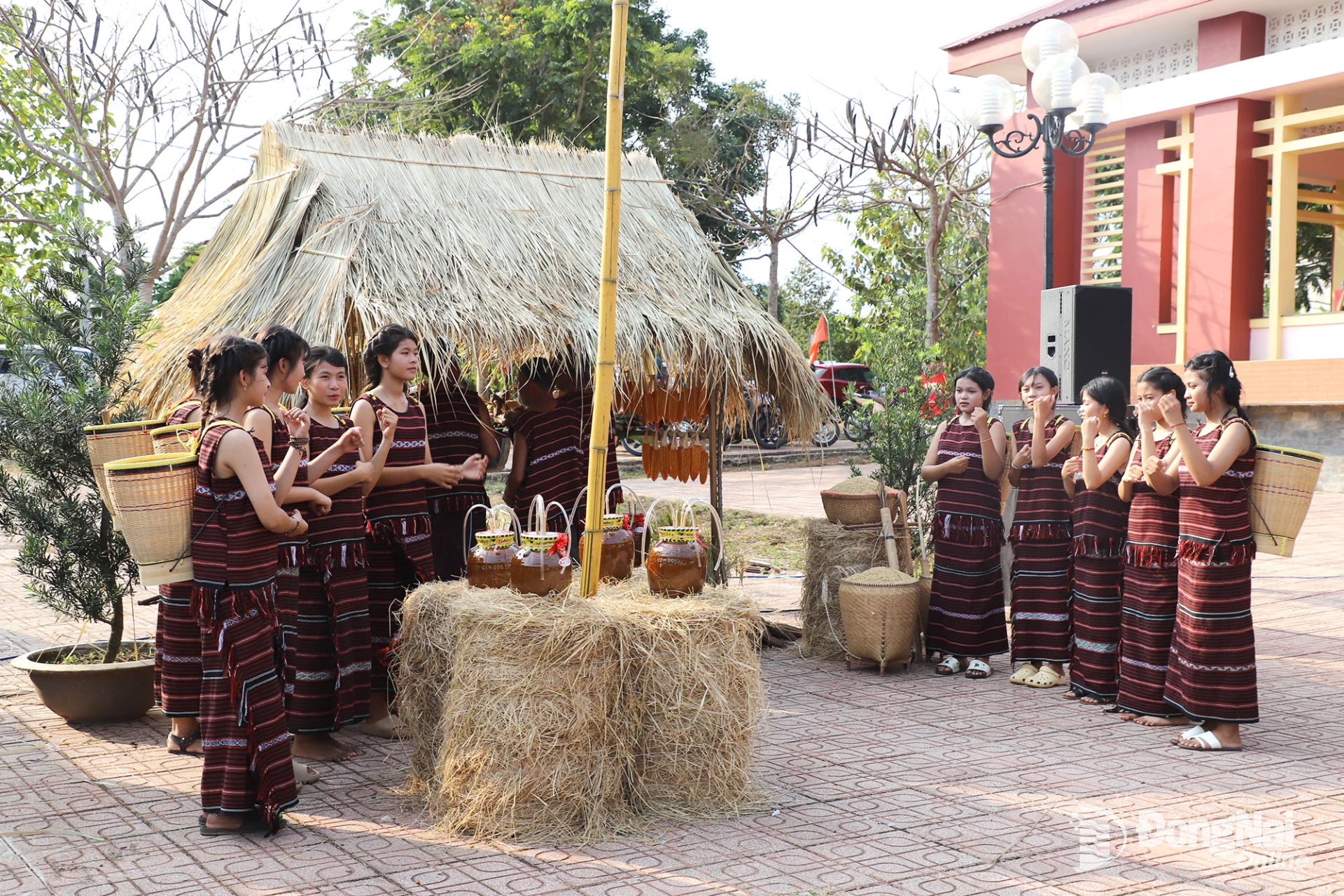 |
| The restored Sayangva Festival of the Cho Ro people is featured at numerous festivals and cultural performances, helping showcase Dong Nai's rich cultural heritage. |
Bringing ethnic minority culture to larger stages
From October 30 to November 8, Ma ethnic artisans from Ta Lai Commune are participating in the Gong Festival – Wild Sunflower Week – Chu Dang Ya Volcano 2026 in Gia Lai Province. At the event, Ma ethnic people from different generations are performing gong music, traditional songs and dances, showcasing distinctive aspects of their cultural life in Dong Nai to local residents and tourists.
For Ka Thi Ngoc Huong, a Ma woman from Ta Lai Commune, the festival is an opportunity to interact with fellow artisans, learn from their performance experience and showcase the community's cultural heritage at a large-scale event. Through traditional gong performances, folk songs, and dances, she hopes to help local residents and tourists learn more about the cultural life of the Ma people in Dong Nai while fostering pride in their ethnic identity, particularly among younger generations.
Alongside the Ma community, the S’tieng people of Tan Hung Commune also brought their traditional culture to the nation's capital through activities held at the Viet Nam National Village for Ethnic Culture and Tourism in 2026. S’tieng artisans reenacted the Blessing and Peace Ceremony of the S’tieng people at the start of spring. They also presented artistic performances, including S’tieng Girl, I Sing to Call the Sun, and S’tieng Eyes along with traditional dances such as Planting Rice on the Hillside, Fish-catching Dance, and The Sound of Pestles in Bom Bo Hamlet. Another highlight was a performance on the Loc Hoa lithophone, a national treasure dating back to approximately 2500 BC.
Thi Gion, an S’tieng woman from Hung An Hamlet in Tan Hung Commune, said emotionally, "The S’tieng people are delighted and deeply proud to bring our gongs and reenact our traditional festival in Hanoi. After the trip, I have been working with village elders, respected community members and other local S’tieng people to help preserve and promote our cultural identity and establish a shared space for gatherings, community activities and the transmission of traditional culture."
In addition to the Ma and S’tieng communities, the Cho Ro people in Dong Nai have continued to make their mark at national cultural festivals and performances. Members of the Cho Ro gong troupe from La Nga Commune, together with Cho Ro people from Binh Loc, Bao Vinh, and Phu Ly, participated in the Great Solidarity of Ethnic Groups - Vietnamese Cultural Heritage Week 2024 in Hanoi and the Festival of Folk Cultural Performances of Ethnic Groups in the Truong Son–Central Highlands Region, held in Quang Ngai in 2022.
According to village elder Dieu Liet of La Nga Commune, participation in cultural festivals and performances provides the Cho Ro community with opportunities to introduce its traditional cultural values to a wider audience. At these events, artisans reenact the Sayangva Festival (Rice Goddess worship ritual) in accordance with ancestral customs. They also perform gong music, play the chinh k'la bamboo zither, and present traditional folk songs and dances. For Dieu Liet, each opportunity to showcase Cho Ro culture in a new setting serves as a reminder to younger generations of their roots and the profound significance of their ancestral customs, encouraging them to uphold and preserve their cultural heritage.
The Dong Nai Department of Culture, Sports and Tourism has sent an official letter to the Hanoi Department of Culture and Sports to register for activities at the Vietnam National Village for Ethnic Culture and Tourism in 2027. Cho Ro artisans, village elders, and residents from across Dong Nai City will reenact the Sayangva Festival in accordance with ancestral rites. As the most important annual festival of the Cho Ro community, the event is held to express gratitude to the deities and pray for health and prosperity in the new year.
Linking cultural preservation and promotion with tourism development
Practical experience gained through cultural exchanges and performances show that these promotional activities help bring traditional heritage closer to the public while encouraging ethnic minority communities to take an active role in preserving their cultural identity. However, ensuring the long-term preservation of these values requires more than occasional stage performances or festival reenactments. Cultural preservation must also be integrated into community cultural spaces and linked with practical activities in contemporary life, including tourism development.
In Dong Nai, numerous traditional festivals and cultural practices of ethnic minority communities have been preserved, restored, and promoted. Notable examples include the Sayangva Festival of the Cho Ro people, the Dua Tpeng (Pha Bau) Festival of the Khmer community, peace and friendship rituals of the S’tieng people, and the Long Tong Festival of the Tay and Nung ethnic groups. These activities play an important role in attracting local residents and visitors to explore and experience traditional cultural heritage.
According to Ton Thi Thanh Tinh, Director of the Dong Nai Culture and Cinema Center, the center has focused in recent years on organizing artistic programs, reenacting the Sayangva Festival, and presenting ethnic gong performances and traditional folk music. Many of these programs have received prestigious awards at national and regional festivals. These events provide opportunities for artisans and ethnic minority communities to exchange experiences in cultural preservation while introducing their rich cultural heritage to domestic and international audiences, forge connections and promote tourism development in the city.
Sharing this view, Nguyen Ngoc Yen, Director of the Dong Nai Museum, said, "In the coming period, the museum will continue to strengthen efforts to preserve and promote ethnic minority culture through the digitization of heritage data and the organization of classes to pass on traditional gong-playing skills. We will also promote the role of artisans, village elders and local communities in preserving and transmitting traditional cultural values. These efforts will help improve the material and spiritual lives of ethnic minority communities while creating favorable conditions for the development of local cultural tourism."
By Cam Thanh – Translated by Minh Hong, Thu Ha


Thông tin bạn đọc
Đóng Lưu thông tin