
Over the years, the Dong Nai Nature and Culture Reserve (DNNCR), located in Tri An Ward, has implemented numerous measures to improve the habitats of wild animals in the forest.
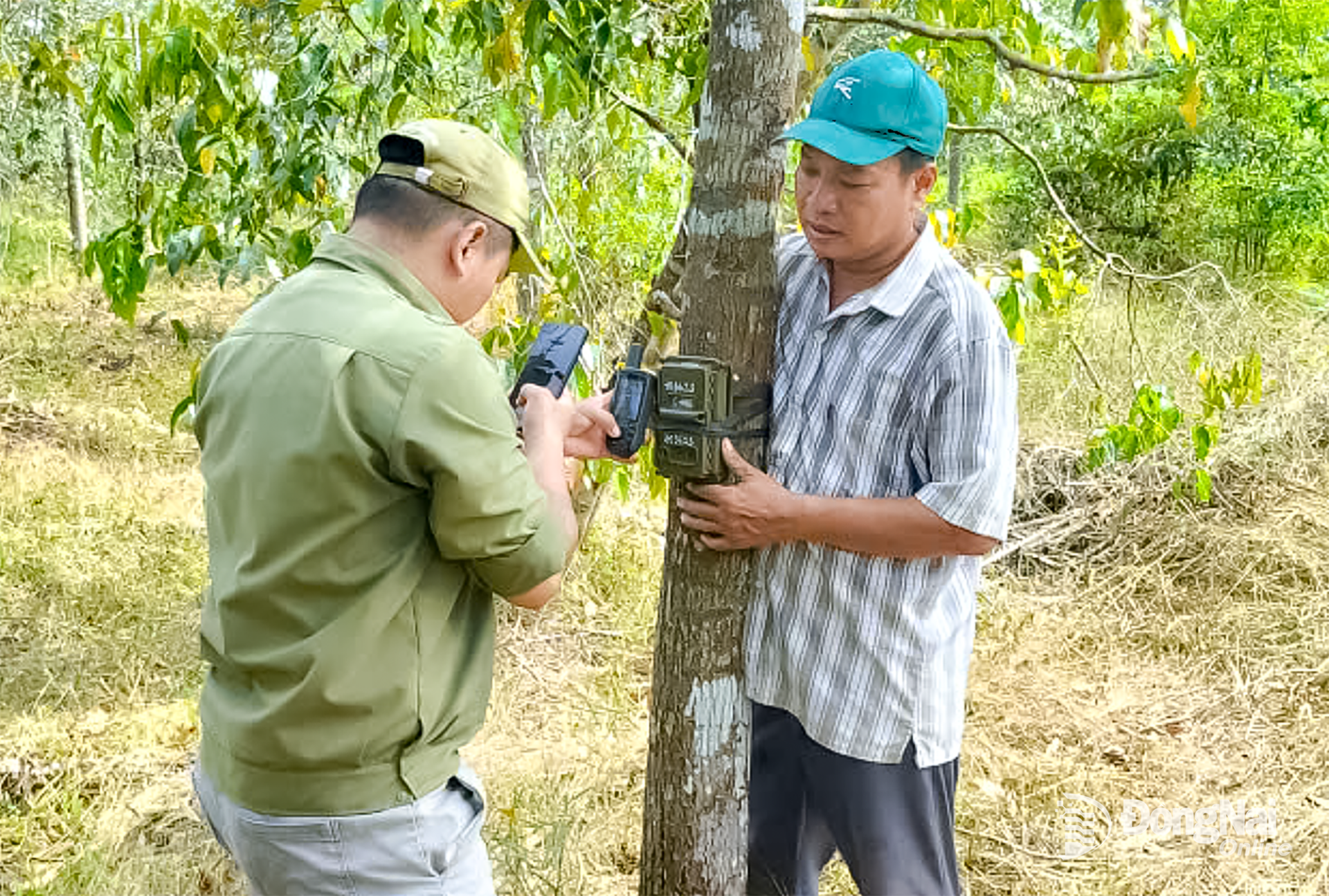 |
| Staff of the DNNCR install camera traps to monitor wild animals. |
These practical efforts help replenish food and water sources, maintain natural habitats, and reduce the risk of elephants and gaurs straying beyond forest boundaries and coming into conflict with local residents in buffer zones.
Habitat restoration deep in the forest
After continuous rainfall, the vast forests of the DNNCR appear revitalized. The forest soil has become moister, while vegetation is beginning to grow lush and green. This is also a favorable time for conservation teams to carry out habitat restoration activities, creating conditions for wild animals to forage and live in their natural habitat.
At around 7 a.m., Nguyen Manh Diep, a specialist in the DNNCR's Nature Conservation and Cooperation Division, and his colleagues ride their motorbikes tens of kilometers deep into the forest to carry out habitat restoration work. Their tasks included clearing undergrowth, hanging mineral salt blocks and setting up camera traps in selected areas. These activities require meticulous attention to detail and a thorough understanding of the ecological characteristics of each species. Before beginning their work, the team must survey the terrain, identify suitable locations, and select areas likely to attract wild animals to ensure the effective implementation of these measures.
"Maintaining the habitat restoration plan contributes to the conservation and sustainable development of forest wildlife resources and biodiversity, while also supporting forest protection and development objectives under the 2021–2030 sustainable forest management plan approved by competent authorities."
Nguyen Duc Tu, Deputy Head in charge of the DNNCR's Nature Conservation and Cooperation Division
According to Diep, clearing undergrowth in selected areas encourages the growth of young grass while supporting native plant species. As grass cover recovers, natural food sources for forest animals are replenished, contributing to the long-term sustainability of their habitats.
In addition, mineral salt blocks are hung at suitable locations to provide wild animals with essential minerals. The placement must be appropriate to the actual conditions of each area, while regular monitoring is necessary to assess how wild animals use them.
Another important task is installing camera traps. These compact devices are placed at strategic locations to capture images of wild animals passing through, including at night or in areas where direct human observation is difficult. The recorded images provide conservation staff with additional information to identify species composition, determine the frequency of animal appearances and assess wildlife habitat use.
Diep said habitat restoration activities are carried out in phases and are closely linked to monitoring and evaluation. Specialized staff conduct direct observations, either with the naked eye or through binoculars, to record animal species appearing in the area. When monitoring sensitive, rare wildlife species, observers must maintain an appropriate distance to avoid disturbing their natural behavior. Whenever wild animals are sighted, staff record essential information, including species names, numbers of individuals, and times of appearance, on survey forms. Camera traps are particularly useful for monitoring species that are rarely observed or are primarily active at night.
Wild animals do not always appear in camera trap images. In many cases, footprints, droppings, or digging marks on the ground provide important evidence that helps specialized teams confirm their presence. The data collected also enables the DNNCR to adjust habitat restoration measures to create living environments better suited to the behavioral characteristics of individual species.
"This initiative does not require a large investment budget, yet it delivers practical benefits for conservation work. Through monitoring, our unit can assess the use of mineral salt licks and determine the distribution patterns and frequency of occurrence of mammal species. This provides a basis for continuously improving measures to protect, restore, and develop ecosystems and the value of forest resources," said Diep.
Ensuring wildlife safety
The DNNCR is responsible for managing more than 100,000 hectares of forests, forest land, and inland wetlands. Given its vast area and exceptional ecological value, it plays an important role in biodiversity conservation, climate regulation, water resource protection, and the maintenance of ecological balance for Dong Nai City and the Southeast region.
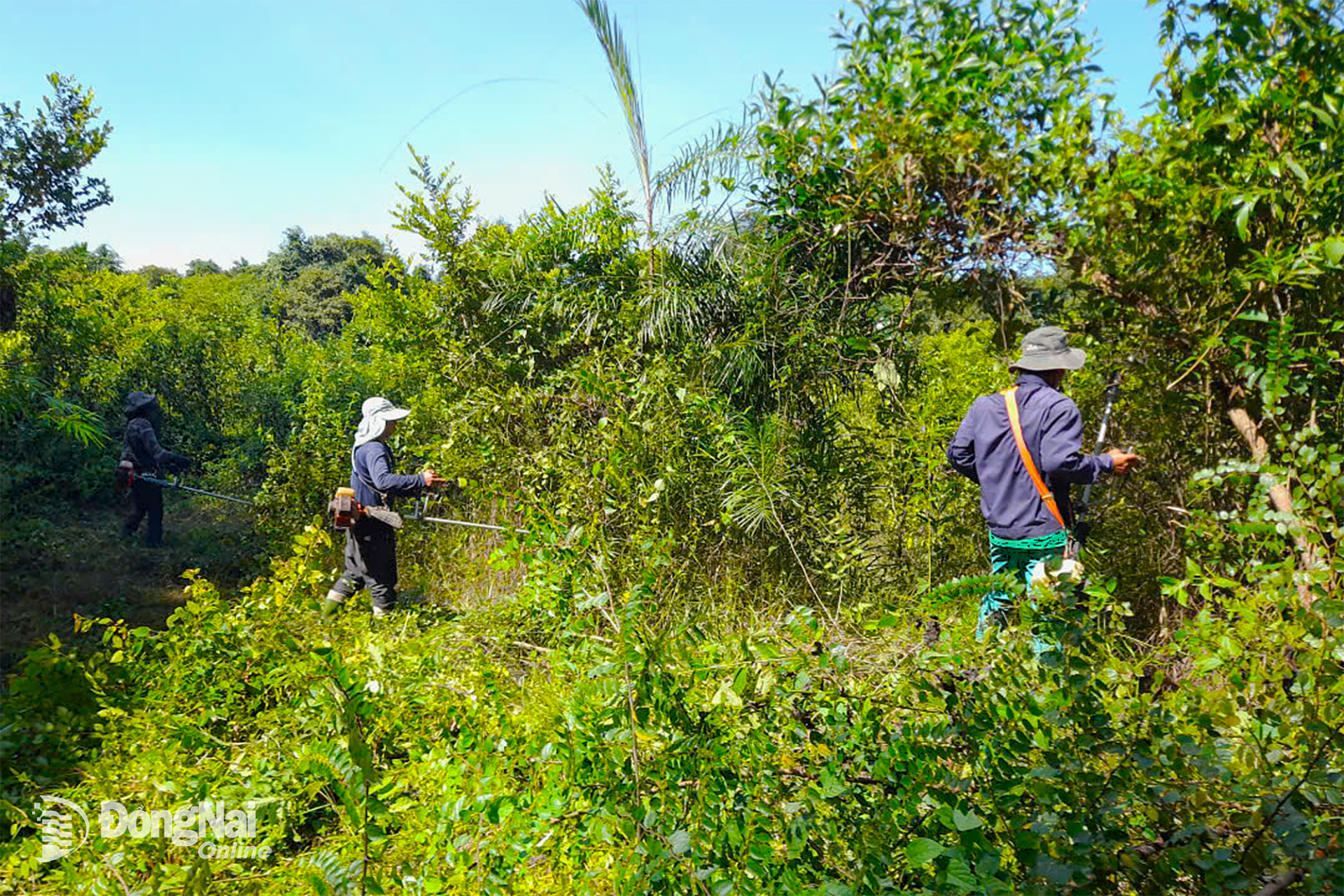 |
| Staff of the DNNCR clear forest undergrowth to ensure abundant food sources for wild animals. |
Nguyen Duc Tu, Deputy Head in charge of the DNNCR’s Nature Conservation and Cooperation Division, said the forest ecosystem is home to numerous rare and precious plant and animal species, including those listed in both the Vietnam Red Data Book and the International Union for Conservation of Nature (IUCN) Red List of Threatened Species. Therefore, maintaining and restoring habitat quality is a key task in forest management and protection.
In recent years, the DNNCR has implemented various measures to improve habitats for wild animals. Artificial ponds have been built and maintained to supplement water supplies, while concrete culverts and water conduits have been installed to support forest fire prevention and firefighting during the dry season and provide water in suitable areas. It has also established artificial mineral salt licks, planted additional native forage species, cleared vegetation in savanna areas, and restored natural grasslands.
These measures are implemented in accordance with the ecological conditions of each area, with the aim of ensuring adequate water, food, and mineral sources for wild animals. When habitats better meet their survival needs, animals are more likely to remain within the forest, helping reduce their movement into residential areas in search of food.
However, habitat restoration efforts continue to face numerous challenges. Climate change, extreme weather, prolonged droughts, and the encroachment of non-native plant species can alter vegetation structures, reduce the area of open grasslands, and cause uneven distribution of water sources. In some areas, natural food supplies for large animals have also been affected, requiring appropriate, long-term management measures.
Notably, large animals such as Asian elephants and gaurs may move beyond forest boundaries when habitat conditions change or their demand for food and water increases. The appearance of wild animals near residential areas heightens the risk of human-wildlife conflict, potentially causing casualties and property damage and affecting the lives of residents in buffer zones.
Against this backdrop, continued research, development, and implementation of measures to improve and restore wildlife habitats are urgently needed. This important task is essential to stabilizing large mammal populations, reducing human-wildlife conflicts, conserving biodiversity, and ensuring sustainable development both at present and in the years ahead.
By An Nhon – Translated by Minh Hong, Thu Ha




Thông tin bạn đọc
Đóng Lưu thông tin