
Dong Nai has recently made positive contributions to the development of the industry and trade sector in the southern region. The city's industry and trade sector has been accelerating industrial development, strengthening supply chain linkages, and expanding regional logistics infrastructure.
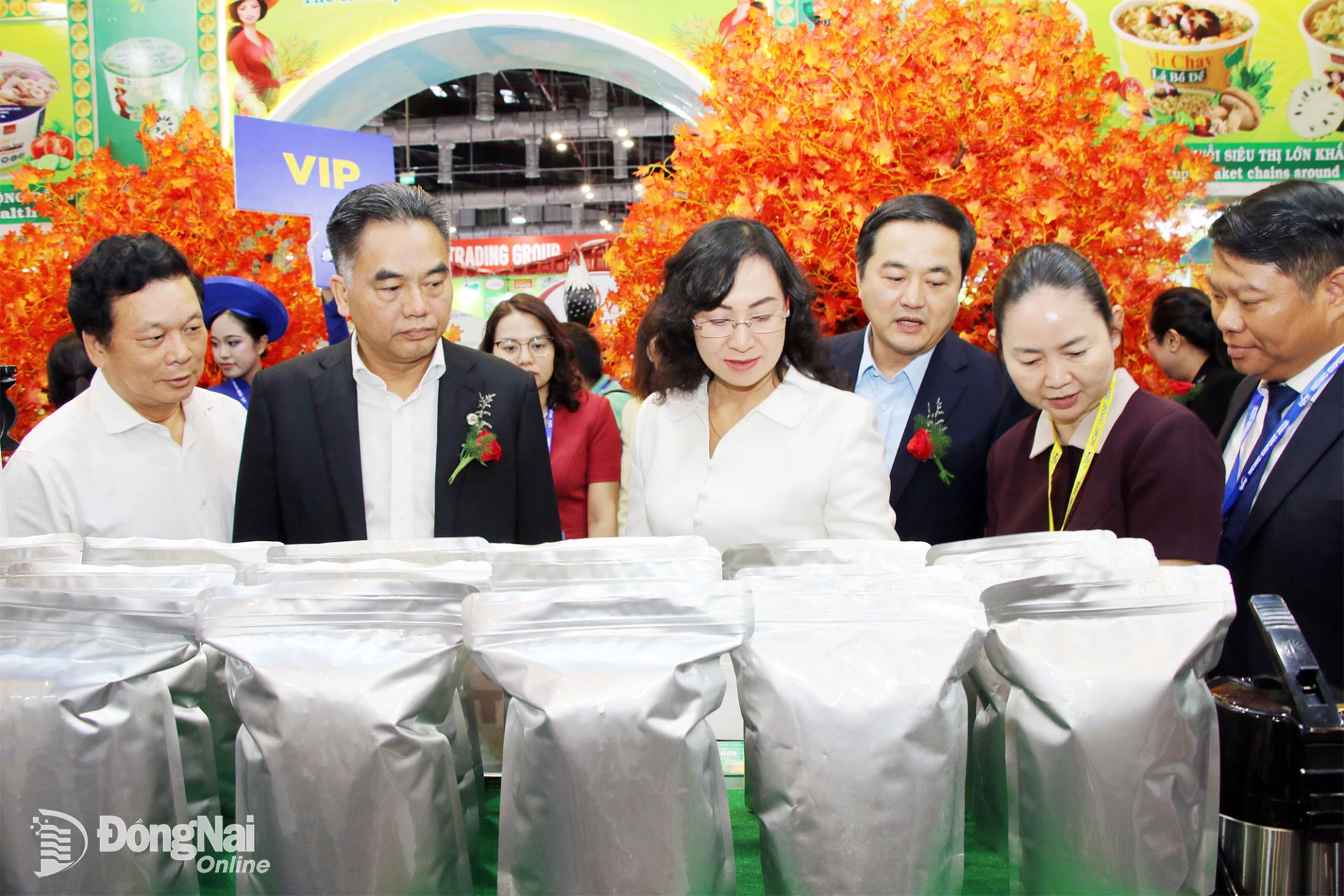 |
| Deputy Minister of Industry and Trade Phan Thi Thang (center) and representatives of localities visit Dong Nai City's collective pavilion at the 2026 Vietnam’s Outstanding Export Products Fair in October 2026. |
Dong Nai has notable advantages in the scale of industrial production, commercial development, and import-export activities. Its strategic location connecting Ho Chi Minh City with the Southeast, Central Highlands, and Mekong Delta regions provides favorable conditions for promoting regional linkages in industrial and commercial development.
Positive results across multiple areas
Several of Dong Nai's industry and trade indicators have maintained strong growth, contributing positively to the overall performance of the industry and trade sector in the southern region.
According to the Dong Nai Statistics Office, industrial and commercial activities across the city continued to expand steadily during the first nine months of 2026. The index of industrial production rose by more than 12.5% compared with the same period in 2025. Total retail sales of goods and revenue from consumer services exceeded VND344 trillion, up 17.4% year-on-year. After excluding price factors, the real growth rate was approximately 13.2%. Of the total, retail sales of goods reached approximately VND225.4 trillion, an increase of more than 16.3% year-on-year.
During the first nine months of 2026, industrial production, trade, and export activities in southern provinces and cities maintained steady growth. According to the Ministry of Industry and Trade, six of the region's eight localities recorded increases in their indices of industrial production above the national average of 12.3%, including Dong Nai, where the index rose 12.6%. In terms of commerce, all provinces and cities in the region recorded growth rates exceeding the national average. Notably, Ho Chi Minh City accounted for 52.1% of the region's trade and service revenue, while Dong Nai City contributed 12%.
Le Van Hong, Director of GO! Dong Nai in Long Hung Ward, said the supermarket regularly runs major campaigns to stimulate consumer demand, particularly during holidays and the Lunar New Year, to attract shoppers and boost retail sales. It also regularly organizes and participates in supply-demand matching activities while setting up stalls displaying local products under the One Commune One Product (OCOP) program in easily accessible locations to stimulate consumer demand and promote the products.
In terms of export value, the localities accounting for the largest shares of the southern region's total export turnover included Ho Chi Minh City, with USD76 billion (54.9%); Dong Nai City, with USD27.5 billion (19.9%); and Tay Ninh Province, with USD15.5 billion (11.2%).
At the 12th Industry and Trade Conference of Southern Provinces and Cities in 2026, Deputy Minister of Industry and Trade Phan Thi Thang emphasized the southern region's important role, citing its large-scale industrial production, vast consumer market, strong export capacity, and abundant energy potential. She stressed that close coordination among agencies under the Ministry of Industry and Trade, local departments of industry and trade, and the regional business community is essential to fulfilling the sector's targets and assigned tasks for 2026.
At the 12th Industry and Trade Conference of Southern Provinces and Cities in October 2026, Vu Ngoc Long, Member of the Dong Nai City Party Committee and Director of the Department of Industry and Trade, said that Dong Nai currently has 59 established industrial parks, of which 44 are operational and have attracted thousands of domestic and foreign investors. The city has also planned 68 industrial clusters, 12 of which are operational, with an average occupancy rate exceeding 86%. Electronics, textiles and garments, footwear, machinery, agricultural processing, and e-commerce sectors are important sources of cargo for developing logistics chains serving the domestic market and exports.
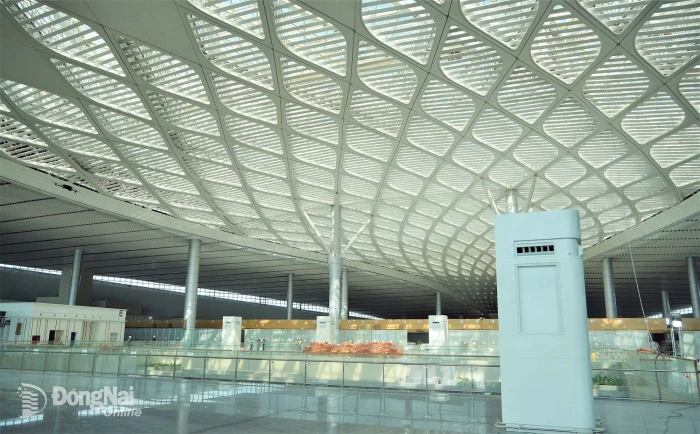
In particular, once Long Thanh International Airport begins operations, international connectivity for high-value and time-sensitive cargo will be substantially enhanced, especially for electronic components, high-tech products, pharmaceuticals, cold-chain goods, and goods shipped through cross-border e-commerce.
Strengthening regional connectivity
Dong Nai is emerging as a leading logistics hub and a gateway for international trade in the southern region. With all five modes of transportation – road, inland waterway, air, rail, and maritime – converging in the city, together with an established industrial base and ample room for development, Dong Nai has a solid foundation to steadily affirm its role as a vital cargo transshipment and coordination hub for the southern key economic zone.
 |
|
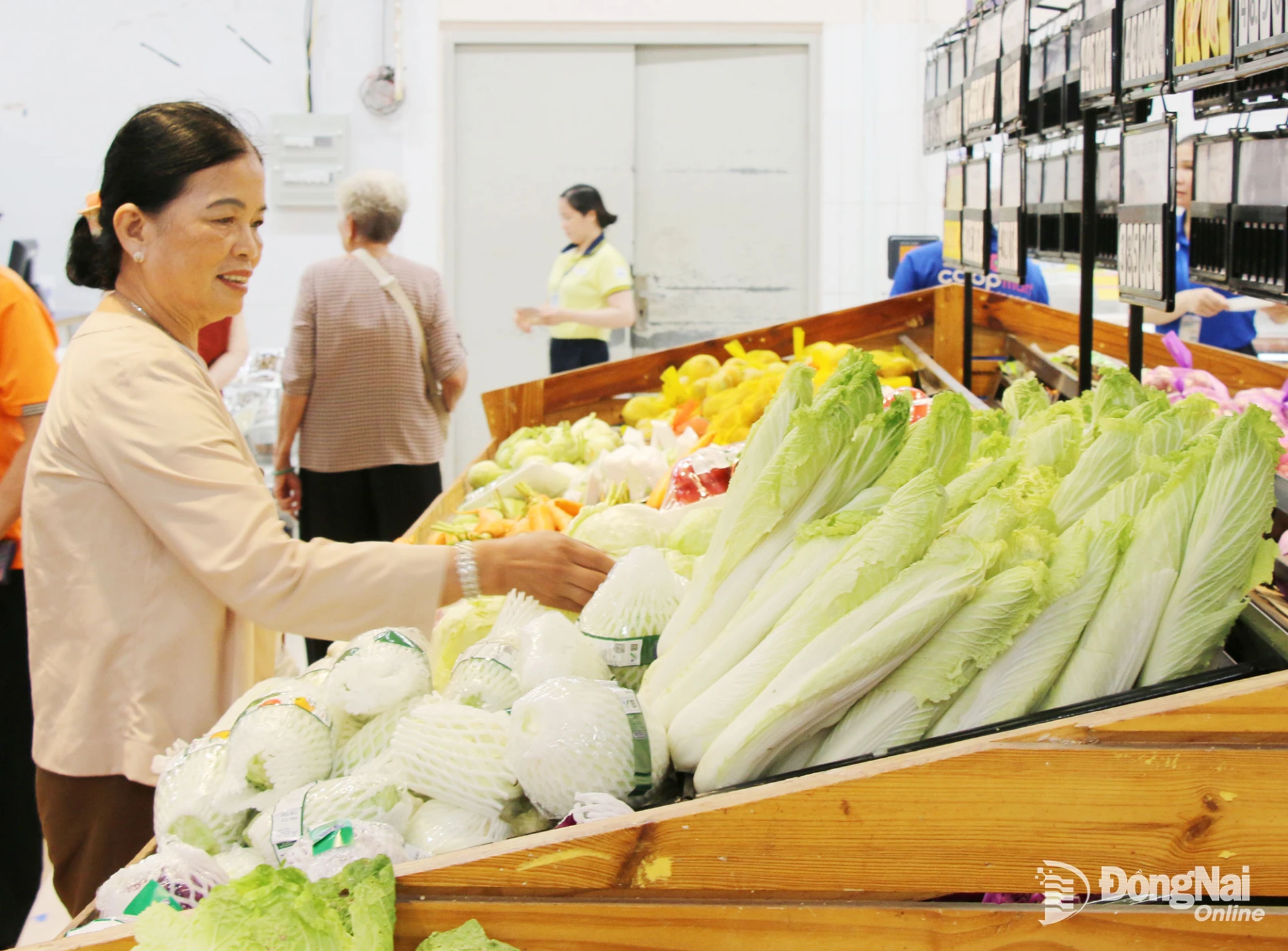
A shopper selects agricultural produce at Co.opmart Dong Xoai in Binh Phuoc Ward. Photo: Hai Quan |
Vu Ngoc Long, Member of the City Party Committee and Director of the Department of Industry and Trade, further noted that the sector would focus on implementing six groups of measures to develop the city's logistics ecosystem in connection with Long Thanh International Airport. Specifically, these measures include reorganizing logistics spaces linked to the airport, industrial parks, and seaports; improving multimodal connectivity while shifting from a "road-building" mindset to one focused on "organizing transport corridors"; developing aviation logistics and value-added services in a coordinated manner; promoting digital and green logistics from the ecosystem design stage; developing human resources, supportive institutional frameworks, and a favorable investment and business environment; and establishing interregional coordination mechanisms alongside a set of logistics performance indicators.
In mid-September 2026, during a working session with the Department of Industry and Trade on its operations, existing bottlenecks and limitations, and proposed solutions and implementation plans to meet future development needs, Deputy Secretary of the Dong Nai City Party Committee Vo Tan Duc instructed the sector to move beyond traditional industrial and commercial management. He urged the department to advise the city on creating new industrial products, developing new markets, building new value chains, and generating new growth drivers.
In particular, the Department of Industry and Trade must achieve four clear changes in the coming period. First, industrial development must shift from extensive growth to a model driven by technology, productivity, and value added. Second, trade and logistics must become new growth drivers, effectively capitalizing on the advantages of Long Thanh Airport and Phuoc An Port. Third, energy infrastructure must take the lead in ensuring an adequate electricity supply for production, business activities, and new areas of development. Fourth, the department's internal apparatus must make a decisive transition from administrative management to proactively working alongside enterprises, removing bottlenecks, and creating a favorable environment for business development.
By Hai Quan – Translated by Minh Hong, Thu Ha

Thông tin bạn đọc
Đóng Lưu thông tin