
On September 8, Ton Ngoc Hanh, Member of the Party Central Committee, Permanent Deputy Secretary of the Dong Nai City Party Committee (CPC), and Chairwoman of the City People's Council, chaired a meeting with leaders of colleges and universities in the city on human resource training and their participation in the implementation of the Politburo's Resolution No. 57-NQ/TW dated December 22, 2024.
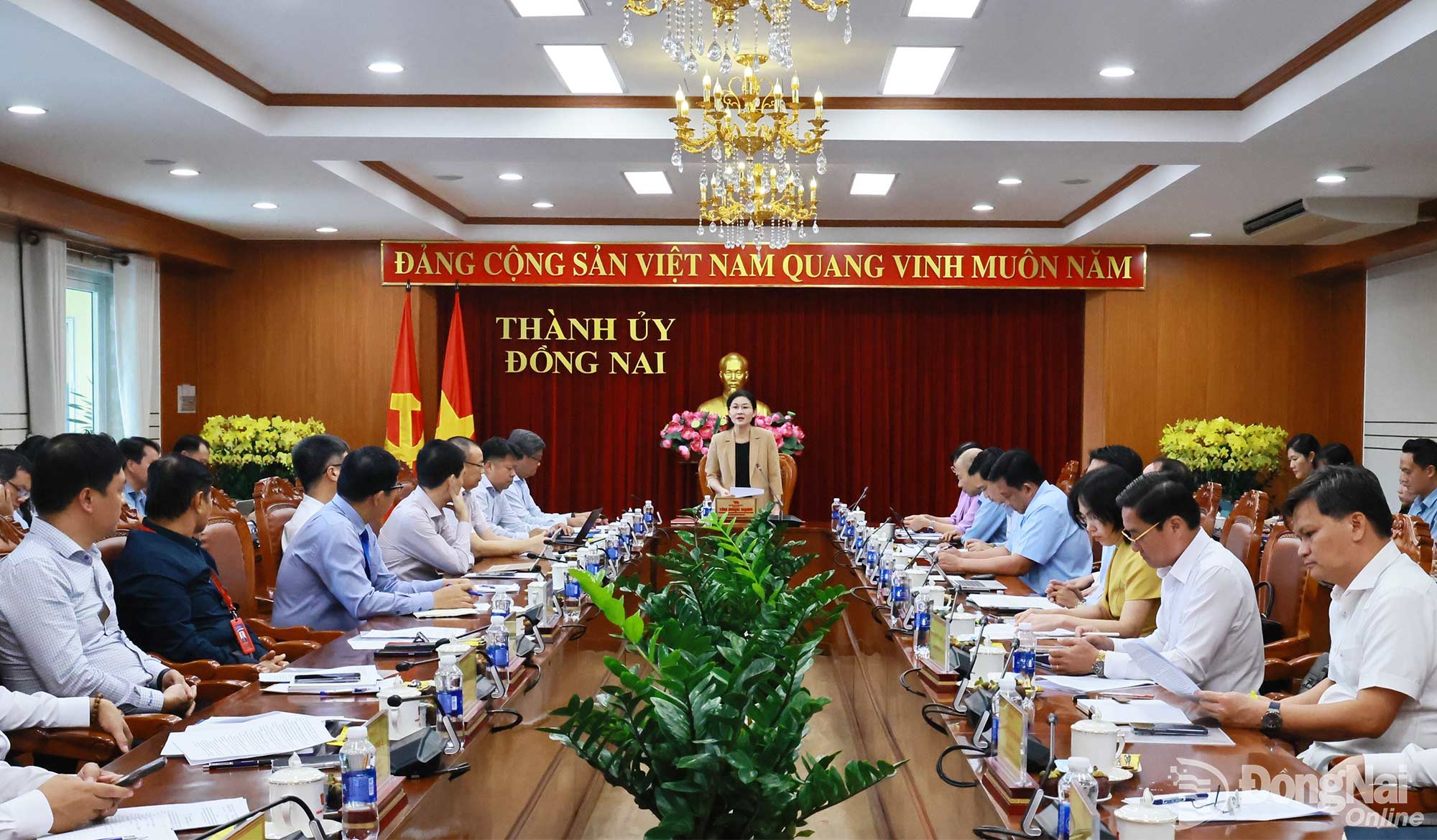 |
| Ton Ngoc Hanh, Member of the Party Central Committee, Permanent Deputy Secretary of the CPC, and Chairwoman of the City People's Council, chairs the meeting. Photo: Cong Nghia |
The meeting was also attended by Nguyen Thi Hoang, Member of the CPC and Vice Chairwoman of the City People's Committee, along with leaders of departments and agencies.
 |
|
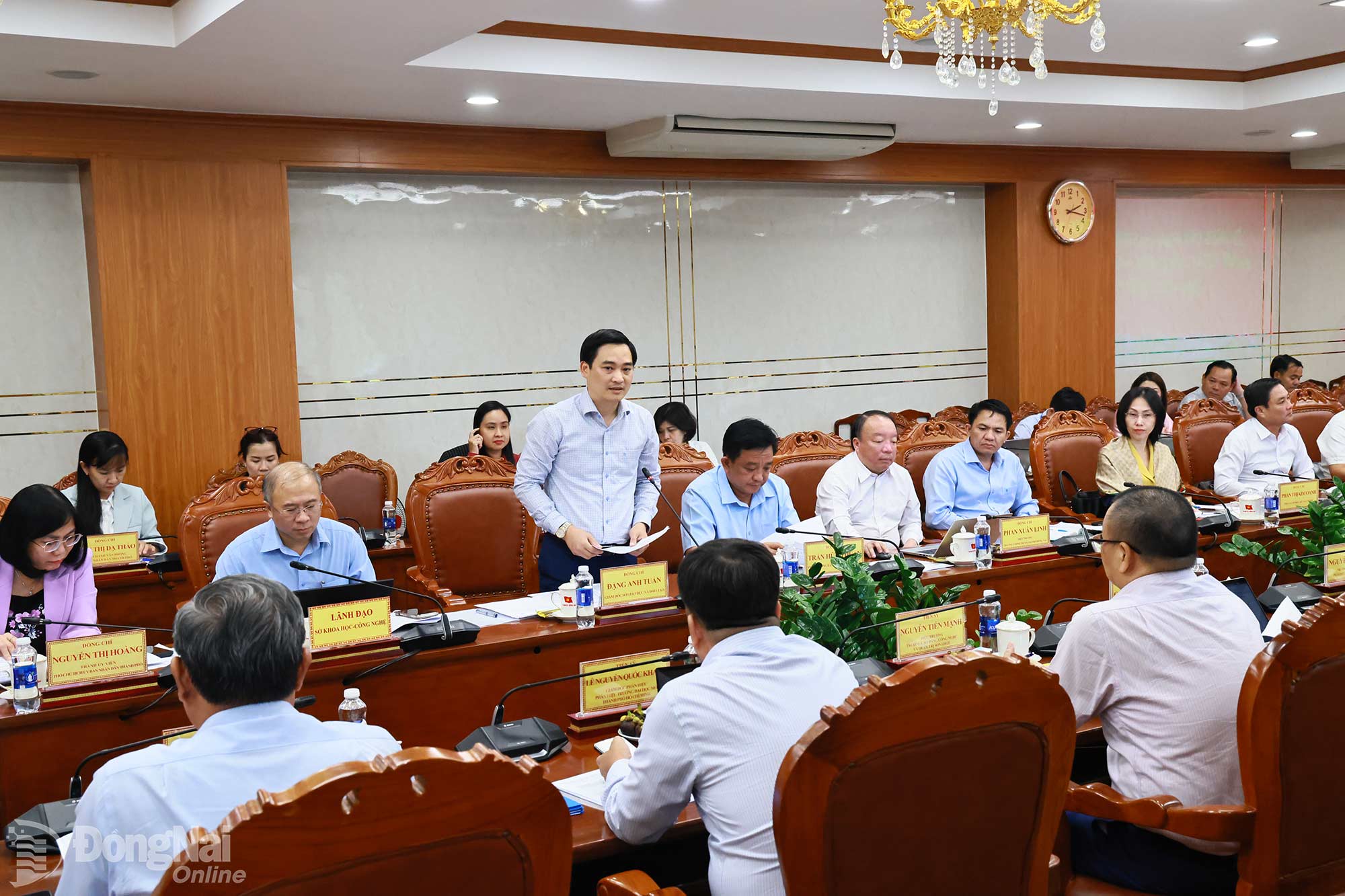
Dr. Dang Anh Tuan, Director of the Department of Education and Training, presents a report at the meeting. Photo: Cong Nghia |
At the meeting, Dr. Dang Anh Tuan, Director of the City Department of Education and Training, reported that, in terms of the scale and network of educational institutions, the city currently has five universities and four university branches; 10 colleges and one college branch; seven intermediate schools and one intermediate school branch; 13 vocational education centers; 10 enterprises participating in vocational education activities; and three regional vocational education and continuing education centers.
Overall, the network of training institutions basically meets the learning and vocational training needs of the public and businesses. Several institutions have received investment aimed at developing them into high-quality training establishments capable of providing training in key majors and occupations that directly serve industrial parks, logistics centers, and Long Thanh International Airport.
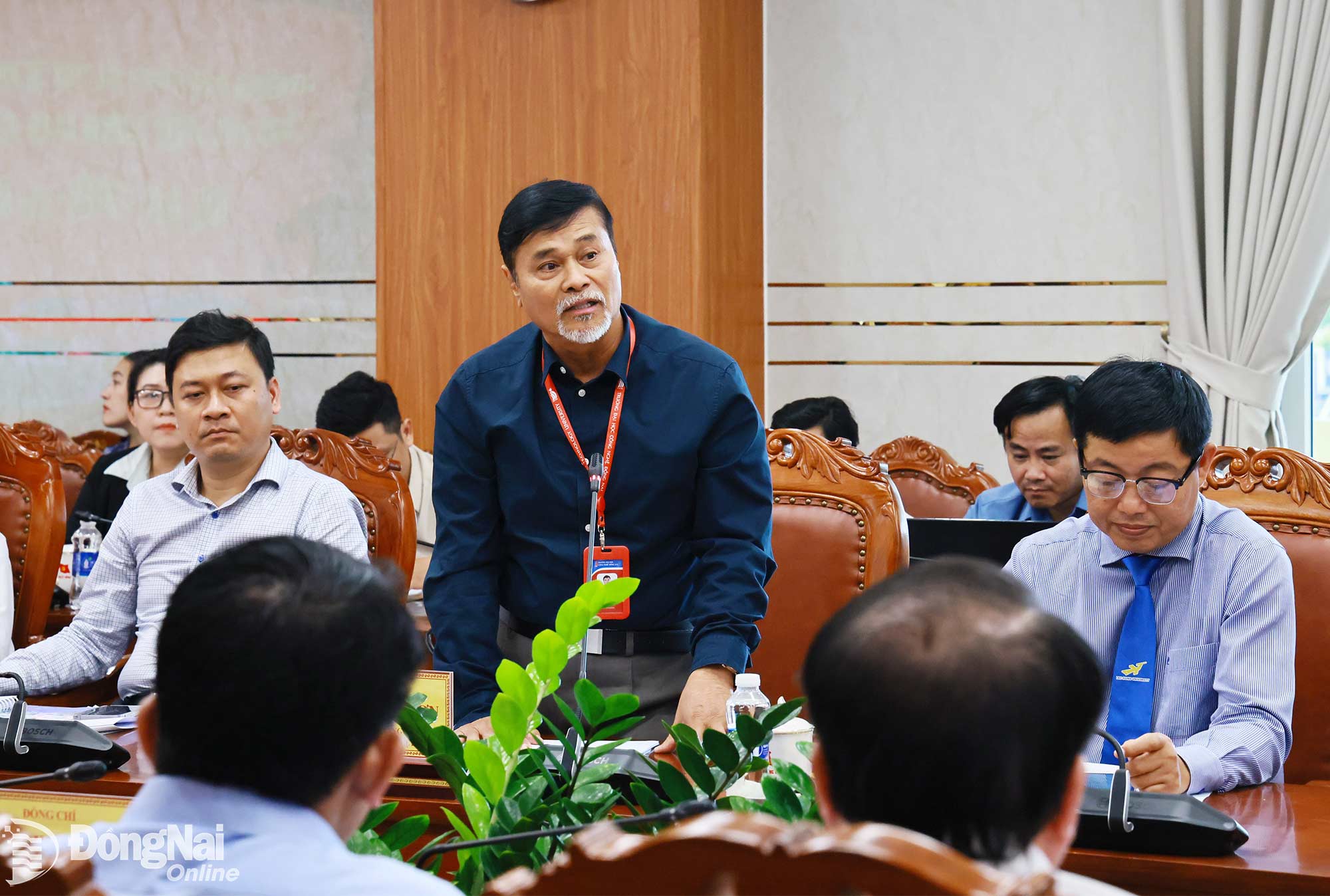 |
| Dr. Phan Ngoc Son, Rector of Dong Nai Technology University, expresses his wish for sci-tech projects to be transferred to the city for application. Photo: Cong Nghia |
However, the distribution of training scale and capacity among institutions remains uneven. Some training disciplines and occupations overlap and remain small in scale, while specialized training centers linked to the city's key economic sectors have yet to be formed. Nevertheless, the structure of training majors has undergone a positive shift toward increasing the proportion of technical, technological, and modern service fields.
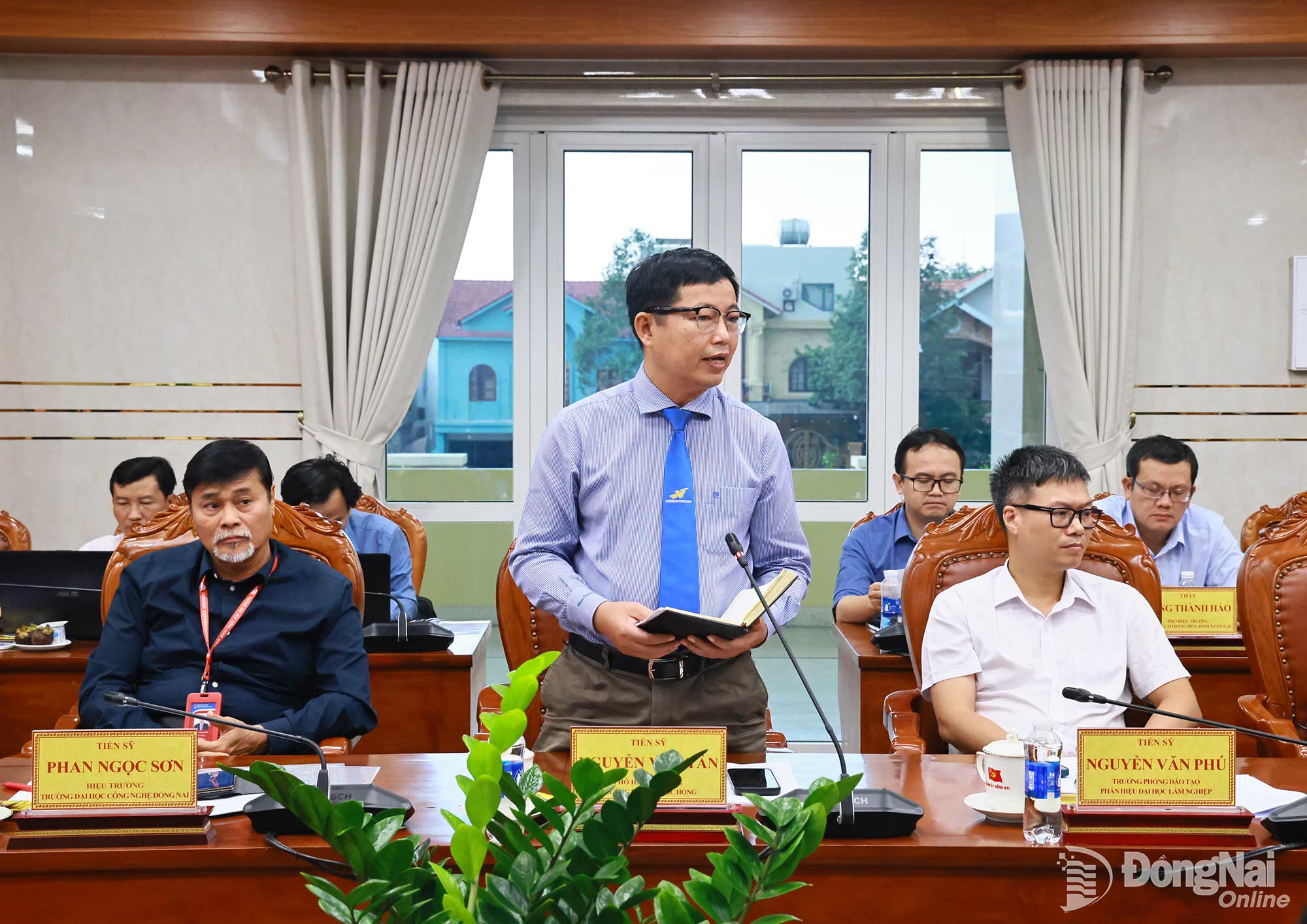 |
| Dr. Nguyen Van Tan, Vice Rector of Lac Hong University, expresses his views. Photo: Cong Nghia |
According to consolidated data from 19 of the city's 57 training units, 2,040 full-time staff members and researchers participated in sci-tech activities in 2025. This figure is projected to reach approximately 2,050 in 2026, including 81 professors and associate professors and 161 staff members currently pursuing doctoral or postdoctoral studies. This is an important intellectual resource for promoting the city's sci-tech development.
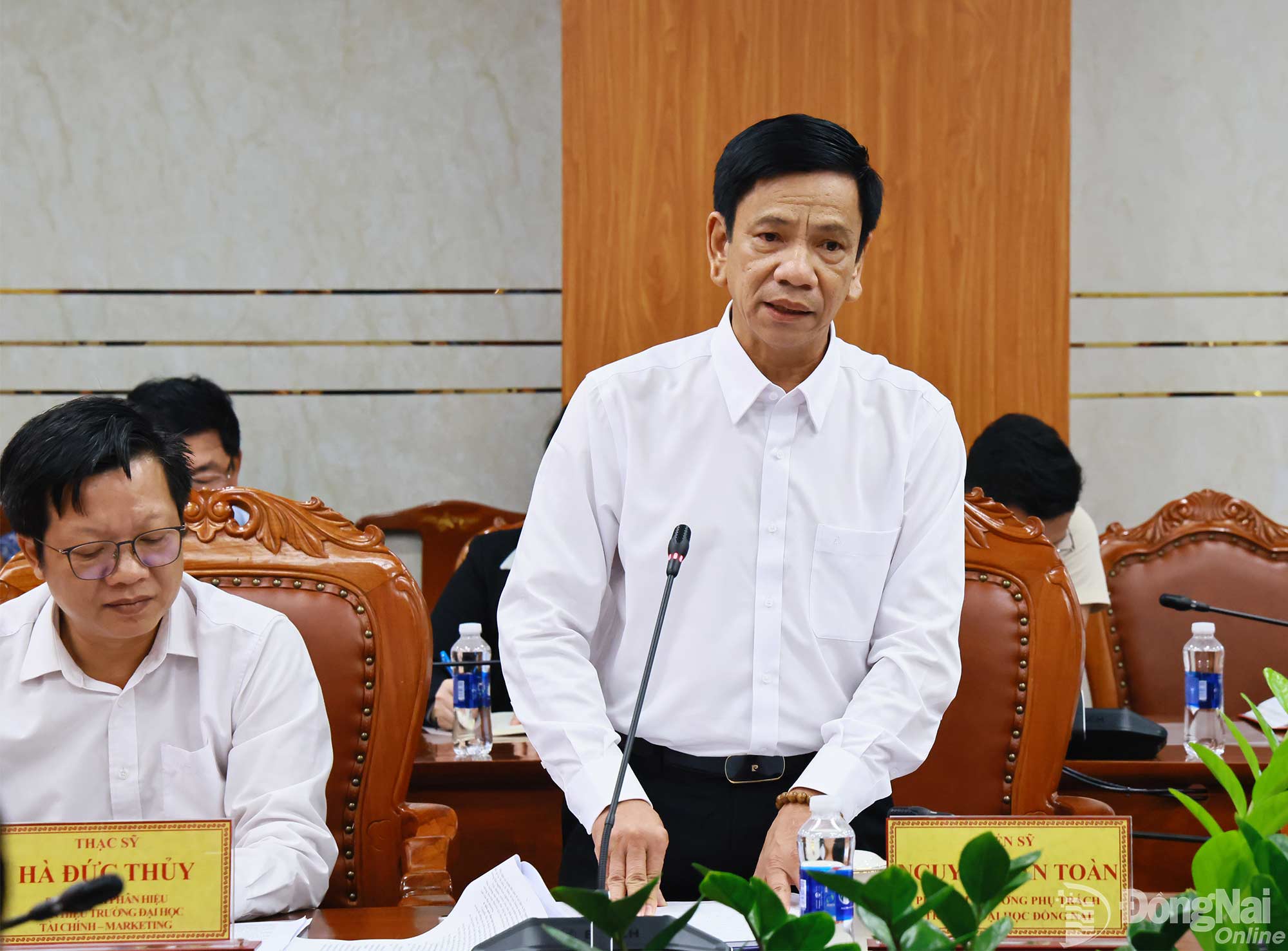 |
| Dr. Nguyen Van Toan, Vice Rector in charge of Dong Nai University, speaks at the meeting. Photo: Cong Nghia |
At the meeting, representatives of universities and colleges expressed appreciation for the attention shown by the Dong Nai CPC leadership, viewing the meeting as an opportunity for educational institutions to present and propose ideas and solutions for advancing scientific research and training high-quality human resources in the new development phase.
The schools proposed that the CPC and the City People's Committee consider issuing mechanisms and policies to facilitate administrative procedures, support institutions in improving their facilities, advancing digital transformation and upgrading training equipment, while also increasing the assignment of scientific research tasks and the commissioning of human resource training.
In addition, the institutions proposed that the Vietnam Bank for Social Policies raise the loan limits for pupils and students above the levels stipulated in current regulations, enabling them to pursue high-tech majors that entail substantial costs. Representatives of the private university sector also expressed their desire for the city to establish favorable and equitable mechanisms for accessing financial resources for technology development and land designated for education, without distinction between public and private training institutions.
Speaking at the meeting, Ton Ngoc Hanh, Member of the Party Central Committee, Permanent Deputy Secretary of the CPC, and Chairwoman of the City People's Council, highly praised the Department of Education and Training for its thorough preparations and the full participation of universities and colleges in the city. She affirmed that Dong Nai is facing historic development opportunities, especially since the Politburo and the National Assembly have issued several crucial mechanisms and policies, creating momentum for Dong Nai to achieve breakthrough development and become a driving force for the nation. To effectively seize these opportunities, the quality of human resources and sci-tech development are among the core factors.
Ton Ngoc Hanh requested that the Department of Education and Training serve as the central hub for connecting with training institutions, regardless of whether they are public or private, managed by the city or by ministries and sectors based in Dong Nai. The schools must continue to closely follow the city's development orientation and improve the quality of human resource training, especially the training of key personnel to meet the city's needs, particularly as Long Thanh International Airport begins operations and new-generation, high-tech industrial parks continue to take shape.
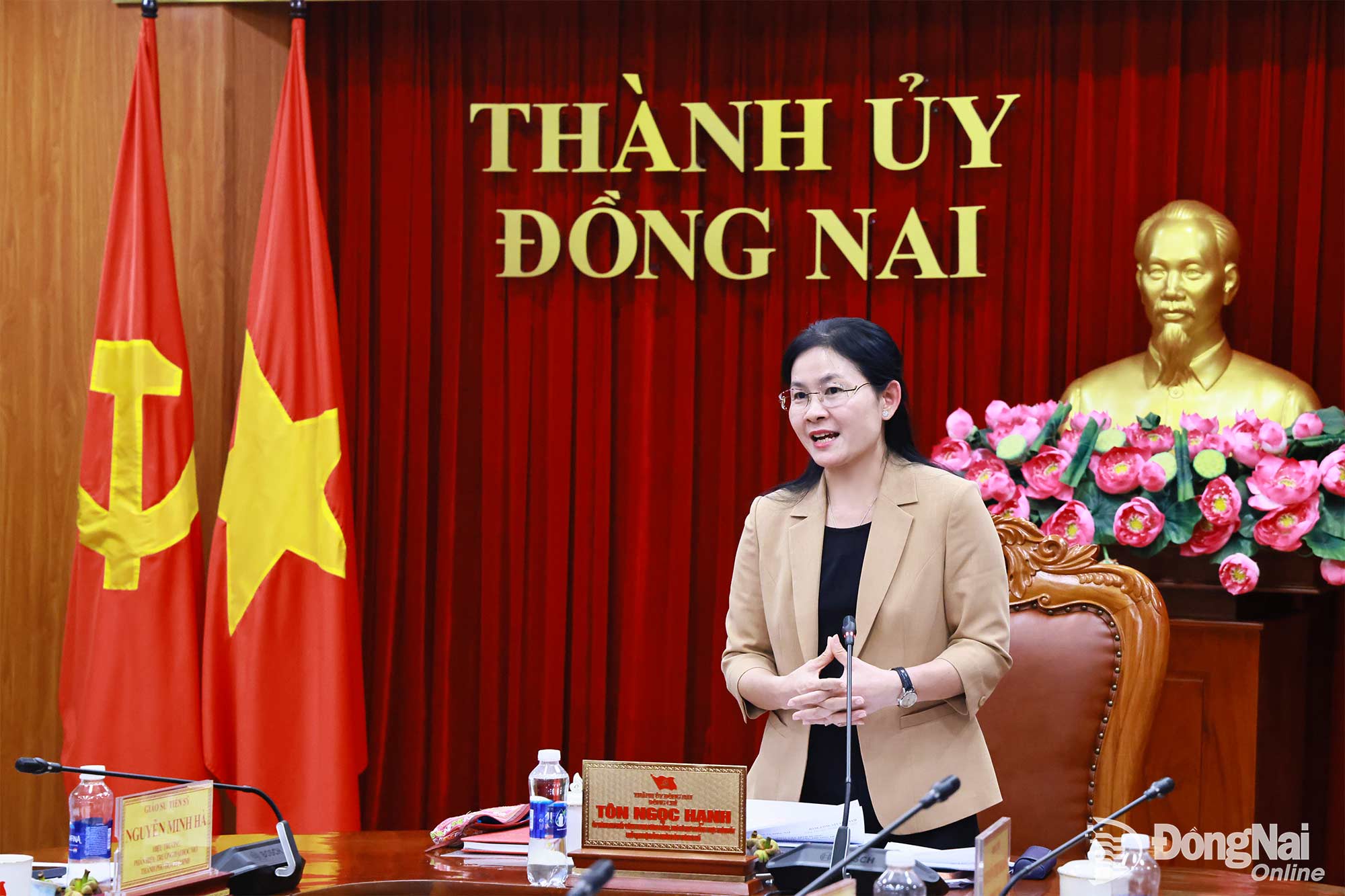 |
| Ton Ngoc Hanh, Member of the Party Central Committee, Permanent Deputy Secretary of the CPC, and Chairwoman of the City People's Council, delivers concluding remarks at the meeting. Photo: Cong Nghia |
Ton Ngoc Hanh affirmed that the city leadership stands ready to meet with and listen to training institutions, consider and address their proposals, and create favorable conditions for their development, without distinction between public and private schools. She also expressed her hope that the schools will produce high-quality human resources and effective scientific works, contributing to the development of Dong Nai City in the new phase.
By Cong Nghia – Translated by Minh Hong, Minho



Thông tin bạn đọc
Đóng Lưu thông tin