
The 2020-2025 term of the Dong Nai Cooperative Alliance was marked by several problems and obstacles, including the pandemic, global market volatility, and initial challenges in the restructuring of administrative units.
In that context, the Dong Nai Cooperative Alliance played a core role in advancing the collective economy, achieving notable milestones in scale, operational quality, and effective contributions to local socio-economic development.
Collective economy grows in scale and quality
During the 2020-2025 term, the collective economy sector in Dong Nai City, including cooperatives, cooperative unions, and cooperative groups, recorded comprehensive development.
According to Nguyen Thanh Hien, Vice Chairwoman in charge of the Dong Nai Cooperative Alliance, the collective economy sector has become increasingly effective in linking production, supplying materials, and consuming products, helping members reduce costs and increase income. Over the past term, the synchronized transition to the new-style cooperative model led to positive changes and contributed to improved operational efficiency. The financial capacity and revenue of cooperatives continued to grow, while management personnel became increasingly professionalized to meet the demands of the new phase of development.
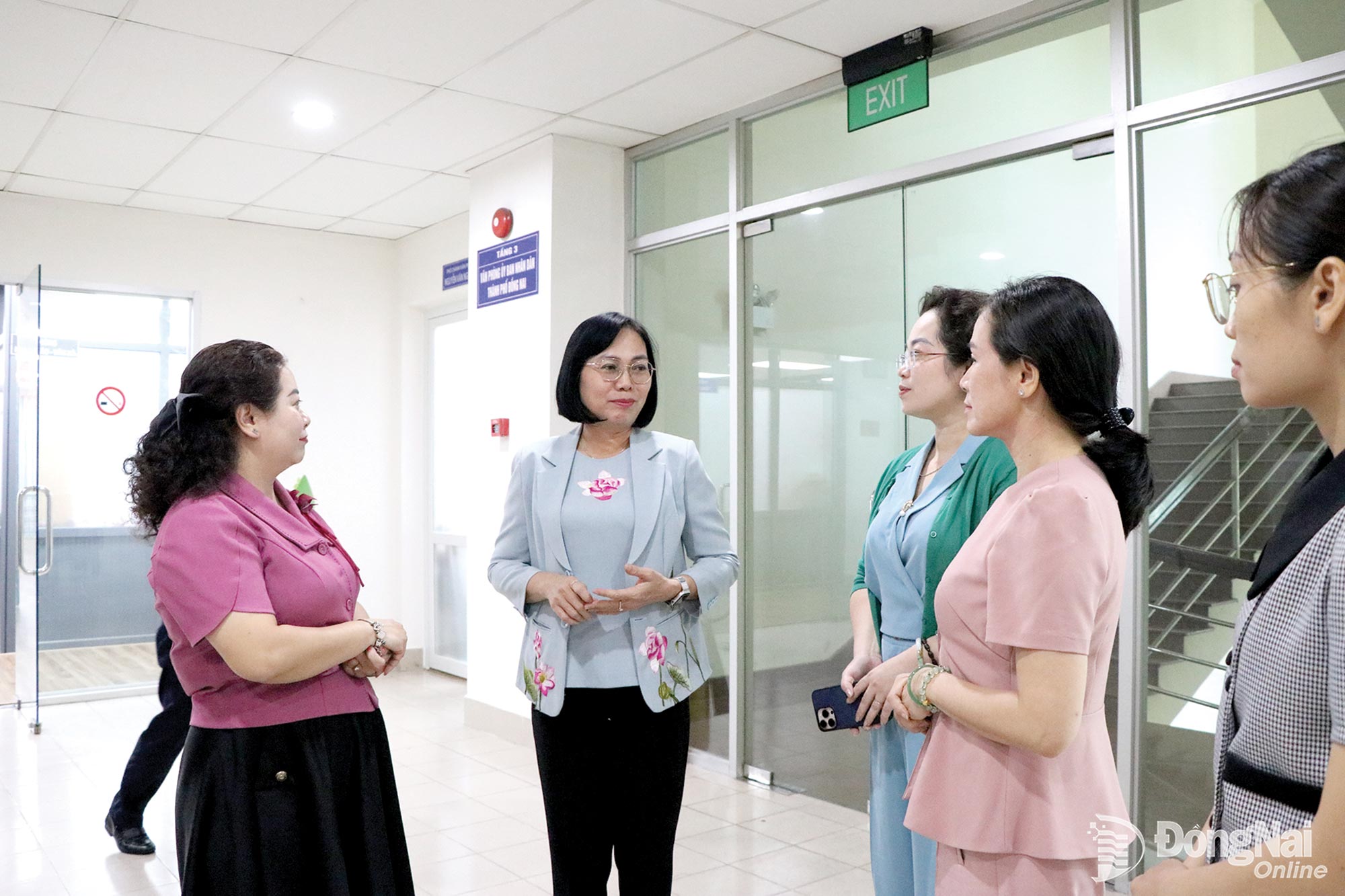 |
| Nguyen Thi Hoang, Member of the City Party Committee and Vice Chairwoman of the City People's Committee (second from left), discusses development-related issues with leaders of the Dong Nai Cooperative Alliance. |
In particular, value-chain linkages associated with high-tech applications have become a breakthrough direction. To date, 194 cooperatives and cooperative groups have participated in value chain linkages, with nearly 80 products receiving 3-star or 4-star OCOP (One Commune One Product) certification. Many units have actively invested in technology and developed OCOP products, gradually shifting from small-scale production to large-scale commodity production, thereby improving productivity, quality, and competitiveness. Typical examples include Cam My Public Service Cooperative (Cam My commune), Thanh Binh Cooperative (Bau Ham commune), Long Thanh Phat High-Tech Agricultural Cooperative (Long Thanh ward), Phuoc Thien Agricultural Trade and Service Cooperative (Hung Phuoc commune), and Thanh An Livestock Service Cooperative (Tan Hung commune), which have become key drivers in promoting the development of the collective economy in a modern direction.
According to Nguyen Viet Vi, Director of the Phuoc Thien Agricultural Trade and Service Cooperative, the cooperative is developing a production network spanning more than 1,000 hectares, with a focus on building a closed value chain from production to consumption. In addition to supplying fresh agricultural products, the cooperative has invested in deep processing to increase product value. From jackfruit alone, the cooperative has developed 12 processed products, many of which have obtained OCOP certification. According to Vi, cooperation with businesses and the development of an ecosystem for production, processing, and consumption have helped improve production efficiency, stabilize output, and increase the market value of agricultural products.
Beyond contributing to economic growth, the collective economy sector has also clearly demonstrated its role in addressing social issues. Many cooperatives have actively supported vocational training, the transfer of technical expertise, and efforts to care for the lives of members and workers. In doing so, they have helped maintain security and order, build community solidarity, and effectively implement the program on building new-style rural areas and advanced new-style rural areas.
To date, the city has 914 cooperatives, including 669 active cooperatives, two cooperative unions (one of which is active), and 1,088 cooperative groups.
Nguyen Thi Dao, Deputy Director of the Hang Gon Agricultural Trade and Service Cooperative (Hang Gon ward), said that in addition to developing production, the cooperative always focuses on job creation and support for youth entrepreneurship. Workers receive free vocational training and earn income while receiving on-the-job training at the facility. Through technical guidance, quality management, and production experience, the cooperative helps many young workers acquire skills, gain confidence in starting businesses, and develop their family economies.
Accelerating to exceed term targets
The 2020-2025 term of the Dong Nai Cooperative Alliance was marked by a strong acceleration in both the scale and operational quality of the cooperative system. Of the 11 targets set for the term, 10 were achieved or exceeded. This was a notable result in a term that saw many fluctuations, requiring proactive and flexible leadership, management, and support to develop the collective economy sector.
Most notably, new cooperative groups and cooperatives grew strongly. During the term, 175 new cooperative groups and 268 new cooperatives were established. This clearly demonstrates the growing attractiveness of the collective economy model among people and businesses. At the same time, the average revenue of cooperatives increased by 11 percent, while the proportion of managers holding college degrees or higher reached 30.6 percent, exceeding the established target. Notably, 100 percent of member cooperatives operating in the agricultural sector participated in value chains and had established brands and product markets.
According to Nguyen Thanh Hien, during the 2020-2025 term, the Dong Nai Cooperative Alliance successfully fulfilled its role of representing and protecting the legitimate rights and interests of its members, serving as a core force in developing the collective economy. It also acted as an effective bridge between the Party, the State, and the collective economy sector. The organizational apparatus was gradually consolidated, and operations became increasingly effective, contributing to enhancing the alliance's position within the political system and socio-economic life.
To achieve these results, the Dong Nai Cooperative Alliance proactively advised on numerous mechanisms and policies to support the development of the collective economy. It regularly identified and addressed difficulties faced by cooperatives and cooperative groups, while promoting the establishment of new entities and the replication of effective models. At the same time, activities supporting trade promotion, digital transformation, brand development, traceability, and human resource training were implemented in a coordinated manner, helping many cooperatives expand their markets, bring products into supermarket systems, and gradually access export markets.
Nguyen Thi Hoang, Member of the City Party Committee and Vice Chairwoman of the City People's Committee, said that during the 2020-2025 term, the Dong Nai Cooperative Alliance effectively fulfilled its core role in developing the collective economy. It proactively advised on many support mechanisms and policies and accompanied cooperatives and cooperative groups in overcoming difficulties and improving their operational efficiency. As a result, it contributed to promoting production, creating jobs, increasing people's incomes, and affirming the increasingly important role of the collective economy sector in the development of Dong Nai's economy in particular and the country's economy in general.
The Dong Nai Cooperative Development Support Fund, with a charter capital exceeding VND 204 billion, has expanded its operations. From July 2023 to April 2026, the fund promptly helped address part of the capital demand of the collective economy sector, with cumulative disbursements exceeding VND 193 billion for 219 production and business plans of cooperatives, cooperative members, and cooperative groups in the city. This source of capital has become a key driver, helping many individuals and organizations innovate production methods and improve competitiveness.
Nguyen Thanh Hien, Vice Chairwoman in charge of the Dong Nai Cooperative Alliance, assessed that during the 2020-2025 term, the city's collective economy sector achieved positive development in both scale and operational quality. The results achieved continue to affirm the alliance's increasingly important role and position in supporting, connecting, and promoting the development of the collective economy.
In the 2026-2030 term, the Dong Nai Cooperative Alliance will continue to fulfill its core role by accompanying cooperatives, cooperative unions, and cooperative groups in innovation, competitiveness improvement, sustainable development, and positive contributions to the city's development.
By To Tam – Translated by Minh Hong, Minho


Thông tin bạn đọc
Đóng Lưu thông tin