
The Dong Nai provincial master plan for the 2021–2030 period, with a vision to 2050, is seen as a turning point that ushers in a new era of groundbreaking growth, creating momentum for localities across the province to advance. Leveraging its geographical advantages, transport, and industrial infrastructure, along with its tradition of “rolling out the red carpet," Dong Phu commune is steadily becoming an attractive destination for investors.
No longer marked by the vast rubber plantations and far removed from the bustle of older urban areas, today’s Dong Phu greets visitors with the brisk rhythm of dynamic, well-planned development. The once red dirt roads have been replaced by wide asphalt arteries, directly linking to industrial parks and clusters.
Transport infrastructure serves as springboard
In addition to the long-established 13.5 km-long provincial road DT741, which connects he Central Highlands provinces to the gateway of Ho Chi Minh City, Dong Phu is benefiting from major projects, such as the nearly 42 km Dong Phu - Binh Duong road, with a 65 m-wide roadbed, and the Gia Nghia - Chon Thanh expressway, soon to be constructed. At the same time, the commune has focused on developing key connectivity-oriented transport projects. Notably, five major arterial routes, totaling nearly 25 km, have been developed to directly connect DT741 with the Dong Phu Industrial - Residential Area and the expanded Nam Dong Phu Industrial Park planning zone.
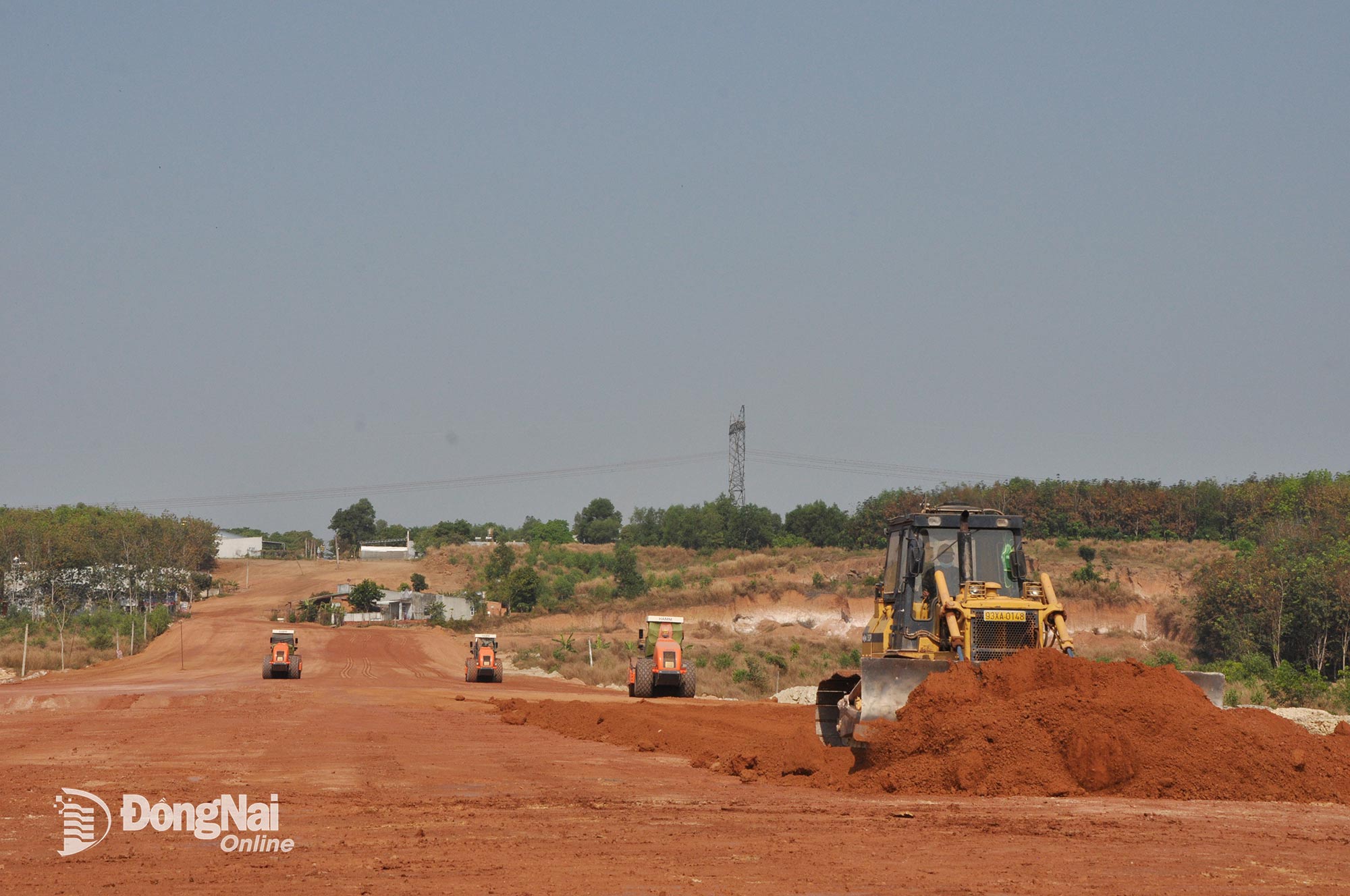 |
| Dong Phu commune has been investing in road networks connecting to industrial parks and clusters. Photo: Xuan Tuc |
Pham Hoang Son, Director of the Dong Phu Regional Construction Investment Project Management Board, said that Route No. 3, stretching over 6 km with eight lanes, along with the synchronously invested sidewalks and lighting systems, has been completed and put into operation, while the remaining routes have reached over 70% completion.
According to Son, the unit has recently coordinated with Dong Phu commune authorities to encourage residents to donate land and crops to support the State’s investment in a road directly connecting Tan Tien 1 and Tan Tien 2 industrial clusters with the newly operational Route No. 3.
“Although less than 1 km in length, the route plays a crucial role. Once completed and put into operation, all goods from businesses in Tan Tien 1 and Tan Tien 2 industrial clusters will be transported via this route, instead of using the current narrow routes passing through school areas, which pose high traffic safety risks,” Son said.
 |
| Route No. 3, stretching over 6 km and featuring eight lanes, has been developed with modern, integrated infrastructure, connecting to industrial parks and clusters in the commune. Photo: Xuan Tuc |
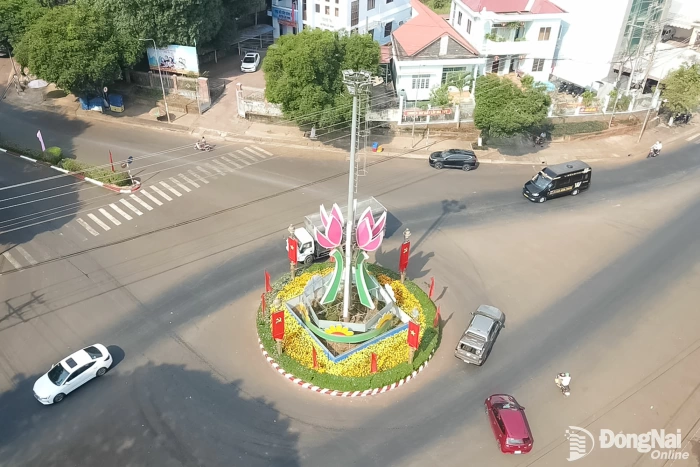
In addition to the five key arterial routes that have been and are being developed, Dong Phu commune is also traversed by 13.5 km of Provincial Road 741, which runs through the commune center and directly connects Ho Chi Minh City with the Central Highlands provinces. Alongside this are routes linking industrial zones in the southwestern area of Dong Xoai ward, running parallel to DT741 along the Suoi Giai lake, as well as a radial road connecting Dong Phu commune with neighboring localities. These projects play an important role in expanding development space, enhancing connectivity, and creating momentum for the locality’s urbanization process.
Abundant industrial land at competitive costs
With ample land reserves and increasingly synchronized infrastructure, northern localities, including Dong Phu, are well-positioned to attract investment.
 |
| Provincial Road 741, a key arterial route linking the Central Highlands provinces with Ho Chi Minh City, passes through Dong Phu commune. Photo: Xuan Tuc |
Currently, Dong Phu commune is home to two stably operating industrial parks: Bac Dong Phu Industrial Park, covering 189 hectares (with phase 2 expanding to 317 hectares), and Nam Dong Phu Industrial Park, covering 69 hectares (with phase 2 expanding to 480 hectares). In addition, the commune also has four industrial clusters in stable operation, including Ha My (10 hectares), Tan Tien 1 and Tan Tien 2 (105 hectares), and Tan Phu 1 (49 hectares).
The industrial parks and clusters in Dong Phu benefit from well-structured planning, synchronized infrastructure, competitive land lease rates, and open investment policies, making them highly attractive to businesses.
Based in Dong Phu commune, Thanh Phuong Real Estate - Investment Joint Stock Co., the investor of Tan Tien 1 and Tan Tien 2 industrial clusters with a total capital of VND1 trillion, has achieved impressive results despite being relatively new to industrial infrastructure development. In a short period, both clusters have reached nearly 100% occupancy.
Do Ngoc Tuan, Deputy Head of the Industrial Cluster Management Board at Thanh Phuong Real Estate - Investment Joint Stock Co., said that businesses investing here can save a significant amount on factory construction costs thanks to the area’s predominantly hard gravel soil. Land lease terms extend until 2070. For the first two years, enterprises are exempt from corporate income tax, followed by a 50% reduction over the next four years. Foreign direct investment (FDI) enterprises are also supported in obtaining investment registration certificates and business registration within two to three months. Notably, land lease rates are highly competitive, ranging from USD 80 to 90 per square meter for a 50-year term.
 |
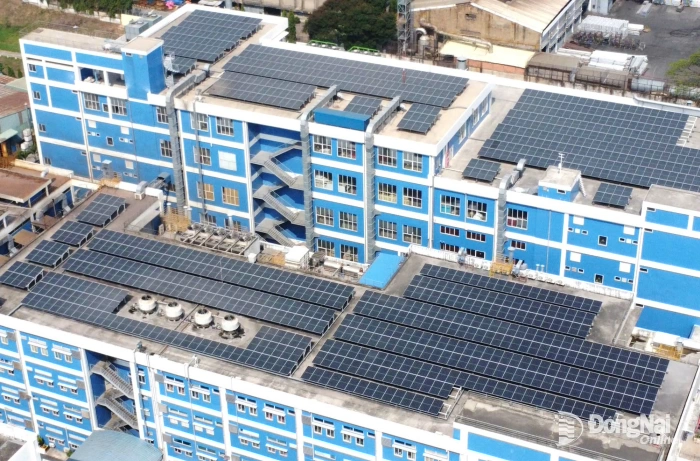
| Bac Dong Phu Industrial Park. Photo: Xuan Tuc |
With Bac Dong Phu and Nam Dong Phu industrial parks nearly fully occupied - hosting 53 domestic projects and 62 foreign-invested projects - Bac Dong Phu Industrial Park Corporation has placed strong confidence in the industrial development potential of Dong Phu commune as it advances Phase 2 expansion, covering a total area of nearly 800 hectares.
Trinh Cong Manh, Deputy General Director of Bac Dong Phu Industrial Park Corporation, said investors benefit from the highest incentives from Bac Dong Phu and Nam Dong Phu industrial parks, including preferential land lease rates, corporate income tax incentives, long-term preferential tax rates, and incentives on import taxes for machinery and equipment used in production, supporting industries, and high-tech projects.
“In addition, we are committed to supporting investors through a “one-stop-shop” mechanism from legal procedures and environmental approvals to construction as well as workforce and business community linkages. Our goal is to create a stable, transparent, and efficient investment environment, enabling enterprises to operate and grow with confidence in Dong Phu over the long term," Manh affirmed.
With a solid industrial foundation, Dong Phu commune is well positioned to confidently move towards ward status in line with the resolution of the 11th Dong Nai Provincial People’s Council for the 2026–2031 term. This marks an important step toward developing Dong Phu into an ecological urban area with strong commerce and services, synchronized infrastructure, a growing economy, and improving living standards, contributing positively to the province’s overall development.
By Xuan Tuc – Translated by Minh Hong, Thu Ha


Thông tin bạn đọc
Đóng Lưu thông tin