
A day for Nguyen Thi Hong, Director of the Hoa Hao Social Assistance Facility in Nhon Trach commune, begins at 4 a.m., along with her husband and the center's staff. They start the day by checking residents’ health conditions and assisting elderly residents with personal hygiene. Meanwhile, another group prepares breakfast for the 80 elderly seniors currently under care at the facility, while the remaining staff clean and maintain the premises.
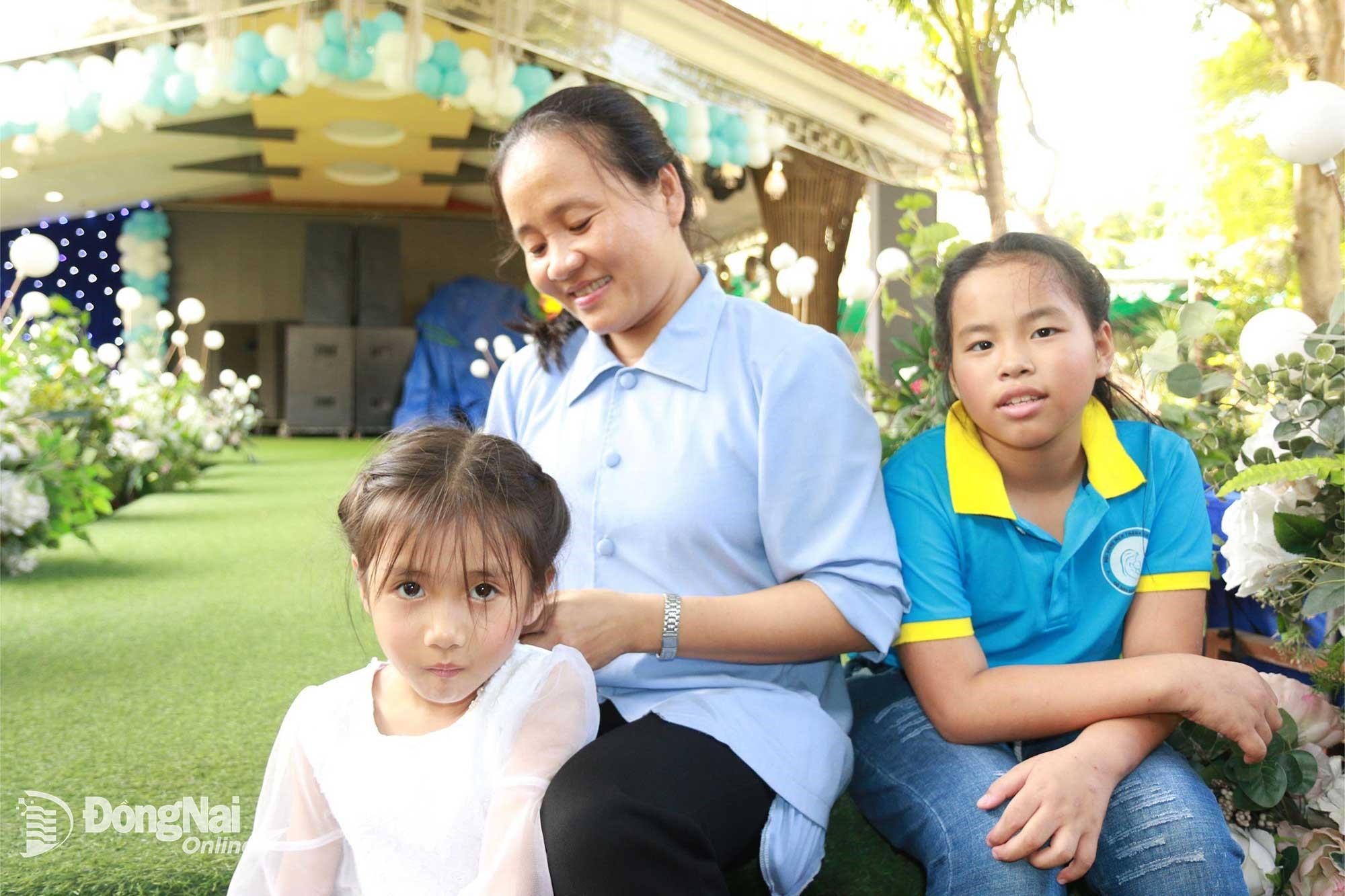 |
| Children are cared for at the Xuan Tam orphan social welfare facility (Xuan Loc commune), under the Xuan Loc Diocese. Photo: Van Truyen |
Thanks to the dedication of unpaid workers at social welfare facilities such as those led by Nguyen Thi Hong, many orphans, elderly seniors, and persons with disabilities who are homeless and without family support have, in recent years, found the warmth of a family and received both material and emotional care.
'Three No's', yet full of love
Dong Nai province currently has 21 social welfare facilities that provide care to approximately 1,400 individuals. Of these, two are public social welfare facilities, one operates on a fully fee-based model, and the remainder are mostly non-public facilities licensed by the State and managed by religious organizations. These social welfare facilities are associated with the “triple no”: they provide a shared home for people who no longer have community support; their staff work without salaries; and those under care are not required to pay any fees.
Yet it is precisely these “triple no” facilities that have offered a home to orphans, giving them opportunities to pursue education and build their futures. For elderly seniors and persons with disabilities, they ensure daily meals and rest, provide medical care when illness strikes, and offer dignified arrangements in their final moments.
Depending on their facilities and operating budgets, each of these non-public social welfare institutions currently cares for between seven and more than 200 individuals who have no place of refuge. For example, the Minh Tran shelter social welfare facility (Minh Tran Pagoda, Minh Hung ward) is caring for 47 orphans and elderly seniors suffering from illness and living alone without support; the An Vu shelter non-public social assistance facility (Dong Tam commune) is providing care and upbringing for 50 orphans; the White Lotus people-run social welfare facility (Buu Son Pagoda, Dinh Quan commune) is caring for and nurturing 40 children along with 28 elderly residents living alone and persons with disabilities; the Thien Binh orphan social welfare facility (under the Xuan Loc Diocese, Tam Phuoc ward) is caring for 176 orphans; and the Bamboo Village humanitarian center (Xuan Que commune) is caring for 230 children, elderly citizeens and persons with disabilities.
According to Sister Tran Thi Kim Huong, Director of the Suoi Tien compassionate elderly care social welfare facility (Bau Ham commune), eight nuns are responsible for caring for 120 older women at the facility. The facility does not discriminate based on religion when admitting impoverished women or those without spouses or children for care.
T.T.T., a child currently being cared for at the White Lotus people-run social welfare facility, shared that she receives full support for her daily needs and education there and is currently in Grade 9. She and the other children at the facility follow the guidance of the nuns and monks at the pagoda, strive to study diligently, return after school to care for one another, and, according to their abilities, help look after younger children and assist adults with cleaning and maintaining their living environment.
Since 2022, through coordination by the Dong Nai Provincial Committee of the Vietnam Fatherland Front, the Management Board of the That Phu Ancient Temple in Bien Hoa, and the Bien Hoa Chinese Liaison Committee, a coordinated program has been implemented to deliver social welfare activities across Dong Nai province. Accordingly, each quarter, the parties provide support to three social welfare facilities, with each facility receiving between 10 and 20 million VND, along with 300-600 kilograms of rice and additional supplies such as instant noodles, fresh milk, and fresh fruit.
Sharing with community shelters
At present, the admission of orphans, elderly seniors, and persons with disabilities who have no place of refuge continues to be carried out in accordance with regulations by non-public social welfare facilities licensed by the State. The shared aspiration of these institutions is to work alongside society in effectively implementing charitable and humanitarian activities. As the number of beneficiaries increases, so does the staff workload at these facilities and the daily operating costs required to sustain care.
According to Van Kiem, Deputy Director of the An Vu shelter, although each caregiver is responsible for an average of 16 children, the facility cannot turn away those in need who come seeking shelter and care.
Meanwhile, Father Nguyen Manh Cuong, Dean of Tan Mai Deanery, Parish Priest of Tan Mai Parish, Director of Caritas Xuan Loc Social Charity, and Director of the Thien Binh Orphan Social Welfare Facility, said that the facility is currently caring for nearly 180 children and remains ready to receive additional disadvantaged cases. Throughout this process, local authorities have provided support in completing procedures related to the adoption of abandoned children and in preparing personal identification documents for the children. The facility hopes to continue receiving support and facilitation from local authorities in carrying out administrative procedures related to social welfare activities. At the same time, it calls on the community to pay greater attention to non-public social welfare facilities not only through material support but also through spiritual and emotional care, such as organizing recreational activities and life skills education for children.
According to Pham Thi Mai Huong, Deputy Director of the Dong Nai Provincial Department of Health, the operations of State-licensed non-public social welfare facilities have helped to foster compassion within the community, provide homes for disadvantaged individuals, and share the burden with the State budget in the implementation of social security policies. To further enable these facilities to fulfill their prescribed roles and functions effectively, the province will continue to implement social welfare and child protection programs for the 2026–2030 period. This endeavor includes strengthening coordination to fully implement relevant programs, plans, mechanisms, and policies on social welfare and child protection; ensuring effective State management in these areas; and working closely with appropriate departments, agencies, and local authorities to guide non-public social welfare facilities in the proper admission, management, and care of beneficiaries. The province will also continue to call for investment in the development of a diverse, high-quality system of non-public social welfare facilities and nursing homes, thereby easing pressure on the State budget and meeting the growing healthcare needs of the elderly and vulnerable groups amid population aging.
By Van Truyen - Translated by Hong Van, Minho



Thông tin bạn đọc
Đóng Lưu thông tin