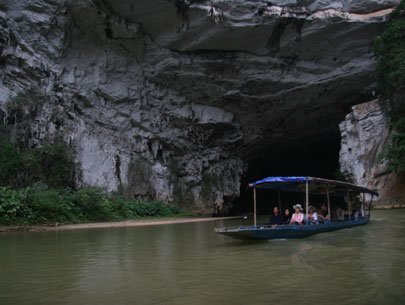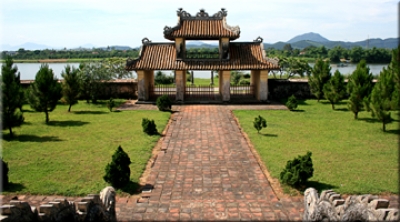
With the 2014 Hue Festival just around the corner, scheduled for this April, visitors will have a chance to discover a number of must see spots in the area.
With the 2014 Hue Festival just around the corner, scheduled for this April, visitors will have a chance to discover a number of must see spots in the area.
Phuoc Tich ancient village
 |
Nestled on the bank of poetic O Lau river, 40 kilometres far from Hue city, on the border of Thua Thien-Hue and Quang Tri provinces, Phuoc Tich is considered a living museum of rural Vietnamese traditional culture.
In 2009 Phuoc Tich was added to the Ministry of Culture, Sports and Tourism’s list of national cultural and historical sites, the second village to be added after the recognition of old Duong Lam in Hanoi.
Visitors to the village can wonder green gardens and search for the ancient trees or admire dozens of shrines, pagodas and temples of the Cham people.
Of the village’s 117 houses, 37 are between 100 and 200 years old, which were made mainly of jackfruit wood and adorned with exquisite and lively carvings.
Bach Ma National Park
 |
Covering 37,487 hectares in the districts of Phu Loc and Nam Dong in the central province of Thua Thien – Hue, Bach Ma National Park is situated at an altitude of 1,450 metres.
The park is named for one particular mountain peak, Bach Ma (White Horse), so-named for the misty white beard that continually encircles the mountain.
It has become one of the most interesting tourist attractions in the area, with spectacular views over the coast.
Bach Ma is home to 2,373 flora and over 1,700 fauna species, accounting for 17% and 7% of the country’s total flora and fauna, respectively.
Visitors can trek Bach Ma Mountain and discover the park’s waterfalls.
King Gia Long’s tomb
 |
King Gia Long (1762 -1820), the first King of the Nguyen dynasty, was laid to rest in a tomb built in Huong Thi Commune, Huong Tra District.
The complex, which also includes the tombs of several of the Emperor's relatives, was constructed from 1814 to 1820 in the Thien Tho Mountains, which comprises 42 small and big mountains.
In front of the tomb, Dai Thien Tho Mountain towers while seven hills at the back look like natural guards of his resting place.
From the tomb, visitors can enjoy views of the boundless mountains and forests.
Huyen Khong Son Thuong pagoda
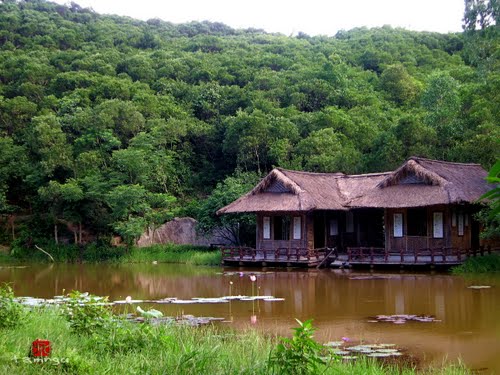 |
Located halfway up the Cham Mountain in the suburbs of Hue, Huyen Khong Son Thuong Pagoda was constructed in 1989 in Huong Ho commune, Huong Tra district.
The Theravada pagoda is well known for its picturesque and heavenly scenery. The tranquil setting of this spiritual getaway is a magnet for those seeking a peaceful alternative to the city.
It also draws literature and art enthusiasts with its collection of stone blocks carved with calligraphy.
On festive days, calligraphy lovers and pilgrims gather at the pagoda to recite poetry, discuss art of handwriting while enjoying the scenic landscape.
Gia Hoi Old Quarter
 |
Stretching from Gia Hoi bridge to Dong Ba bridge, Gia Hoi street (now Chi Lang street), is extolled as another Hoi An ancient town.
Once a bustling business centre in Hue imperial city in the 19th century, visitors to the street can explore Chinese leftovers such as Chieu Ung and Quang Dong pagodas and the Phuc Kien and Quang Trieu ancient houses.
Meanwhile, ancient Hue-style houses can be seen across the street, many of which have survived two centuries and many historical ups and downs. Thanh Binh ancestral temple commemorating the founder of Tuong (classical drama), which was classified as a national cultural site, is a must see.
For Cham architecture, visitors can reach Thien Tien Thanh Giao sect’s General Assembly, a holy worshipping place of the Cham people.
(Source:Nhan Dan)