
The People's Committee of Dong Nai City has recently issued a plan to ensure that 92% of the urban population has access to clean water through centralized water supply systems by 2030. This objective is intended to improve residents’ quality of life, contribute to the completion of urban technical infrastructure standards, serving as one of the key targets outlined in the Resolution of the Dong Nai Provincial Party Congress (now Dong Nai City) for the 2025–2030 term.
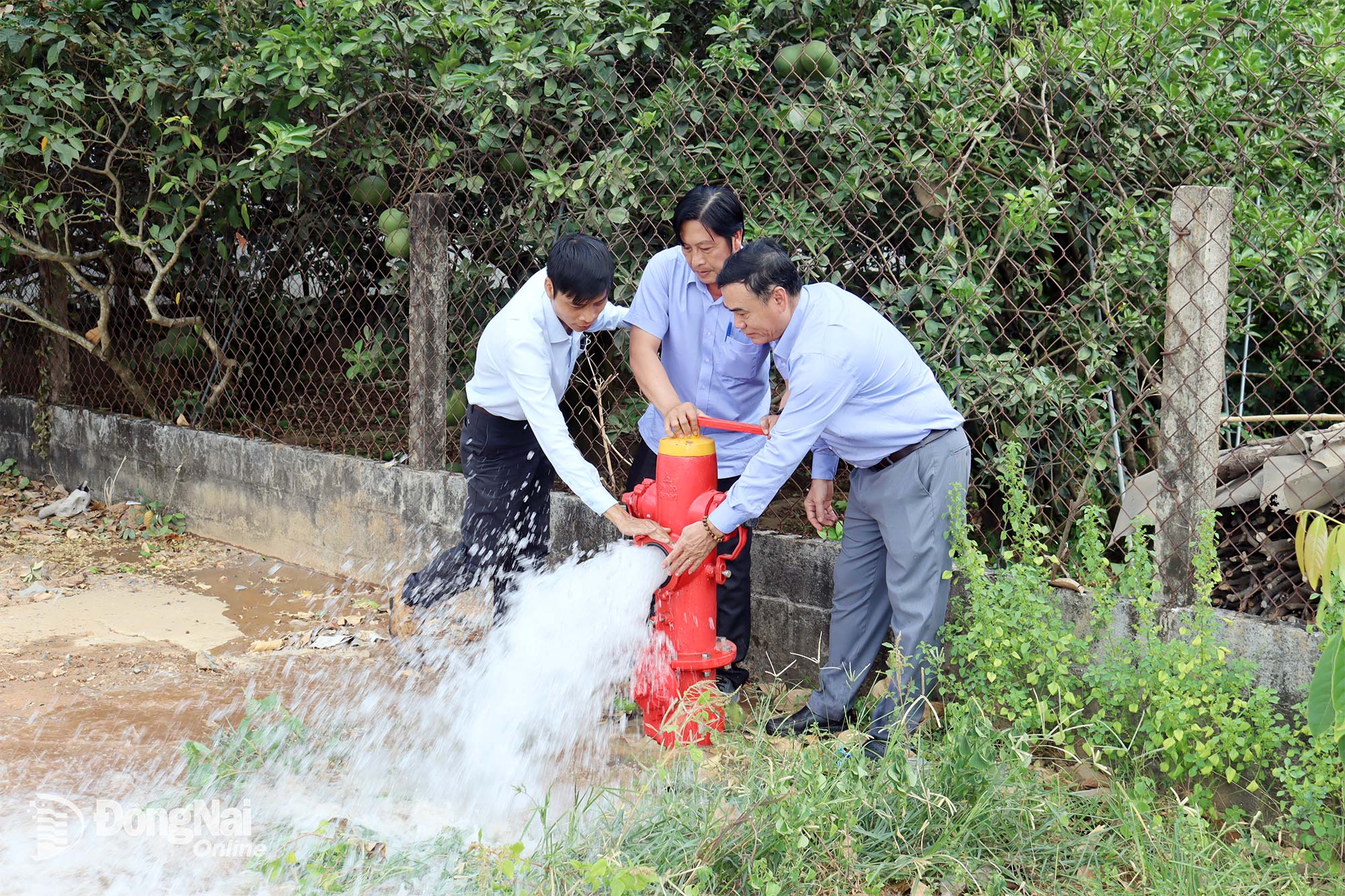 |
| Dong Nai City targets 92% of its urban population to utilize clean water by 2030. Illustrative photo: Hoang Loc |
According to Plan No. 97/KH-UBND, dated June 16, 2026, on urban clean water supply in Dong Nai City for the 2026–2030 period, the proportion of urban residents with access to clean water will increase annually. Specifically, the target is to raise coverage from 88% in 2026 to 89% in 2027, 90% in 2028, 91% in 2029, and ultimately 92% by 2030.
To achieve this goal, the city will focus on constructing new water supply facilities while upgrading and renovating existing systems. Water pipeline networks will be expanded to cover urban areas comprehensively and gradually extend to rural communities. At the same time, investments will be made to increase the capacity of several existing water treatment plants, including those in Bien Hoa, Thien Tan, Nhon Trach, Gia Tan, Phuoc Long, Dong Xoai, and Chon Thanh.
The city will also accelerate the implementation of Phase 2 of the Nhon Trach Water Supply System Project, which is designed to provide a daily capacity of 100,000 cubic meters. In addition, procedures will be completed to launch new water plant projects, including Ho Gia Mang, Nha Bich, Thanh Binh, and the Long Thanh Waterline Project, to ensure water security and meet the demands of future urban and industrial development.
Beyond infrastructure investment, the city has instructed local authorities and water suppliers to intensify public awareness campaigns encouraging residents to connect to the municipal water network in areas where infrastructure is already available. Water supply companies are also required to simplify water meter installation procedures, improve service quality, and strictly monitor water quality before distribution to consumers.
The coordinated implementation of these measures is expected to help realize the goal that “wherever there are residents, there will be access to clean water,” thereby supporting the city’s broader urban development objectives.
According to the Dong Nai Water Joint Stock Company (Dowaco), the largest producer and supplier of clean water in the city, the company plans to invest approximately VND 428 billion in 2026 to expand and upgrade water infrastructure in response to growing demand from both residents and businesses. Specifically, Dowaco will accelerate projects to develop new water sources and increase plant capacity, while also expanding and modernizing water distribution networks to ensure a stable, safe water supply that complies with environmental protection regulations.
By Hoang Loc – Translated by Mai Nga, Minho


Thông tin bạn đọc
Đóng Lưu thông tin