
Along with the goal of economic growth, during the 2020–2025 period, Dong Nai Province has placed special emphasis on building human character and developing culture toward sustainability.
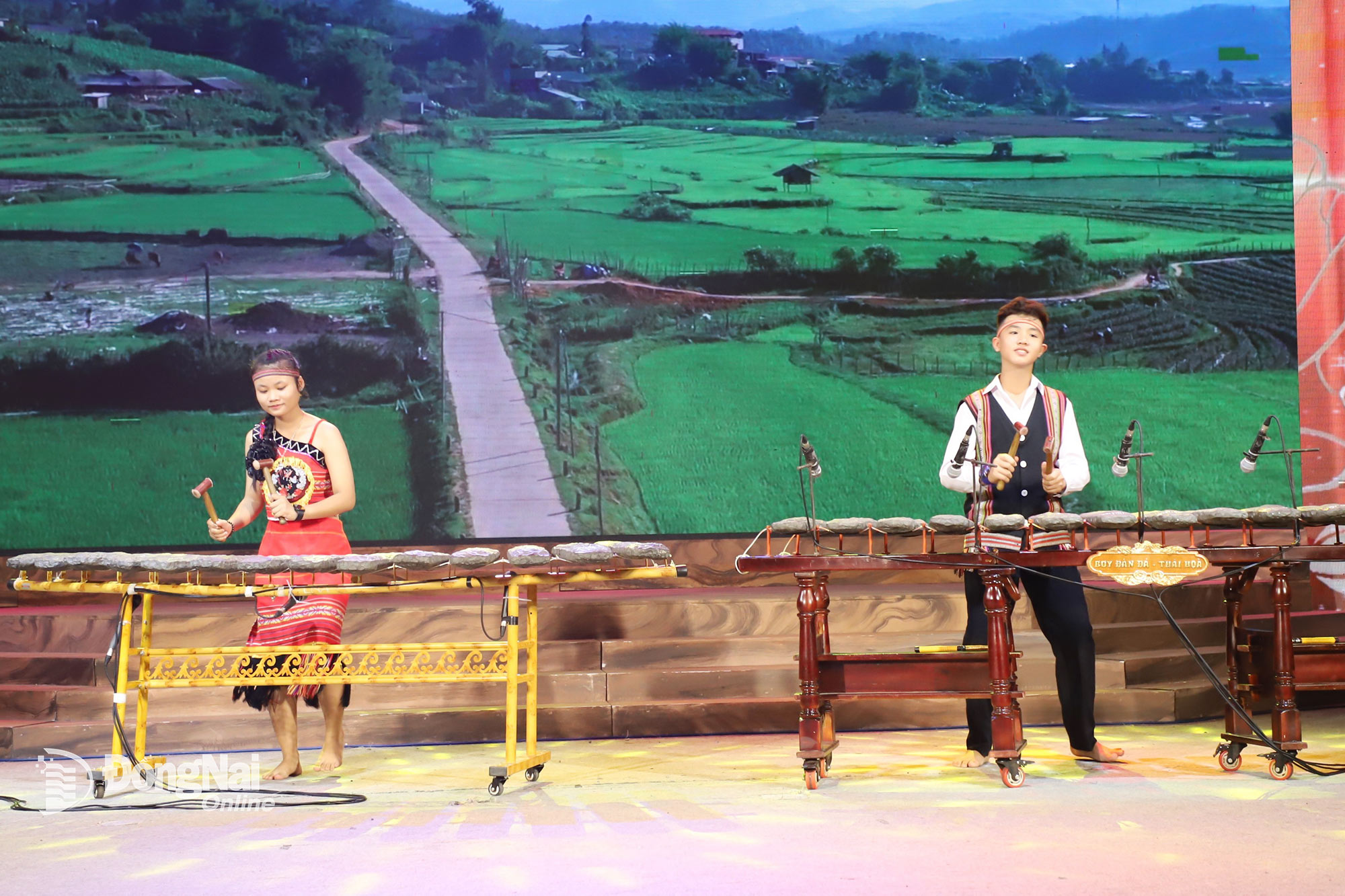 |
| Students in the province perform on lithophones, contributing to the preservation and promotion of traditional cultural values. Photo: My Ny |
The preservation and promotion of cultural values in Dong Nai not only help shape a modern cultural lifestyle but also strengthen national unity and serve as a vital driving force for the province’s socio-economic development.
Multiple heritage preservation activities implemented in sync
Once known as the “green village in the green resistance base,” Ly Lich 1 Hamlet in Phu Ly Commune was among the most disadvantaged areas. Since the launch of the National Target Program on New Rural Development, and thanks to the determined efforts of residents in the locality, both the material and spiritual lives of the community have seen remarkable improvement. The hamlet is home to a large population of the Cho Ro ethnic minority. Each year, locals continue to celebrate the Sayangva Festival with traditional rituals such as offerings to the Rice God, gong performances, grilling bamboo rice, brewing rice wine, and playing folk games like crossbow shooting and bamboo dancing, creating a lively atmosphere of cultural and sporting activities.
Phu Ly Commune is currently home to five Cho Ro artisans who are able to perform and pass down the art of gong playing to younger generations. Notably, these artisans have preserved six traditional gong pieces unique to their ethnic group, including Welcoming Guests, Villagers Climb the Mountains and Forests, Villagers Unite to Protect the Homeland, Phoenix Flying, Rice Pounding, and Lullaby.
Not only in Phu Ly, but also in many other communes and wards such as Thanh Son, Dinh Quan, Dong Tam, Bom Bo, Bu Dang, Loc Ninh, Bu Gia Map, Bao Vinh, and Hang Gon, where ethnic communities such as Stieng, Cho Ro, Tay, Nung, Ma, Mnong, and Khmer live, cultural preservation and promotion efforts are being prioritized. Between 2020 and 2025, Dong Nai has had several traditions recognized as National Intangible Cultural Heritage, including the basket weaving and brocade weaving crafts of the Stieng people, the Stieng’s rice wine brewing techniques, and the Sayangva Festival of the Cho Ro people.
Elder Dieu Liet, a village patriarch in La Nga Commune, shared: “For many years, the Party and the State have shown great care for improving the material and spiritual lives of ethnic minority communities. We are proud that our traditional cultural values are not only preserved but also formally recognized and passed down to younger generations. Thanks to that, the Sayangva Festival of the Cho Ro people, along with our traditional customs and musical instruments, is becoming increasingly well known and appreciated.”
Alongside efforts to safeguard intangible cultural heritage, Dong Nai is also placing strong emphasis on preserving its tangible heritage across 95 communes and wards. According to the Department of Culture, Sports and Tourism, since 2020, the province has been investing in the restoration and embellishment of 14 historical sites, with a total budget of over 131 billion VND. The department has also advised the Provincial People’s Committee to issue a 2024–2028 plan for the restoration and embellishment of relics with a total funding of 331.5 billion VND. This plan aims to preserve degraded sites, promote heritage values, and meet the needs of visitors and local communities.
In just the first nine months of 2025, Dong Nai has prepared a heritage dossier for the Hand-Pounding Rice Craft of the Stieng and Mnong ethnic groups in the former Binh Phuoc area, compiled the profile of the Long Tong (Field-Going) Festival of the Tay people in Dong Nai to propose its inclusion in the National Intangible Cultural Heritage List, and classified the Eastern Nam Bo Security Committee Base in Tri An Commune as a provincial-level historical site. Particularly, the Bom Bo Hamlet Historical Site in Bom Bo Commune has been recognized by the Ministry of Culture, Sports and Tourism as a national historical site.
During the first nine months of 2025, the Dong Nai Museum and historical sites such as the Tran Bien Temple of Literature, Nguyen Huu Canh Temple and Tomb, Tan Hiep Prison, Bien Hoa Citadel, Giao Te House, Loc Ninh Military Airfield, and the Headquarters of the Liberation Army Command of Southern Vietnam have welcomed more than 195,000 visitors for tours, incense offerings, and educational activities
Linking cultural preservation with tourism development and youth education
Beyond preservation, Dong Nai is actively integrating traditional cultural values into contemporary life, connecting them with community-based tourism and youth education. In many localities, traditional festivals have become highlights of tourism programs, offering visitors unique cultural experiences while also creating livelihoods for residents in the locality and promoting the province’s diverse ethnic heritage.
Across the province, youth unions and schools have incorporated lessons about heritage, customs, and folk arts into extracurricular activities. Students have opportunities to visit heritage sites, learn to play gongs, perform folk dances, and try traditional crafts such as basket weaving, brocade weaving, and rice wine making. This undertaking allows younger generations not only to engage closely with the cultural identity of their ancestors but also to develop pride and responsibility in preserving and spreading traditional values within their communities.
Le Thi Ngoc Loan, Provincial Party Committee member and Director of the Department of Culture, Sports and Tourism, emphasized: “Dong Nai will continue prioritizing resources to preserve, promote, and develop both tangible and intangible cultural heritage values. The province is focusing on building major cultural projects, especially the restoration and embellishment of significant historical and cultural relics to educate revolutionary traditions among young generations. At the same time, Dong Nai aims to effectively promote folk art forms and preserve the cultural identities of ethnic minorities in line with sustainable tourism development.”
In its 2025–2030 development orientation, Dong Nai identifies the preservation and promotion of its cultural and historical values, the heritage of its land and people, as one of the key tasks accompanying socio-economic development. The province will continue to strengthen the preservation and utilization of both tangible and intangible cultural heritage, viewing them as vital spiritual resources for building a modern cultural life and enhancing its tourism appeal.
By My Ny - Translated by Trieu Ngan, Minho


Thông tin bạn đọc
Đóng Lưu thông tin