
FINAL ARTICLE: MOVING FORWARD WITH THE NATION
From the Party’s expectations and choices in building a model team of officials, political theory training for cadres and Party members plays a crucial role. It is also the “key” to improving the leadership and management capacity, as well as the fighting strength, of Party organizations, contributing to the sustainable socio-economic development of localities.
 |
|
Principal of Dong Nai School of Politics Phan Xuan Linh (5th from right) presents graduation certificates to participants of the intermediate political theory class. Photo: Truong Hien |
To discuss solutions for enhancing the overall quality of the cadre workforce in the new period, reporters from Dong Nai Newspaper and Radio, Television held a conversation with Dr Vu Thi Nghia, Vice Principal of Dong Nai School of Politics.
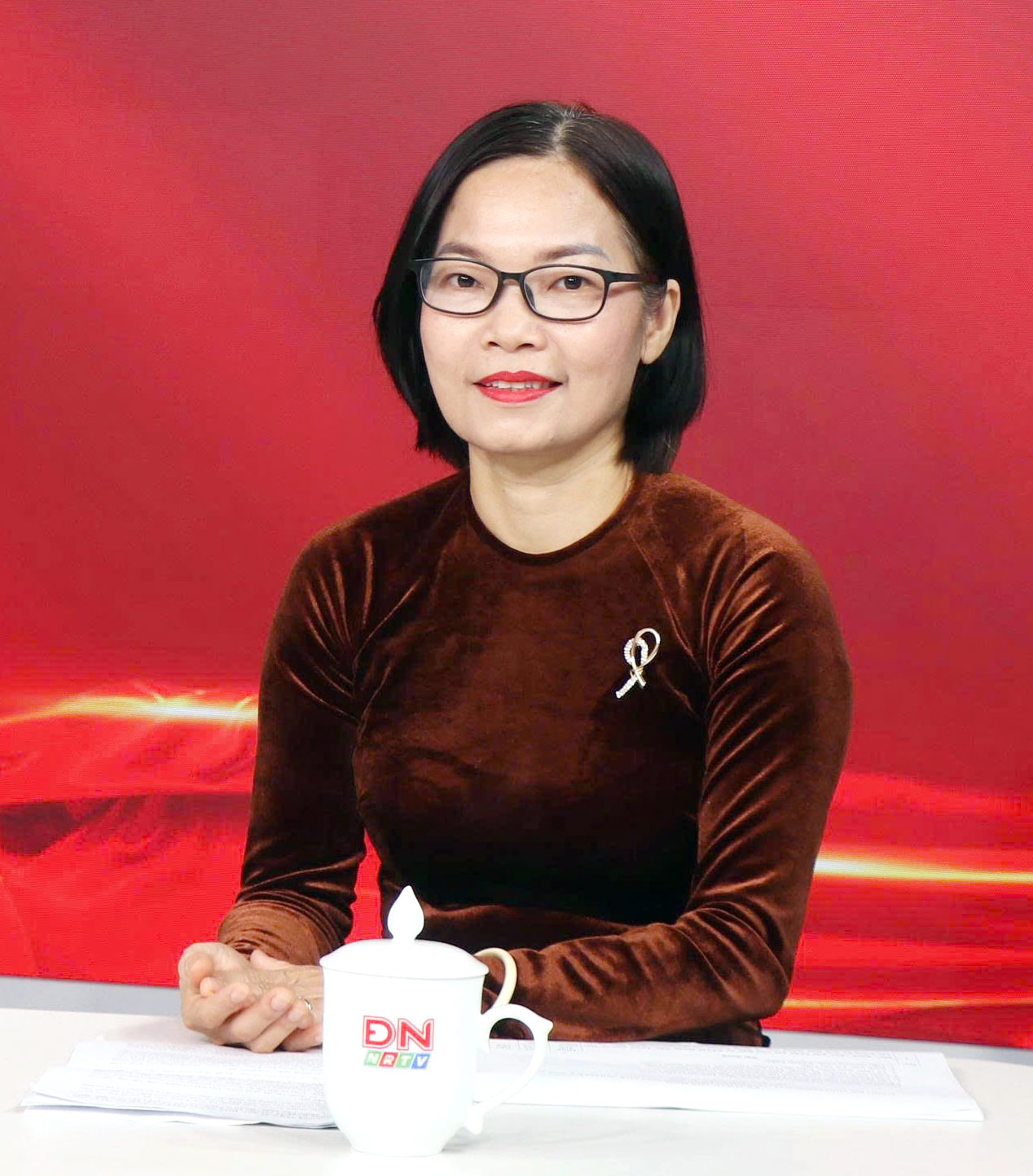 |
| Dr Vu Thi Nghia, Vice Principal of Dong Nai Provincial School of Politics. |
In all programmes and tasks, human resources remain the decisive factor. How do you assess the role of cadres in ensuring breakthroughs are successfully implemented?
During his lifetime, President Ho Chi Minh affirmed: “Cadres are the root of all work; whether success or failure depends on whether cadres are good or not.” Therefore, cadre work holds critical importance and determines the success of revolutionary activities and breakthrough programs across the entire term. Cadres are the ones who turn resolutions into action. In reality, even when we define the right tasks and the right breakthrough programs, no matter how correct they are, if they are not implemented and carried out, they become meaningless. As Lenin once emphasized: “Party guidelines, no matter how correct, if not implemented in practice, are nothing more than a pile of wastepaper.”This shows the pivotal role of cadres and Party members. They translate the Party’s correct guidelines into real life and guide the public in implementing breakthrough programs at the local level. Throughout this process, they promptly detect emerging issues and, from there, propose adjustments to competent agencies. This helps improve Party policies and guidelines. Cadres are also those who inspire and build social consensus. A team of officials who stay close to the people, understand the people, and work for the people will create strong social agreement, thereby mobilizing collective strength to realize breakthrough programs.
Given that importance, what solutions do you propose for personnel work in the 2025–2030 term?
Personnel work is extremely important. Therefore, in this term, the province needs to implement measures to improve the quality of its cadre workforce.
First, we must reaffirm that cadre work is the priority of priorities and requires special attention. The province will need innovations in recruitment, appointment, and evaluation processes. In particular, cadre evaluation must be fair and objective, using modern assessment tools based on KPIs. Each cadre must have specific performance outcomes that serve as a measure of public trust.
The province should establish mechanisms to nurture young cadres and those with development potential, creating opportunities and environments for them to train in real-world conditions, especially in difficult areas and complex sectors. At the same time, policies to attract, utilize, and retain talented individuals must be strengthened through appropriate wages, bonuses, and incentives.
With bold and open mechanisms, Dong Nai can attract capable officials from central agencies or highly skilled Vietnamese working overseas. In fact, breakthrough solutions may include inviting competent experts abroad to return and contribute to Dong Nai.
Alongside attracting high-quality human resources, the province must enhance inspection, supervision, and control of power, and strictly handle cadres showing signs of wrongdoing. With such fundamental solutions, we will build a team of officials with vision, dedication, and the aspiration to contribute, advancing Dong Nai’s development in this term.
Recently, the Dong Nai Provincial Party Committee has also deployed measures to rotate leaders of departments and sectors to grassroots units. In my view, this is an extremely effective method to train and challenge cadres, helping them develop comprehensively in both theoretical and practical capacity.
Dr Vu Thi Nghia,
Vice Principal of Dong Nai School of Politics
To build a team of cadres with “heart and vision,” how important is the training work of the Provincial School of Politics? What innovations will the school apply to improve training quality in the near future?
The Provincial School of Politics is responsible for training and fostering leaders and managers within the grassroots political system, as well as local officials, public servants, and employees. This includes political-administrative theory; Party guidelines and State policies and laws; knowledge and professional skills related to Party building, government, the Vietnam Fatherland Front, and socio-political organizations; and knowledge in other fields. The school also participates in practical reviews and scientific research relating to Party building and the political system at the local level.
Particularly as the country, including Dong Nai, implements the two-tier local government model, the demand placed on grassroots-level cadres is extremely high. Therefore, the school has clearly defined its training direction.
We aim to fundamentally innovate from program content to teaching methods. Learners at Dong Nai School of Politics will not only receive political theory but also practical skills: modern governance, grassroots leadership and management under the two-tier model, citizen engagement, information technology, cybersecurity, smart urban management, and more.
In the new era, the role of cadres is more important than ever. The 2025–2030 Congress Resolution of the Dong Nai Provincial Party Committee has identified developing high-quality human resources as one of the breakthrough programs of the term. The school is committed to inviting leaders from departments, sectors, and localities to share practical experience and problem-solving approaches with learners, helping ensure the effective and timely implementation of Party resolutions in practice.
Fully aware of its role, tasks, and the importance of cadre training for the Party, the Provincial School of Politics will make the most of its capacity to help build a team of officials equipped with both theoretical grounding and practical skills, ready to advance with the nation’s ongoing development.
Thank you for your time.
By Cam Lien (interviewer) – Translated by Thuc Oanh, Thu Ha


Thông tin bạn đọc
Đóng Lưu thông tin