
On the morning of November 25, after listening to the National Assembly (NA)’s group discussions on the investment policy for the national target program on modernizing and improving the quality of education and training for the 2026–2035 period, and the investment policy for the national target program on healthcare, population, and development for the 2026–2035 period, NA deputy Bui Xuan Thong, Full-time Deputy Head of the Dong Nai delegation of NA deputies, chaired the discussion session of Group 6.
At the discussion session, the delegates generally agreed with the draft content but proposed additions and adjustments to certain points.
 |
| Overview of Group 6’s session on the morning of November 25. Photo: Courtesy of NA delegation |
Challenges in repurposing health stations after mergers
Delving into Project 1 on investment in infrastructure and equipment for grassroots healthcare, deputy Nguyen Thi Nhu Y (Dong Nai delegation of NA deputies) noted that implementing the National target program on public healthcare for the 2026–2035 period faces numerous systemic challenges, starting with the need to adjust the program to align with the two-tier local government management model.
Deputy Nhu Y pointed out a practical issue: After the administrative merger at the commune level took effect on July 1, many localities now have surplus health-station facilities. However, to make use of these facilities in accordance with the standards of the National Target Program, a thorough review is required.
“Not every surplus facility can be repurposed as a health station. If we compare with the latest regulations, such as Circular No. 43 issued on November 15, we can see many obstacles regarding infrastructure, medical equipment, and personnel. Therefore, it is necessary to review and assess the actual readiness of commune- and ward-level health stations” – NA Deputy Nhu Y emphasized.
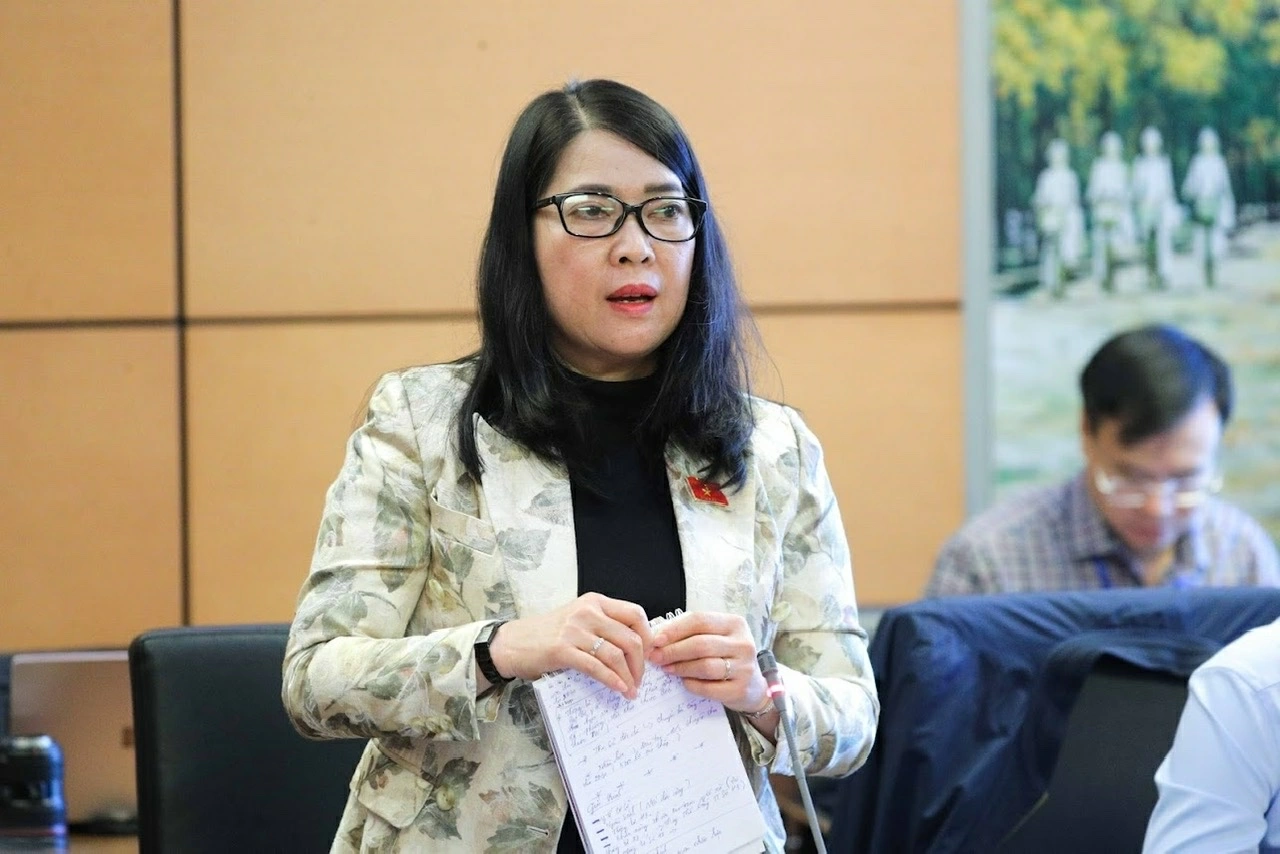 |
| Nguyen Thi Nhu Y from the Dong Nai delegation of NA deputies speaks at the discussion session. Photo: Courtesy of NA delegation |
Regarding healthcare personnel, Nhu Y expressed concerns about the feasibility of the target to train 500 specialist doctors by 2035. She cited that in Dong Nai, which currently has 95 communes and wards, each health station would require 5–7 medical staff under this program, but in reality, many stations are operating with only 1–2 personnel.
Regarding professional targets, NA deputy Nguyen Thi Nhu Y suggested reconsidering the indicator related to stunted child nutrition. The draft currently sets a goal to reduce the rate of stunted malnutrition to below 15% by 2030 and below 13% by 2035.
According to Nhu Y, child health is affected by more than just stunted nutrition. In urban areas, overweight and obesity among children have become an alarming health issue, attracting global attention, and therefore measures are also needed to reduce the rate of overweight and obesity in children.
Concerns about "gaps" during program transitions
Sharing the view on the need for investment, deputy Phan Viet Luong (Dong Nai delegation of NA deputies) praised the drafting agency for building on past experience and applying special mechanisms from Resolution 111/2024/QH15 to ensure feasibility.
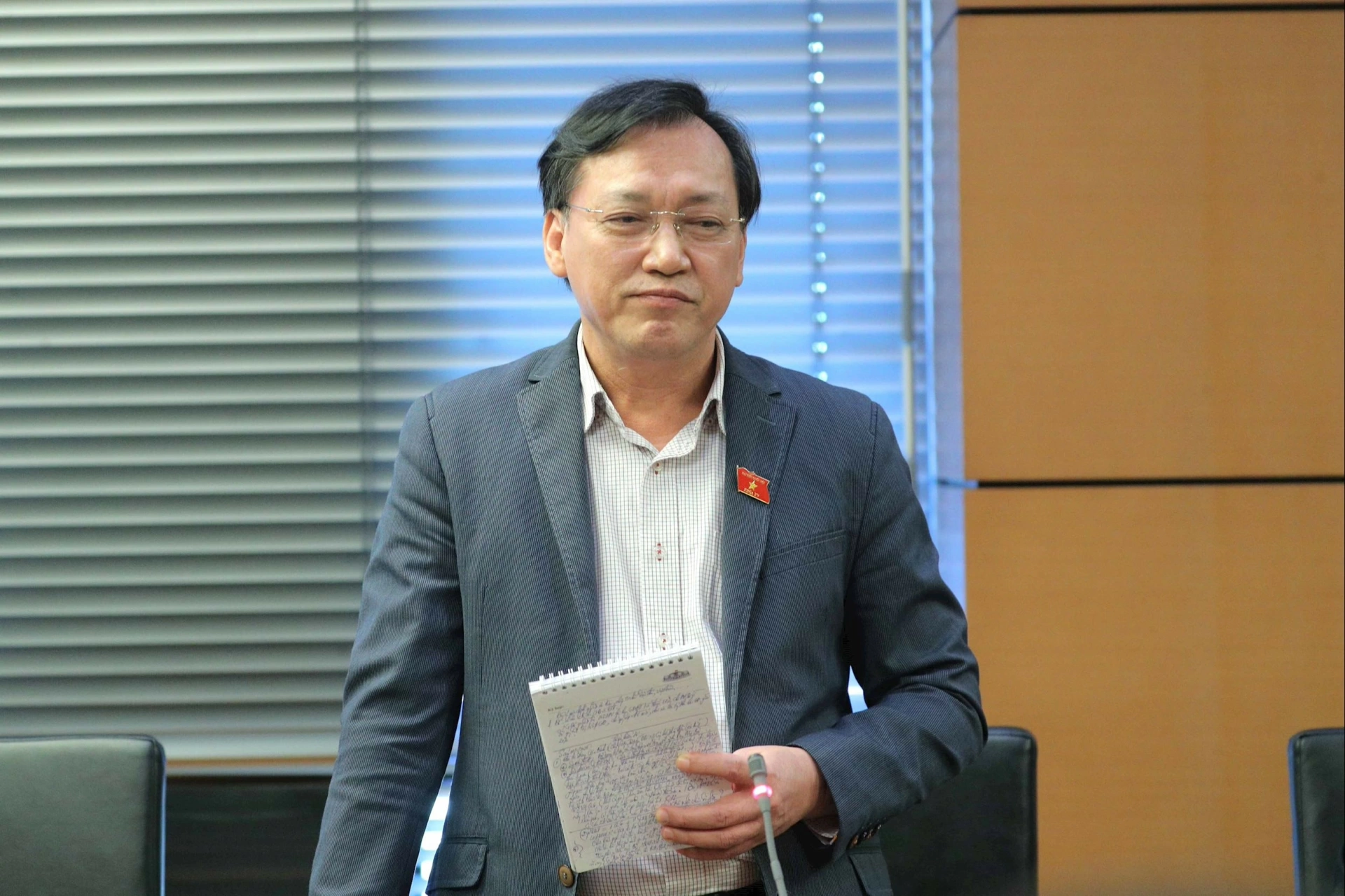 |
| Phan Viet Luong from the Dong Nai delegation of NA deputies speaks at the discussion session. Photo: Courtesy of NA delegation |
However, Luong noted the risk of disruption when integrating healthcare tasks from previous national target programs (such as the Socio-Economic Development Program for Ethnic Minority and Mountainous Areas) into the new program.
“This transition will inevitably create gaps while preparing the necessary conditions for implementation. Without mitigating measures, coupled with already slow capital disbursement, the likelihood of interruptions in essential healthcare tasks is very high” - Luong emphasized, suggesting a thorough review to prevent any disruption of essential medical tasks.
Deputy Phan Viet Luong also proposed renaming the resolution to “National target program on public healthcare, population, and development” to ensure clarity and comprehensiveness.
Regarding the overall objective, he emphasized the need to clearly distinguish between general and specific goals. The general objective should focus on standardizing the healthcare system and ensuring citizens’ equal and fair access to healthcare, as mandated by the Constitution, rather than delving into minor details.
Regarding the group of 10 specific indicators, deputy Luong expressed particular concern about the target of “100% of the population having electronic health books by 2030”.
“The rigid regulation of 100% by 2030 is too general. It may be better to implement it in phases and by population groups or regions to link with the quantification in implementation and evaluation of results" - Luong suggested. Additionally, he recommended a thorough assessment of the targets on fertility rates and sex ratio at birth, as these are long-standing and challenging issues.
 |
| Do Huy Khanh from the Dong Nai delegation of NA deputies speaks at the discussion session. Photo: Courtesy of NA delegation |
Contributing opinions on the preparation work, Deputy Do Huy Khanh (Dong Nai delegation of NA deputies) highly appreciated the drafting agency’s approach in positioning these two projects within the broader framework of national target programs that have been and are being implemented.
The NA deputy noted that the drafting team conducted thorough research and drew on practical experience from previous program development to select the content for the resolution. As a result, the current draft resolution addresses many existing challenges and effectively meets the proposed requirements.
By Hong Cuc – Translated by Dang Huyen, Thu Ha


Thông tin bạn đọc
Đóng Lưu thông tin