
Female intellectuals in Dong Nai Province have been affirming their roles in spreading the values of knowledge and humanity, as well as advancing sustainable development. Promoting the role of female intellectuals is an important driving force to enhance human resource quality, foster breakthroughs in science and technology, and build a modern, civilized society.
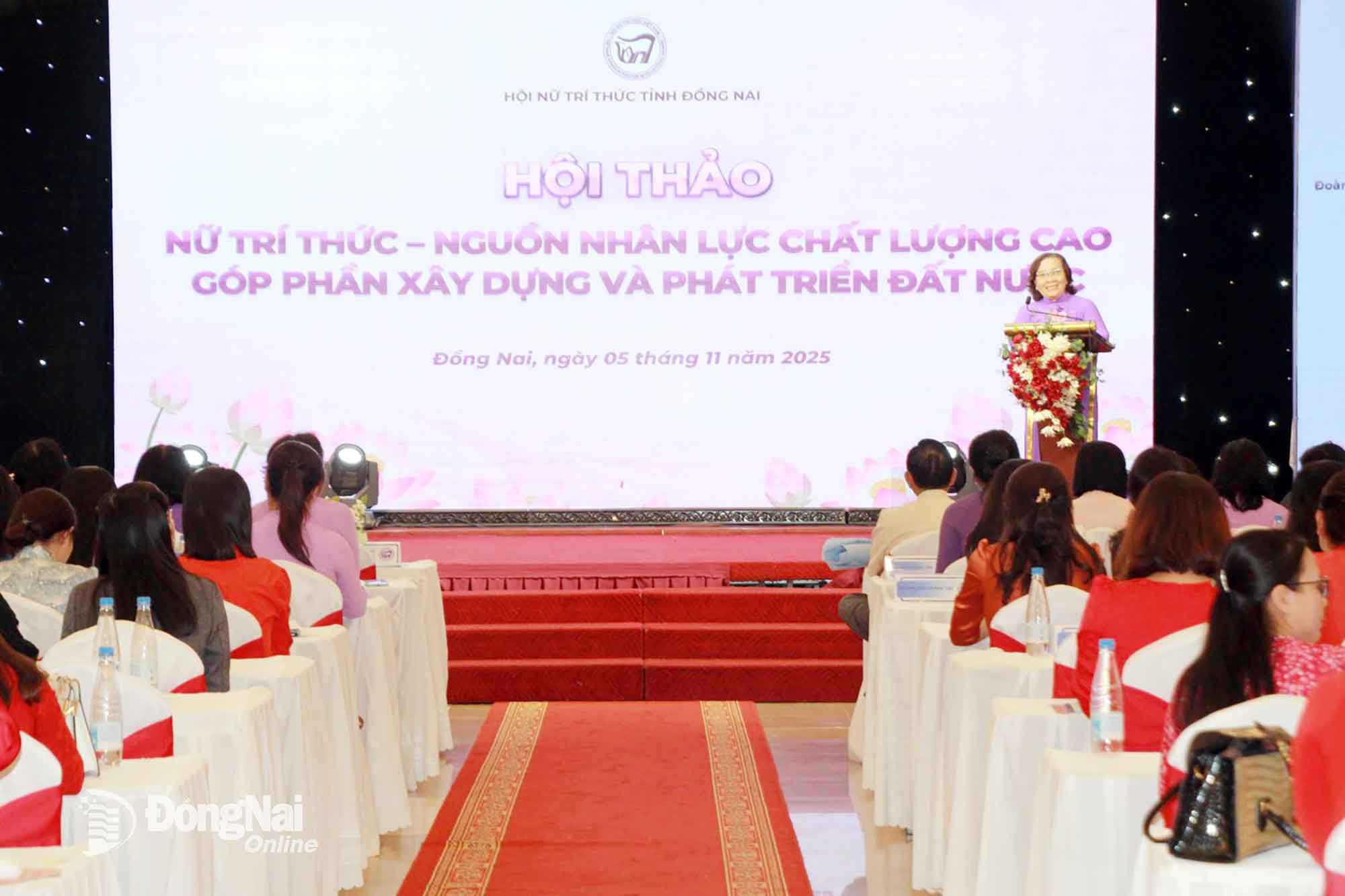 |
| Scene of the seminar. Photo: Nga Son |
At the seminar titled “Female intellectuals – A high-quality human resource contributing to national building and development” held on the morning of November 5 by the Dong Nai Provincial Intellectual Women’s Association, numerous discussions and presentations highlighted the significant contributions of the province’s female intellectuals and proposed multiple solutions to further enhance their strength in the new context.
Affirming the great contributions of female intellectuals
 |
|
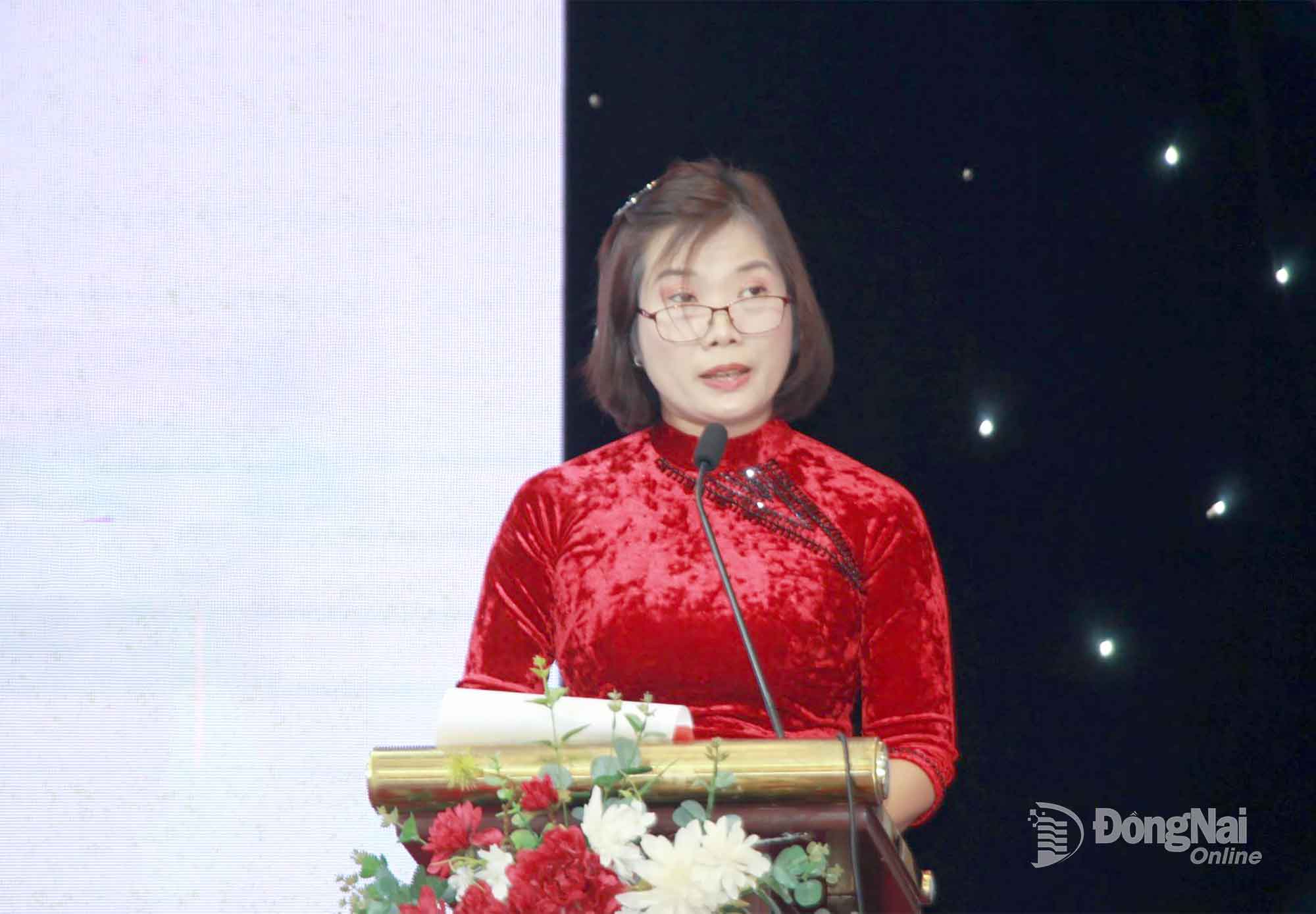
Assoc. Prof. Dr. Huynh Bui Linh Chi, representative of the Intellectual Women’s Association of Dong Nai University, speaks at the seminar. Photo: Nga Son |
Speaking at the event, Assoc. Prof. Dr. Huynh Bui Linh Chi, from the Intellectual Women’s Association of Dong Nai University stated that Dong Nai currently has over 22,000 female intellectuals active in almost all fields of social life. Among them, more than 61% are teachers who dedicate themselves daily to nurturing students’ knowledge and dreams. Thousands more are doctors, engineers, technology experts, entrepreneurs, and social activists. Each female intellectual represents an indispensable piece in the overall picture of Dong Nai’s development.
Dr. Ngo Thi Huyen from Lac Hong University emphasized the remarkable contributions made by the female intellectuals across various sectors. Women account for the majority of the workforce in the province’s administrative and public service sectors (about 64% of total officials, civil servants, and public employees). The proportion of women participating in Party committees at all levels has been steadily increasing.
 |
|
Dr. Ngo Thi Huyen, Lac Hong University, speaks at the seminar. Photo: Nga Son |
The clearest example is that after the 1st Congress of the Dong Nai Provincial Party Committee (2025–2030 tenure): two out of four Deputy Secretaries of the Provincial Party Committee are women, and 22 out of 68 members of the Provincial Party Executive Committee are also female. With intelligence, competence, innovative thinking, human-centered management style, and inspirational qualities, the female leaders and managers have contributed to driving significant improvements in the management, administration, and implementation of provincial tasks.
In education and human resource development, the female intellectuals account for more than 61%. At the university and college levels alone, over 50% of lecturers are women. They play a direct role in shaping and training high-quality human resources for the province in the new era. Beyond their important roles in the government apparatus and fields that require knowledge, ethics, and dedication, the female intellectuals are also pioneers in digital transformation, mastering technology, quickly adapting to changes, and continuously innovating to keep pace with the rapidly evolving world.
With the attention of provincial leadership, the support of agencies and organizations, and above all, the determination, intellect, and resilience of the female intellectuals, Dr. Nguyen Thi Thu Lan, Chairwoman of the Dong Nai Intellectual Women’s Association, expressed confidence that the province’s female intellectuals will continue to shine and make growing contributions to the sustainable development of both the province and the nation.
In her presentation, Nguyen Ho Xuan Huong, Deputy Head of the Intellectual Women’s Association of Lac Hong University, noted that the female intellectuals-especially those in education and training field-are becoming increasingly active in using interactive digital platforms to design lessons and applying learning analytics to track students’ progress. They also encourage students to use digital tools for self-assessment and personal development planning.
 |
|
Dr. Nguyen Thi Thu Lan, Chairwoman of the Dong Nai Intellectual Women’s Association, speaks at the seminar. Photo: Nga Son |
Besides performing their professional duties, the female intellectuals and female scientists contribute through initiatives, technical innovations, digital transformation applications, and scientific research projects that generate value in their fields and for the community. Their contributions have left a significant mark on national development, affirmed their capabilities across diverse sectors, and inspired younger generations to nurture the aspiration to contribute.
Proposing solutions to promote the role of female intellectuals
In addition to highlighting the female intellectuals’ achievements and contributions, participants also pointed out the difficulties and challenges facing them—such as gender stereotypes limiting their advancement opportunities, the pressure of balancing work and family affairs, limited research incentives and environments, and insufficient skills in digital technology, foreign languages, data management, and new technologies.
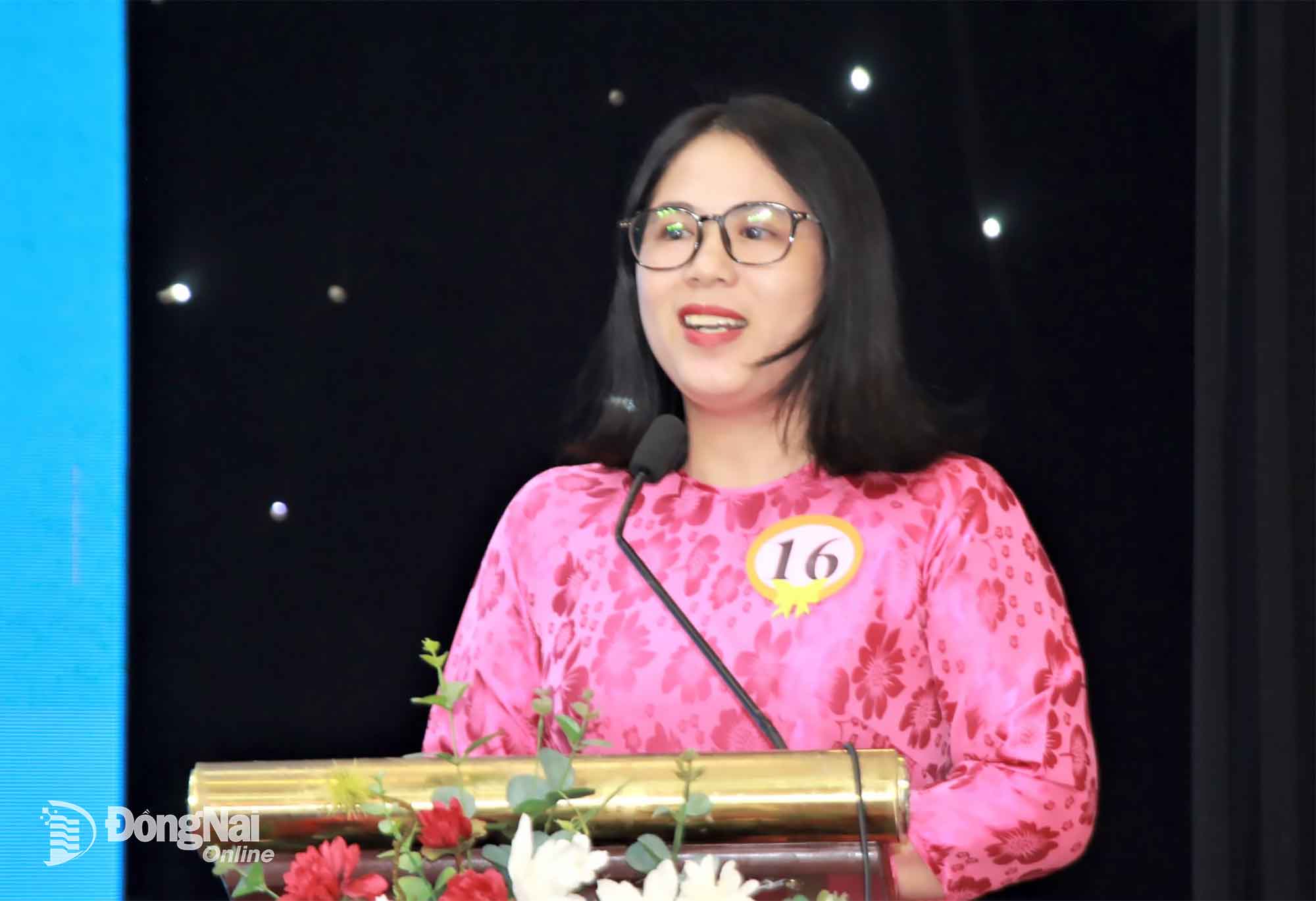 |
| Master’s degree holder Trinh Thi Tinh, lecturer at the Provincial School of Politics, delivers her presentation. Photo: Nga Son |
To address these issues, the participants proposed several measures to further promote the female intellectuals’ contributions. Regarding mechanisms and policies, Master Trinh Thi Tinh from the Dong Nai Provincial School of Politics suggested enhancing activities to raise awareness among leaders at all levels, society, families, and the female intellectuals themselves about their positions and importance in social development. These efforts aim to eliminate gender bias and change the way the female intellectuals are perceived, evaluated, planned for, selected, trained, and utilized."
Party committees and authorities at all levels should regularly include the female intellectuals in personnel planning to ensure both quantity and quality. The Provincial Women’s Union and the Provincial Intellectual Women’s Association should take a more active role in advising the Provincial Party Committee and Provincial People’s Committee to issue policies encouraging women to engage in scientific research, innovation, and digital transformation. This should include mechanisms to prioritize assigning female intellectuals as principal investigators of research topics and projects and providing support in terms of funding, time, modern research facilities and equipment, and flexible working conditions.
 |
| Master Hoang Thi Lai, Vice Chairwoman of the Dong Nai Intellectual Women’s Association, speaks at the seminar. Photo: Nga Son |
Regarding solutions on training and professional development and capacity building, Master Hoang Thi Lai, Vice Chairwoman of the Dong Nai Intellectual Women’s Association, proposed special programs to support the female intellectuals in pursuing master’s and doctoral degrees in strategic fields like information technology, artificial intelligence, data science, automation, processing industries, and logistics-meeting the demand for high-quality human resources in the new era. She also emphasized the need to build networks connecting Dong Nai’s female intellectuals with those nationwide and internationally, creating opportunities for knowledge sharing, research cooperation, and integration.
On behalf of the seminar chairs, the, Assoc. Prof. Dr. Huynh Van Toi-former member of the Provincial Party Standing Committee, former Head of the Propaganda and Training Department of the Provincial Party Committee, and former Chairman of the Vietnam Fatherland Front Committee of Dong Nai Province-praised the high-quality discussions and valuable insights presented at the event. The organizing committee will incorporate these into the seminar’s final documentation.
In addition to fostering a dynamic, creative, and equitable working environment, many participants proposed empowering young, capable female intellectuals to hold key positions within the political system and public service units-helping to rejuvenate and strengthen the leadership pipeline.
Promoting the role of the female intellectuals in the new era is not only a strategic mission but also an essential requirement to enhance human resource quality, drive innovation, and advance international integration. Therefore, it’s necessary to create more favorable mechanisms, policies, and environments to allow the female intellectuals to fully unleash their talents and join hands in building Dong Nai into a green, modern, and civilized province.
By Nga Son – Translated by Trieu Ngan, Thu Ha


Thông tin bạn đọc
Đóng Lưu thông tin