
On the morning of September 29, as part of the agenda of the 1st Dong Nai Provincial Party Congress for the 2025–2030 tenure, delegates were divided into five groups to discuss the draft documents. Among them, Group No. 3 held discussions on the topics of culture, education, healthcare, environment, social welfare and digital transformation.
The session was co-chaired by Le Truong Son, Member of the Standing Committee of the Provincial Party Committee, Vice Chairman of the Provincial People's Committee, and Giang Thi Phuong Hanh, Member of the Standing Committee of the Provincial Party Committee, Secretary of the Party Committee, Chairwoman of the People's Council of Binh Phuoc ward; and Ho Van Ha, Member of the Provincial Party Committee, Vice Chairman of the Provincial People's Committee.
Ton Ngoc Hanh, Alternate member of the Party Central Committee, Standing Deputy Secretary of the Provincial Party Committee, and Chairwoman of the Dong Nai Provincial People’s Council, also attended the discussion.
 |
| Delegates moderate the discussion session at Group 3. Photo: Huy Anh |
Participating in the discussion, delegates shared strong agreement with the goals, viewpoints and development orientations as well as the specific tasks and solutions presented in the draft documents. In addition to discussions to further clarify the results of implementing the Resolution of the 2020–2025 Provincial Party Congress, many delegates contributed opinions on the orientation, tasks and solutions in the fields of culture, social affairs and digital transformation for the 2025–2030 term.
Delegate Nguyen Thi Lan Anh, Permanent Deputy Secretary of the Party Committee of Phu Rieng commune, raised the issue of ensuring that cultural development should keep pace with economic growth. She noted that the draft documents already identify core objectives for cultural development. However, for culture to truly become a driving force in the current phase, resource allocation for culture must be planned in a more concrete manner, tailored to each locality and region, thereby enriching the cultural landscape of Dong Nai province.
Regarding the preservation and restoration of cultural values, especially traditional culture and that of ethnic minority communities, delegate Lan Anh proposed that the province establish a roadmap to safeguard and promote cultural heritage, particularly distinctive cultural identities to help maintain local uniqueness throughout the process of integration and development.
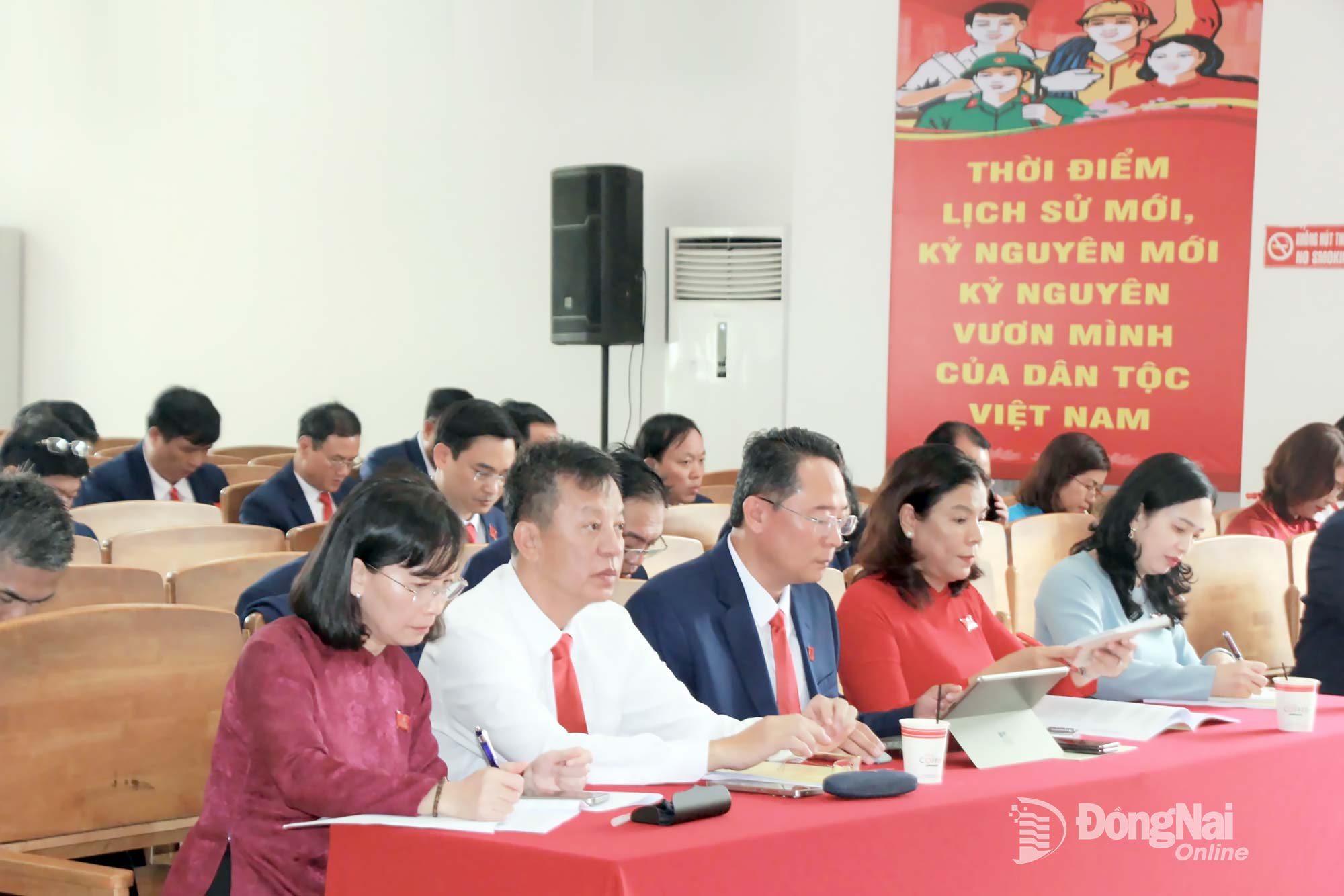 |
| Delegates participate in the discussion at Group 3. Photo: Nguyen Tuyet |
In the field of culture, some delegates mentioned that the operations of grassroots cultural and sports institutions have not fully utilized their functions due to the lack of mechanisms and personnel. They called for solutions to maximize the effectiveness of these grassroots cultural and sports institutions.
The province needs to step up investment in building more schools and allocating additional teaching staff to meet students’ learning needs. At the same time, it should work toward achieving the target of having 80% of public schools meet national standards by 2030.
In addition, some delegates proposed that the education and culture sectors work together to strengthen the teaching of local history and culture for students, giving them the opportunity to gain a deeper understanding and a more comprehensive perspective of local history.
 |
 |
 |
 |
 |
|

Delegate Nguyen Duc Thanh, Chief of Binh Phuoc ward Police stated that ensuring social welfare plays an important role in safeguarding national security and maintaining social order and safety. However, the beneficiaries of social welfare policies must include street wanderers, orphans, people with mental disorders, and those without any support, so that appropriate policies and solutions can be effectively implemented.
Social housing for workers and low-income earners was also a concern raised by many delegates.
One of the targets set for the 2025–2030 tenure, building 65,000 social housing units, is considered low compared to Dong Nai’s current workforce of nearly one million people. Therefore, delegates proposed raising the target to between 100,000 and 110,000 units to better meet housing demands among low-income groups.
In addition, delegates discussed a wide range of other issues related to investment, transportation infrastructure, and the treatment of wastewater and solid waste.
Speaking at the discussion session, Le Truong Son, Member of the Standing Committee of the Provincial Party Committee, Vice Chairman of the Provincial People's Committee, on behalf of the discussion moderators, acknowledged and took note of all delegates’ opinions and affirmed that they would be compiled and submitted to the congress.
By Nga Son - Translated by Thu Hien, Thu Ha


Thông tin bạn đọc
Đóng Lưu thông tin