
After two months of implementing the two-tier local government model, Bien Hoa ward in Dong Nai province, like other wards and communes, has faced challenges in facilities and heavy workloads. However, ward officials and civil servants have made efforts to fulfill their duties.
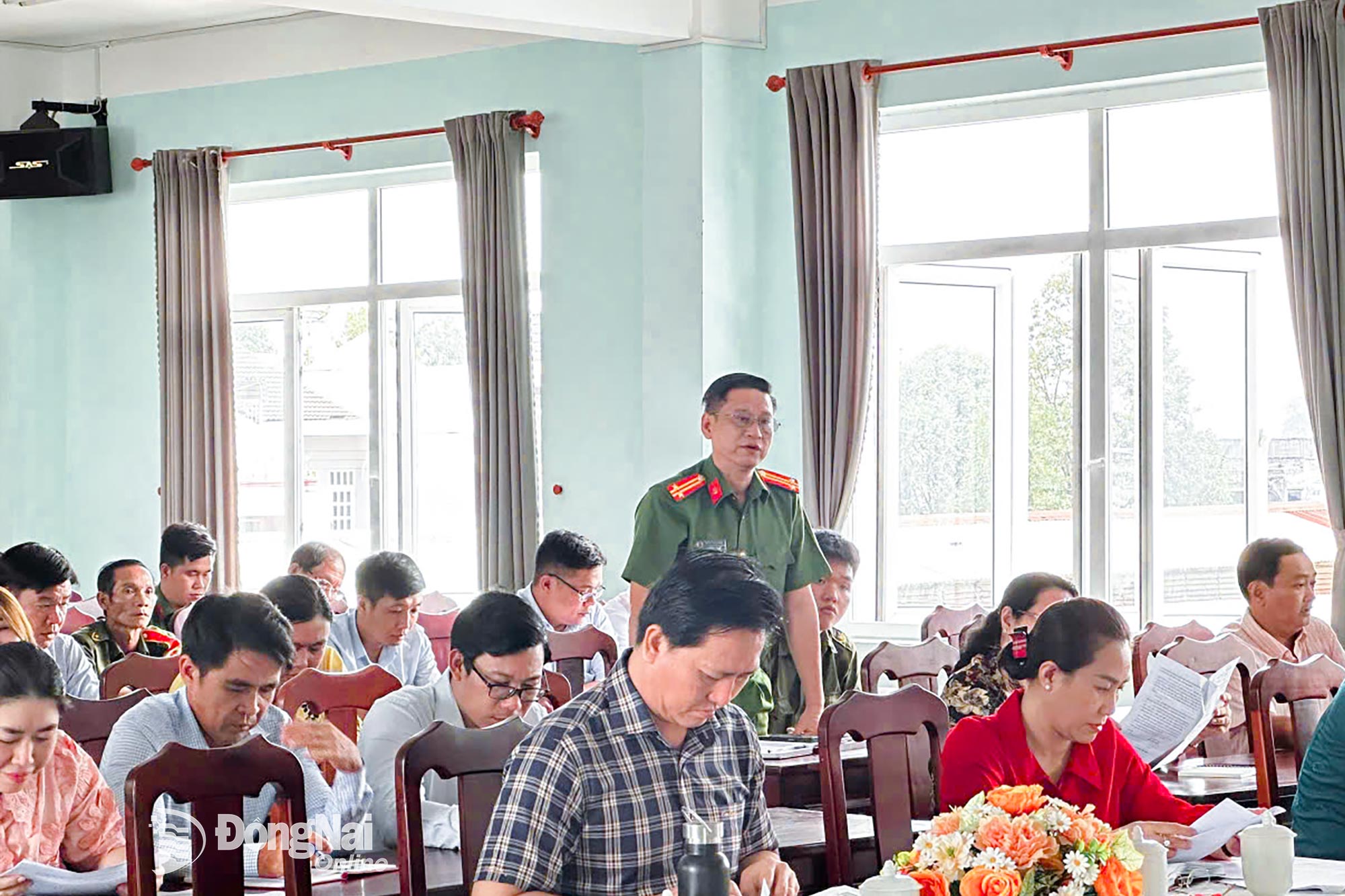 |
| Official and civil servant of Bien Hoa ward share opinions at the dialogue with the Party Secretary and Chairman of People’s Committee of the ward. Photo: Phuong Hang. |
Many officials and civil servants have shown initiative, working diligently to serve residents regardless of weekends or evenings. However, alongside these achievements, several difficulties and shortcomings remain.
Listening to the people
To build a commune-level government that is truly close to the people, transparent, and effective, where citizens’ requests must be resolved at the commune level in line with the Party Central Committee’s directive upon the implementation of the two-tier local government model, the Party Committee and People’s Committee of Bien Hoa ward recently became the first of 95 communes and wards in the province to organize a dialogue between the Party Secretary, Chairman of People’s Committee of the commune with officials and civil servants of the ward in 2025. The aim was to address difficulties, overcome shortcomings, and find practical solutions to improve performance.
The dialogue took place in an open and democratic atmosphere, grounded in listening and understanding so that ward officials could work together more effectively.
Le Thi Ngoc Ngan, Deputy Chief of Office of the Bien Hoa ward Party Committee, shared: Since adopting the two-tier government model, workloads have increased. Officials often work beyond office hours, including Saturdays, Sundays, and evenings, to meet requirements. To encourage and recognize these efforts, there should be overtime support policies. Meanwhile, Huynh Anh, Member of the ward Party Committee’s Inspection Commission, noted: Officials and civil servants from the Party Agencies of the former Bien Hoa city Party Committee, after the merger, have been transferred to the ward Party Committee and retain their salary and allowances for six months, including a 25% public duty allowance and a 30% Party work allowance. However, those transferred from the government bloc of Bien Hoa city and communes/wards, now also working in the ward Party Committee since July 1, 2025, do not receive the 30% Party work allowance. We propose the ward Standing Party Committee raise this issue to higher authorities for consideration.
Truong Le Ngoc Huy, Officer of the Culture and Society Division of the ward People’s Committee, added: Currently, ward officials and civil servants have to undertake multiple roles. Will they receive responsibility allowances or additional support?”
Other opinions raised concerns that a small number of officials and civil servants still show a lack of enthusiasm and reluctance to embrace changes. How will the ward Party Committee lead to enhance their sense of responsibility and commitment to serving the people? In addition, with shortages in information technology equipment and infrastructure at the ward level, what plans does the ward have to support investment in these areas?
In response to the proposals, representatives from the specialized divisions of the ward Party Committee and People’s Committee addressed several issues within their authority, while matters beyond their jurisdiction were recorded to be submitted to higher-level authorities for consideration. Specifically, the ward will propose that the provincial People’s Committee, Department of Home Affairs, and Department of Finance review allowances or additional support for ward officials covering multiple roles. The ward People’s Committee has also reported IT equipment needs to the provincial People’s Committee and the Department of Science and Technology.
Action in parallel with words
At the dialogue, Member of the Provincial Party Committee, Party Secretary and Chairman of People’s Council of Bien Hoa ward Vien Hong Tien said: In the coming time, the ward Party Committee will focus on leading and directing the implementation of the Party’s guidelines and the State’s policies and laws; promoting learning and following Ho Chi Minh’s ideology, morality, and style so that each official embodies the spirit of “people as the foundation.”
He emphasized the importance of role modeling, starting with leaders of the Party, government, and agencies, whose words must be matched by actions, to inspire collective responsibility.
In annual evaluations, responsibility and public service attitude will become key criteria. Those who serve diligently will be rewarded, while those showing negligence will be criticized or strictly disciplined. The ward Party Committee and People’s Committee will also work to build a friendly, democratic environment that encourage officials and civil servants to promote initiatives, dare to think, dare to act, and dare to take responsibility for the common good. Attention will be given to the well-being of officials and civil servants, as only when they feel secure can they wholeheartedly serve the people.
With such comprehensive measures, the ward Party Committee and People’s Committee believe the sense of responsibility and public service among officials will continue to improve, strengthening the apparatus to meet new demands.
Bien Hoa ward’s leadership also urged all officials and civil servants to thoroughly grasp the motto of the ward’s first Party Congress for the 2025-2030 tenure: “Solidarity – Discipline – Breakthrough – Development,” along with the guiding viewpoints in the new context. This is not merely a slogan but must become the compass for every policy, decision, and action at all levels, sectors, and by every cadre and Party member, thereby contributing to building a strong political system and ensuring rapid, sustainable development in the new stage.
Improving the quality of administrative reform is a key task. Efforts should focus on reviewing cumbersome and unnecessary procedures to propose adjustments and shorten processing times. Each official and civil servant needs to be more proactive in their work, willing to share and support colleagues, and minimize the passing of responsibility. They must firmly grasp their functions and duties, stay updated on new regulations, and uphold the role of officials who are “close to the people, connected with the people, and serving the people.” Each individual should reflect on themselves: Have I truly been close to the people? Have I listened to them? Have I been flexible enough in reasonably addressing their concerns?
Government mass mobilization work will also be strengthened, with officials urged to adopt a courteous and receptive attitude when dealing with citizens, avoiding harassment or unnecessary obstacles. The Party Secretary reminded: Each official and civil servant must strive for self-improvement, focus on self-study, enhance communication skills, apply technology, and strictly comply with the 19 prohibitions for Party members.”
Vien Hong Tien also requested the ward People’s Committee to develop specific annual training plans, prioritizing courses on administrative reform, state management, and leadership skills to meet new requirements.
The dialogue between the ward leaders and civil servants was not a formal event but an opportunity to strengthen trust, solidarity between leaders and officials, and the relationship between government and citizens. It encouraged greater efforts to build a truly “integrity-based, action-oriented, people-serving” ward government.
Member of the Provincial Party Committee, Party Secretary and Chairman of People’s Council of Bien Hoa ward Vien Hong Tien
By: Phuong Hang
Translated by: M.Nguyet-Thu Ha


Thông tin bạn đọc
Đóng Lưu thông tin