
(ĐN) – The merger of provincial and communal administrative units marks a historic milestone in Vietnam’s national administrative reform, a sweeping restructuring effort aimed at building a leaner, more modern and capable government aligned with the country’s developmental aspirations in a new era of national resurgence.
To ensure the success of the national transformation, civil servants, party members and public officials must elevate their leadership capacity and act decisively. Meanwhile, citizens are encouraged to unite behind the Party, overcome transitional challenges, and work collectively toward a brighter future.
 |
|
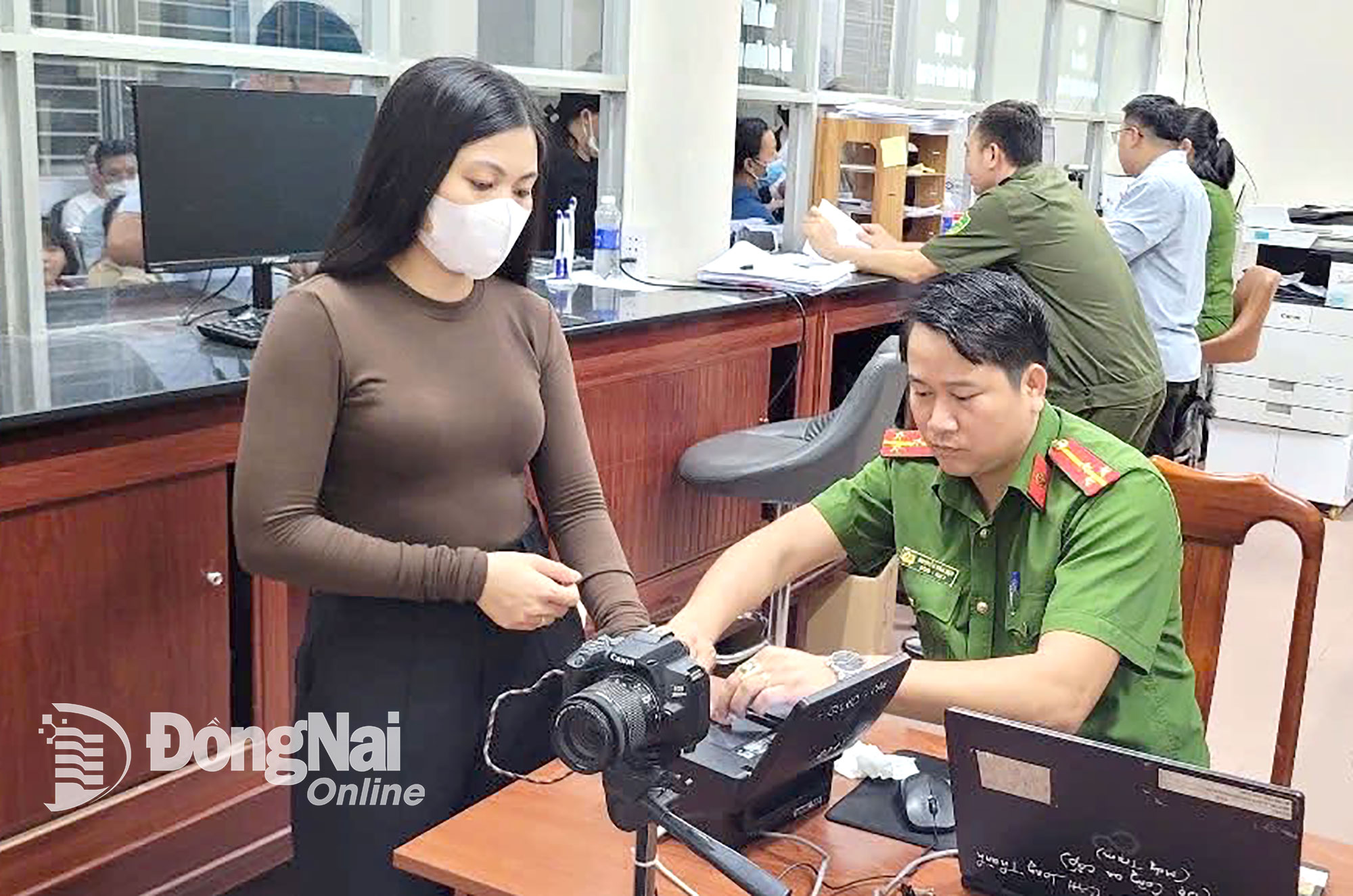
Long Thanh communal Police assist residents with administrative procedures. |
Party will, public consensus
Despite being a Saturday, on July 12, all Party members of Binh Tien hamlet’s Party Cell in Xuan Phu commune gathered early to join local residents in a community cleanup campaign.
According to Party Cell Secretary Truong Phu Hoang, the collective spirit was palpable as early as 6:00 AM. Organized in small groups, villagers swept the streets, trimmed overgrown vegetation, and cleared obstacles obstructing traffic visibility. With strong participation from both Party members and residents, the work was quickly completed, giving local streets a cleaner and more welcoming appearance.
“This may seem like a small act,” shared local resident Nguyen Thi Binh, “but it raises community awareness about environmental hygiene and strengthens neighborhood bonds. Clean streets uplift people’s spirits. Every household doing their part, from clearing trash to planting trees, can help transform the hamlet day by day. I hope this movement becomes a regular activity to keep our environment fresh and healthy.”
In the wake of administrative restructuring, residents in newly formed communes and wards initially faced difficulties accessing administrative services. Recognizing this, Long Thanh commune Police stepped up efforts to serve citizens regardless of time.
In a public notice, Police Chief Major Le Huy Thong announced that from July 8 to 31, 2025, the Long Thanh Police would offer extended public service hours to meet residents’ pressing needs. Administrative services such as ID issuance, residency registration, and Level 2 digital ID processing would be available in three daily shifts, morning (7:30–12:00), afternoon (13:30–17:00), and evening (19:00–21:30), from Monday through Sunday at the commune’s police station.
Thanks to this flexible schedule, residents unable to take time off during business hours were still able to complete their procedures. This dedication drew praise and gratitude from locals, a powerful source of motivation for the officers to continue embodying their motto: “For the people we serve.”
Responsibility and innovation in governance
According to Chairman Vo Tan Duc of the provincial People’s Committee, for Dong Nai’s newly formed governance system to operate smoothly and effectively, every level of the administration, from local officials to provincial leaders, must adopt a results-driven mindset. He emphasized the principles of “clear roles, clear tasks, clear responsibilities, clear timelines, clear outcomes, and clear authority” as essential to advancing into Vietnam’s next chapter.
As part of the new administrative model, commune-level authorities have gained increased autonomy in key areas such as land management, civil registry, judicial affairs, and personnel.
Chairwoman Giang Thi Phuong Hanh of the Binh Phuoc ward People’s Council shared that the ward has already deployed a suite of digital platforms, including the National Public Service Portal, electronic civil registry systems, and document management software. However, she noted some technical challenges remain with network connectivity and system synchronization.
To address this, the ward launched several citizen-centric innovations to improve public service delivery. One standout is the “At-home administrative services” model.
Under this initiative, public service staff from the ward’s administrative center visit residents at home to assist with tasks like signature verification, secured transactions, and other essential procedures. Additionally, staff are available outside standard working hours to serve the community based on the principle: “When citizens need us, we’re there.”
Mr. Cao Tien Sy, Secretary of Dau Giay communal Party Committee, explained that the commune was formed by merging the former Dau Giay township with Bau Ham 2, Hung Loc, and Lo 25 communes. Drawing on the combined strengths of these former units, the local Party Committee immediately set forth development priorities post-merger.
Top among these are land-use planning, infrastructure projects, and economic restructuring toward higher value-added sectors. The commune is actively promoting high-tech and organic agriculture, supporting cooperative models and new-style agricultural collectives, and aligning all efforts with the National target program on new rural development.
Dau Giay is also optimizing its wholesale agricultural market to improve supply chain efficiency and offer high-quality produce to both traders and consumers. Leveraging its strategic location as a provincial gateway, the commune is attracting investment in trade, services, light industry, and industrial clusters to further stimulate local economic growth.
At the same time, the commune has focused on improving public well-being, from income and healthcare to education and cultural life. Efforts are also being made to maintain political stability and ensure public safety.
To realize these goals, the Dau Giay Party Committee has instructed every public official and civil servant to set monthly, quarterly, and annual work plans, embrace innovation, engage with the grassroots, and truly listen to the people, speak so they understand, and serve so they are satisfied.
Reported by P. Hang


Thông tin bạn đọc
Đóng Lưu thông tin