Dong Nai - a land steeped in a proud revolutionary tradition - has continued to transform and grow with remarkable momentum. On the occasion of the 51st anniversary of the Liberation of the South and National Reunification (April 30, 1975 – April 30, 2026), Dong Nai officially attains city status, marking the beginning of a new era of development in step with the nation’s rise.
From a region closely tied to the country’s southward expansion to the birthplace of the country’s first industrial park, Dong Nai has, in every circumstance, preserved and promoted the values handed down by previous generations. Today, it proudly stands among the country’s leading localities, carrying the important responsibility of serving as one of Vietnam’s key growth poles.
 |
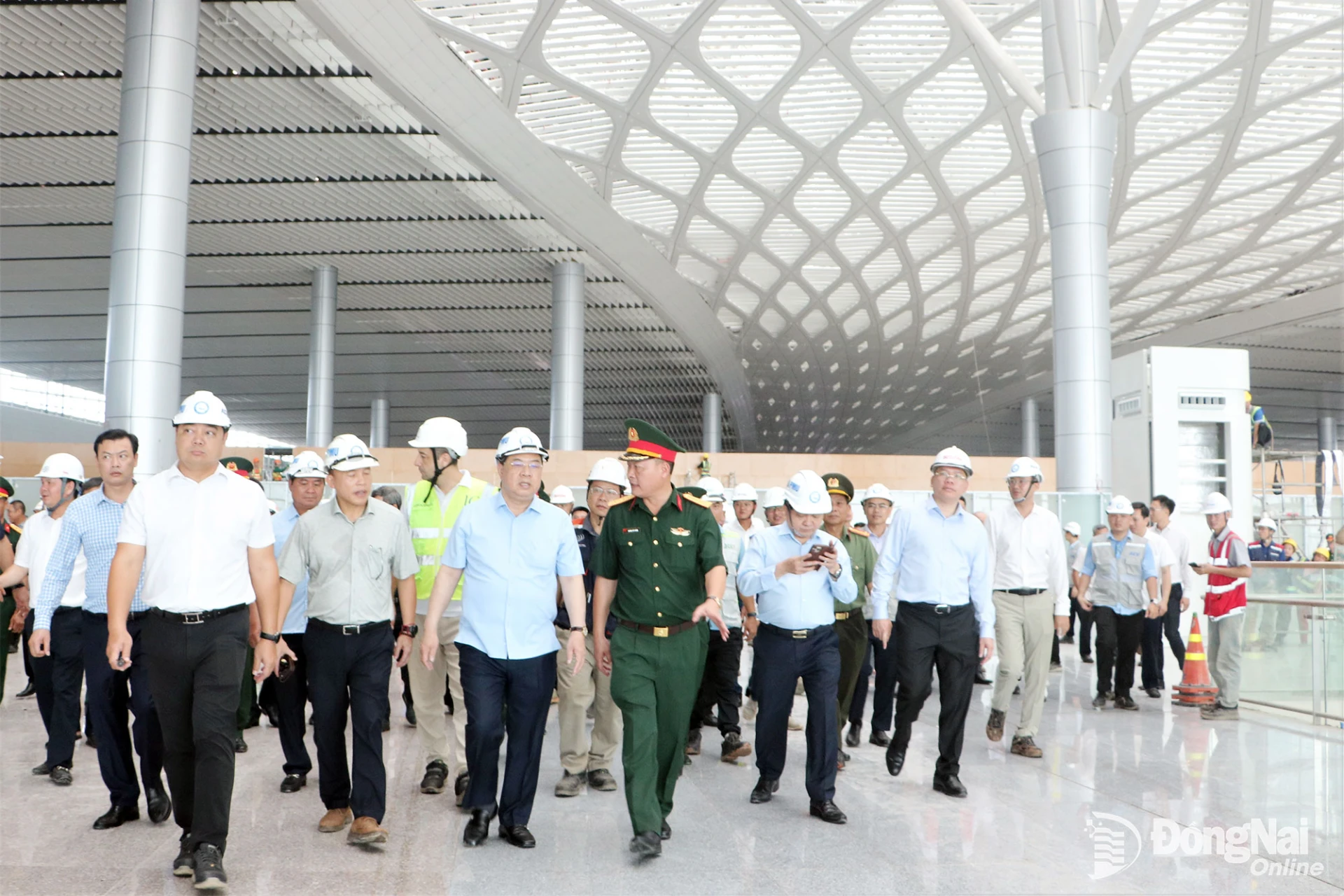
| Party General Secretary (now Party General Secretary and State President) To Lam visits the Long Thanh International Airport project in November 2025. Photo: Cong Nghia |
Located in the Southern Key Economic Region, Dong Nai has emerged as a dynamic industrial and urban center. With transport infrastructure increasingly taking shape, particularly strategic projects such as Long Thanh International Airport, along with seaport systems and large-scale industrial parks, Dong Nai has not only attracted domestic and foreign investment flows, but also improved the quality of life for its residents. Meanwhile, the city continues to prioritize social welfare, healthcare and education, aiming for sustainable and inclusive growth.
 |
| Binh Phuoc ward bears the appearance of a modern urban center. Photo: Cong Nghia |
 |
| Successive generations of Party members in Dong Nai are admitted to the Party at the Phu Rieng Do Revolutionary Relic Site — the birthplace of the first Party cell in the Southeast region. Photo: Cong Nghia |
 |
| A modern urban area of international standards in Dong Nai City. Photo: Cong Nghia |
 |
| The land once known as the “Steel Gate” of Xuan Loc is undergoing rapid transformation. Photo: Cong Nghia |
 |
| Bien Hoa 2 Industrial Park (IP), where many investors have chosen to establish export-oriented manufacturing plants. Photo: Cong Nghia |
 |
| The Phuoc An cable-stayed bridge is nearing completion, connecting Dong Nai and Ho Chi Minh City. The project is expected to ease pressure on National Highway 51, while strengthening the national logistics network and promoting regional economic growth. Photo: Cong Nghia |
 |
| Becamex – Binh Phuoc IP in Chon Thanh ward serves as a strategic gateway linking the Southeast region, the Central Highlands and Cambodia, and is accelerating investment attraction efforts. Photo: Cong Nghia |
 |
| Phuoc An Port not only receives cargo vessels, but also modern superyachts. Photo: Cong Nghia |
By C.Nghia, P.Tung – Translated by M.Nguyet, Thu Ha



Thông tin bạn đọc
Đóng Lưu thông tin