
The successful organization of Congresses of Provincial-affiliated Party Committees under the context of implementing the two-tier local government system has provided many valuable lessons. These include strictly following guidance from higher authorities; promptly resolving difficulties and obstacles; placing emphasis on preparation; and careful oversight in directing and setting orientations during the Congresses.
Closely following higher-level guidance, timely removing difficulties
According to Thai Bao, Deputy Secretary of the Provincial Party Committee and Head of the Provincial Party Organization Committee, some experiences have been drawn from the success of the congresses of Provincial-affiliated Party Committees. First, it is the need to focus on studying and thoroughly implementing Directive No. 45-CT/TW dated April 14, 2025, of the Politburo on Party Congresses at all levels leading up to the 14th National Party Congress, along with other directives and guidance from higher authorities. At the same time, extensive propaganda before, during, and after the Congresses should be promoted; vibrant, concrete, and practical activities should be organized to celebrate the congresses, creating a sense of trust and excitement among cadres, party members, and the public, contributing to the overall success of the PCs.
Second, it is essential to regularly review and promptly guide the resolution of difficulties and obstacles, while orienting the key areas in need of concentration to ensure the upcoming congress will be organized on schedule and meets its intended objectives and requirements.
Third, thorough investment is required in drafting congress documents, ensuring content reflects the local realities. Attention should be given to contributions to the draft congress documents, consolidating and fully incorporating feedback in a detailed, constructive, and open-minded manner. Issues not adopted yet must be reported with specific explanations suitable to the actual situation of the Party Committee, with a high level of persuasiveness.
Fourth, the draft political reports submitted to the Congress must honestly and objectively evaluate achievements; identify shortcomings and weaknesses; determine the causes, especially subjective ones; and draw lessons from both successes and failures in leadership, direction, and implementation of the previous term’s resolutions. There’s a need to conduct an in-depth assessment of the leadership's results in implementing the Party Committee's key tasks and breakthrough tasks, serving as a basis for setting targets, tasks, and solutions for the new term.
In practice, the drafting of congress documents for the Provincial- affiliated Party Committees this time differs from that in previous congresses, as it requires compiling the overall results of the 2020–2025 term from merged Party Committees into a single, unified document. Even setting goals, orientations, tasks, and solutions is more complex because most merged Party Committees have larger administrative, population, or economic scales and more complex tasks than before. Furthermore, the documents must align with the province’s new development direction, focusing on high economic growth, and modern, synchronous infrastructure investment.
To assist Provincial-affiliated Party Committees in drafting congress documents that align with the province’s resolute reform spirit, the Provincial Party Committee has provided specific guidance during the drafting process. The Provincial Standing Party Committee established appraisal teams to review draft congress documents of the Provincial- affiliated Party Committees before setting the official congress dates. In addition to the Provincial Standing Party Committee members serving as team leaders, the appraisal teams included representatives from the Party Committee’s Party departments and provincial agencies. Before the official appraisal, all draft congress documents were submitted in advance to the appraisal team members, allowing them sufficient time for thorough study and providing feedback during the formal review session.
In-depth orientation for the new term
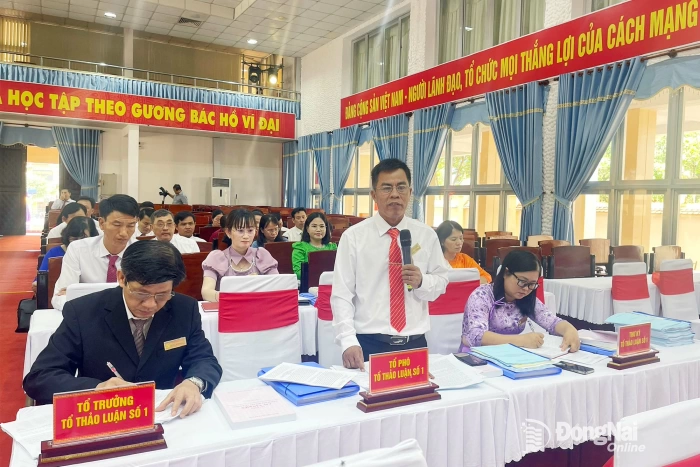
Ho Van Nam, Member of the Provincial Standing Party Committee and Secretary of the Party Committee, Chairman of the People’s Council of Tran Bien Ward, the most populous ward in the province, shared that the Ward’s Congress was honored to welcome the Provincial Party Secretary and Head of the Provincial National Assembly Delegation Vu Hong Van. The Secretary’s candid, dedicated, and thorough remarks helped the Ward identify existing limitations and shortcomings. Particularly, in setting orientations for the new term, delegates highly appreciated the ambitious targets outlined by Secretary of the Provincial Party Secretary, including making Tran Bien a symbolic ward and a political, economic, cultural, scientific, and technological hub of the province. The Secretary also proposed solutions and encouraged cadres and Party members to create favorable conditions for achieving these goals.
Phan Quang Tuan, Secretary of the Party Committee and Chairman of Trang Dai Ward People’s Council, noted that although preparations for the ward’s first Party congress were done in a short period of time, it was successfully held thanks to the Provincial Standing Party Committee’s close guidance. The provincial appraisal team closely followed and guided the Ward on new directions, addressing urgent local issues such as personnel management, planning, and infrastructure investment.
The successful organization of the congresses of provincial- affiliated Party committees under the two-tier local government system is of great significance, marking a political transformation, guiding local development, and contributing to enhancing the management and operational efficiency of local governments and the overall development of localities and the country.
By: Cong Nghia – Duong An
Translated by: M.Nguyet-Thu Ha



Thông tin bạn đọc
Đóng Lưu thông tin