
After more than seven months of administrative boundary consolidation and the operation of the two-tier local government model, Dong Nai is entering a new stage of development with expanded space in both economic and cultural terms.
 |
| The announcement ceremony recognizing Sayangva Festival of the Choro people in Dong Nai as a national intangible cultural heritage is expected to take place in first quarter of 2026. Photo: Phuong Hien |
According to Tran Quang Toai, Chairman of the Dong Nai Provincial Association of Historical Sciences, cultural and human development constitutes the foundation and a vital endogenous resource for rapid and sustainable growth. Properly identifying values, preserving and promoting cultural heritage will serve as the basis for building a Dong Nai citizenry that is compassionate, creative and well integrated in the new era.
New space – ample room for cultural development
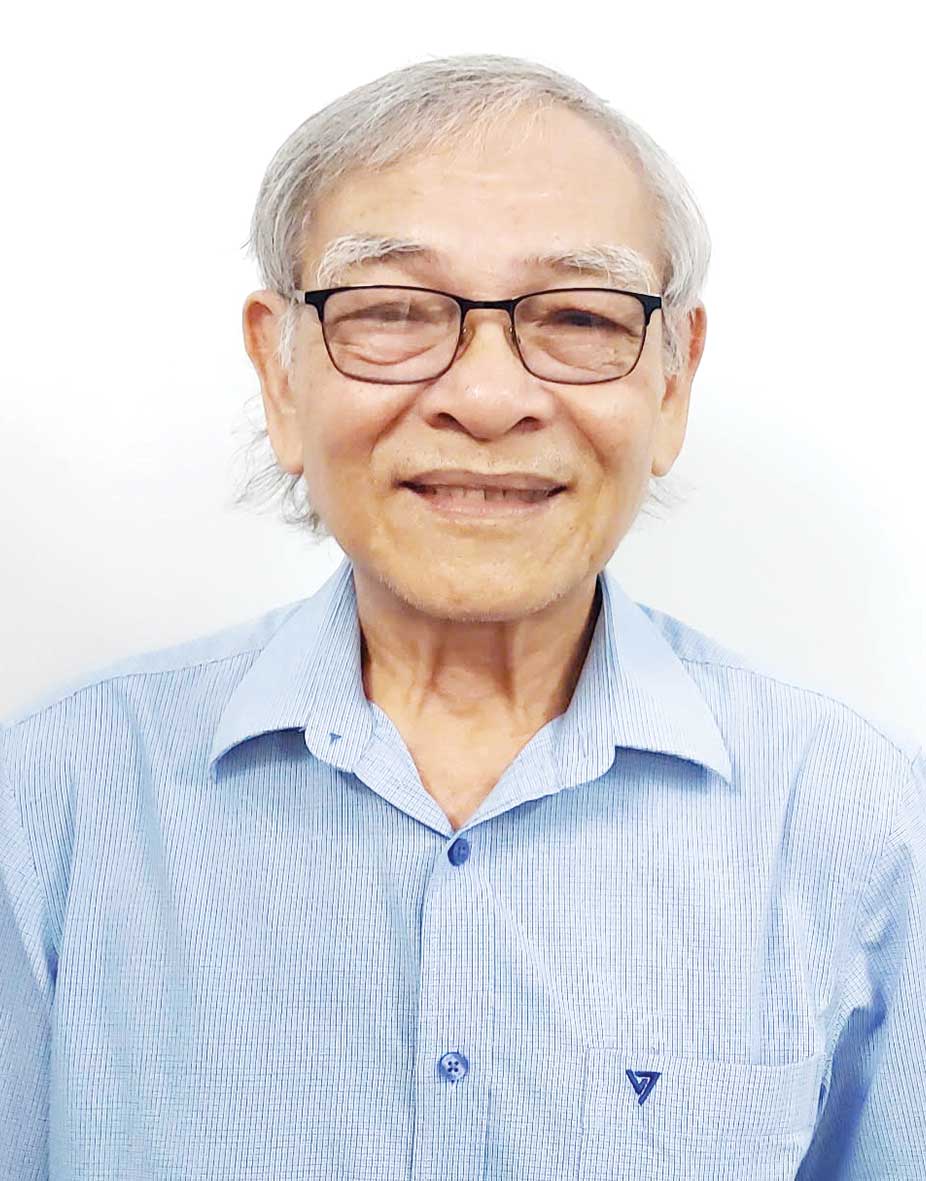 |
| Tran Quang Toai, Chairman of Dong Nai Provincial Association of Historical Sciences. Photo: My Ny |
Since July 1, 2025, the formation of the new Dong Nai province has been in place. What advantages has this brought to cultural development?
I believe this represents a historic turning point. First and foremost, it expands the province’s geopolitical and geo-economic space, enabling a harmonious combination of strengths in both agriculture and industry. From a cultural perspective, this consolidation has created a large entity with numerous advantages and great potential. This includes a system of historical relics, cultural heritage sites, and natural reserves recognized as world heritage, such as the Dong Nai Biosphere Reserve and Bu Gia Map National Park, along with the rich cultural treasury of ethnic groups such as the Choro, Ma, S’tieng and Hoa. These factors form a highly favorable foundation for Dong Nai’s cultural development in the new era.
When it comes to Dong Nai, the province is often mentioned as a land with the “heroic spirit of the Eastern region,” marked by deep historical layers. In the new context, how can these “red addresses” become not only historical witnesses but also resources for economic development?
-Dong Nai possesses a vast system of revolutionary historical relics. Notable examples include War Zone D in Tri An commune; Ta Thiet Base in Loc Ninh commune; Dong Xoai Victory Site in Binh Phuoc ward; Nhon Trach Tunnels in Phuoc An commune; and La Nga Victory Site in Dinh Quan commune. In addition, the province is home to many cultural and spiritual institutions such as That Phu Co Mieu (Ong Pagoda), Dai Giac Pagoda in Tran Bien ward, and Long Thien Pagoda in Bien Hoa ward. I believe that with well-structured investment and concerted efforts from multiple stakeholders, these values can be transformed into cultural industries that drive the province’s economic development.
From the cultural values mentioned above, in your view, what defines the unique identity of Dong Nai’s culture, a land with more than 325 years of formation and development?
Dong Nai is one of the regions formed early in the southward expansion process of our ancestors since the 16th century. The distinctive feature of Dong Nai’s culture lies in its inclusiveness. The convergence and interaction of cultural identities of many ethnic groups living, bonding and developing together over different historical periods have created a unique cultural character, diverse yet unified. This culture serves the province’s overall development orientation: strong modernization and industrialization, while still respecting, preserving and promoting traditional national values.
Removing “bottlenecks” to create momentum for cultural growth
The Politburo has recently issued Resolution No. 80-NQ/TW on the development of Vietnamese culture. How do you assess its core principle of “placing people at the center,” especially in shaping a generation of global citizens?
Two years ago, the Dong Nai Provincial Party Committee issued Resolution No. 12-NQ/TU and Resolution No. 14-NQ/TU on cultural development. Most recently, the Politburo promulgated Resolution No. 80-NQ/TW on the development of Vietnamese culture. All these resolutions affirm a consistent guiding principle: placing people at the center. To realize this, we need to strongly promote the application of modern technologies, take education as the foundation, and create conditions for comprehensive human development, not only professional competence and foreign, language skills, but also sufficient resilience to become future “global citizens.”
Resolution No. 80-NQ/TW points out several shortcomings, such as low investment in culture and policy mechanisms that have yet to unleash the creativity of intellectuals and artists. In your opinion, what is the biggest bottleneck, and where should solutions begin?
In my view, the “bottleneck of bottlenecks” lies in institutional mechanisms. Currently, policies that encourage intellectuals and scientists to invest in research and creativity still face many procedural obstacles. Moreover, investment policies for science and culture are not strong enough and remain hesitant to accept new, breakthrough approaches as seen in many developed countries. Therefore, it is necessary to mobilize additional social resources, enhance the connecting role of the Union of Science and Technology Associations and specialized associations, and promote cooperation between intellectuals and enterprises in industrial production and cultural development investment. This will help form a combined strength and enhance the creative capacity of the intellectual community.
For culture to truly become an endogenous resource and a powerful driver of rapid and sustainable development, what solutions are needed to maximize Dong Nai’s heritage values and cultural identity?
I believe there are three key factors. First, we must preserve traditional cultural values, including rituals, festivals and distinctive cuisine. These constitute the “roots” that create Dong Nai’s cultural uniqueness and appeal. Second, there must be joint efforts from the State, enterprises and the community to harness collective strength and transform cultural values into tangible products. Third, it is essential to raise social awareness and renew communication efforts through digital technologies. History and heritage must be brought onto social media platforms such as TikTok and YouTube so that the public, especially young people, can better understand the role and significance of heritage in contemporary life.
Currently, Dong Nai has 121 ranked relics, including six special national relics, 42 national relics and 73 provincial-level relics. The province also possesses five national treasures, more than 400 types of festivals, and numerous national intangible cultural heritages such as the Ong Pagoda Festival, the Death Anniversary of Marquis Nguyen Huu Canh, the Sayangva Festival of the Choro people, the Pha Bau Festival of the Khmer people, the Ba Ra Temple Festival, and the brocade weaving craft of the M’nong people. This is a valuable heritage treasury, forming an important foundation for Dong Nai to develop culture in association with tourism, cultural industries and integration in the new period.
Looking ahead, how do you envision Dong Nai’s culture being shaped, both in terms of its image and the province’s position on the national cultural map and in international integration?
The cultural values of Dong Nai, formed across different spaces and historical periods, have now converged into an invaluable shared asset. What matters most is having a long-term vision and a coherent strategy to preserve and promote these values, ensuring that culture is not only safeguarded for today but also properly passed on to future generations. Through this, Dong Nai can affirm its position on Vietnam’s cultural map and gradually deepen its integration with the region and the world.
By My Ny – Translated by M.Nguyet, Thu Ha


Thông tin bạn đọc
Đóng Lưu thông tin