
Viet Nam recently added 15 historical sites and scenic areas to the national heritage list, the Ministry of Culture, Sports and Tourism has announced.
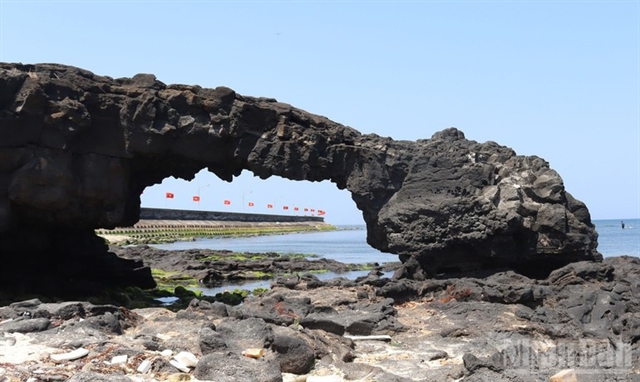 |
| The To Vo Gate Scenic Area in Ly Son Special Zone, Quang Ngai Province is one of 15 historical sites and scenic spots newly designated as national heritage. — Photo nhandan.vn |
The national scenic areas are located in the provinces of Ninh Bình, Lang Son, Tay Ninh, Dong Nai, Hue, Hung Yen, Lam Dong, Quang Ngai, Quang Tri and Ha Noi.
Ninh Bình Province has three newly listed sites: the architecturally significant Dinh Noi-Phuc Khanh Pagoda in Nam Xang Commune; the cultural and scenic complex at Lat Son, which includes a temple dedicated to female general Le Chan and the remnants of the Thanh Chan Temple, among many others; and the historical site and memorial house for comrade Le Duc Tho in Hong Quang Ward.
Two spots in Huế have made it onto the list: the Forward Surgical Station and the Tomb of Đặng Văn Hòa, both located in Phong Thái Ward.
Lam Dong Province also has two newly designated heritage locations: the scenic areas of C7 Cave and C8 Cave in Nam Da Commune.
Quảng Trị Province has two newly listed sites as well: the historical area of Song Trung Temple, including the tombs of Hoang Vinh To and Hoang Vinh Du in Tan Gianh Commune, and the II Long Dai ferry crossing, where 16 youth volunteers sacrificed their lives in September 1972, located in Trường Ninh Commune.
Other recently designated heritage areas include the archaeological site at Nguom Sau Cave in Bang Mac Commune, Lang Son Province and the historical Thai Khe Communal House in Kieu Phu Commune, Ha Noi.
Under the recent decision, documents including meeting minutes and local maps have defined the sites' protected area.
The People's Committees at various levels where the designated sites are located, within the scope of their responsibilities and authority, will implement state management of the areas in accordance with the regulations of cultural heritage law.
Source:VNS


Thông tin bạn đọc
Đóng Lưu thông tin