
Song Pho Square - a small bronze plaque placed on the wall of a roundabout (behind the Dong Nai Provincial People’s Committee headquarters) - is the meeting point of three intersections with the first two leading to Bien Hoa Market and Nguyen Du Primary School, while the third intersection is the starting point of April 30 Street running along the center of former Bien Hoa City, then passing Nam Ha roundabout and Ngo Quyen High School connected to both Nguyen Ai Quoc Street and a branch joining Pham Van Thuan Street that leads to Bien Hoa - Ho Chi Minh City highway.
|
||
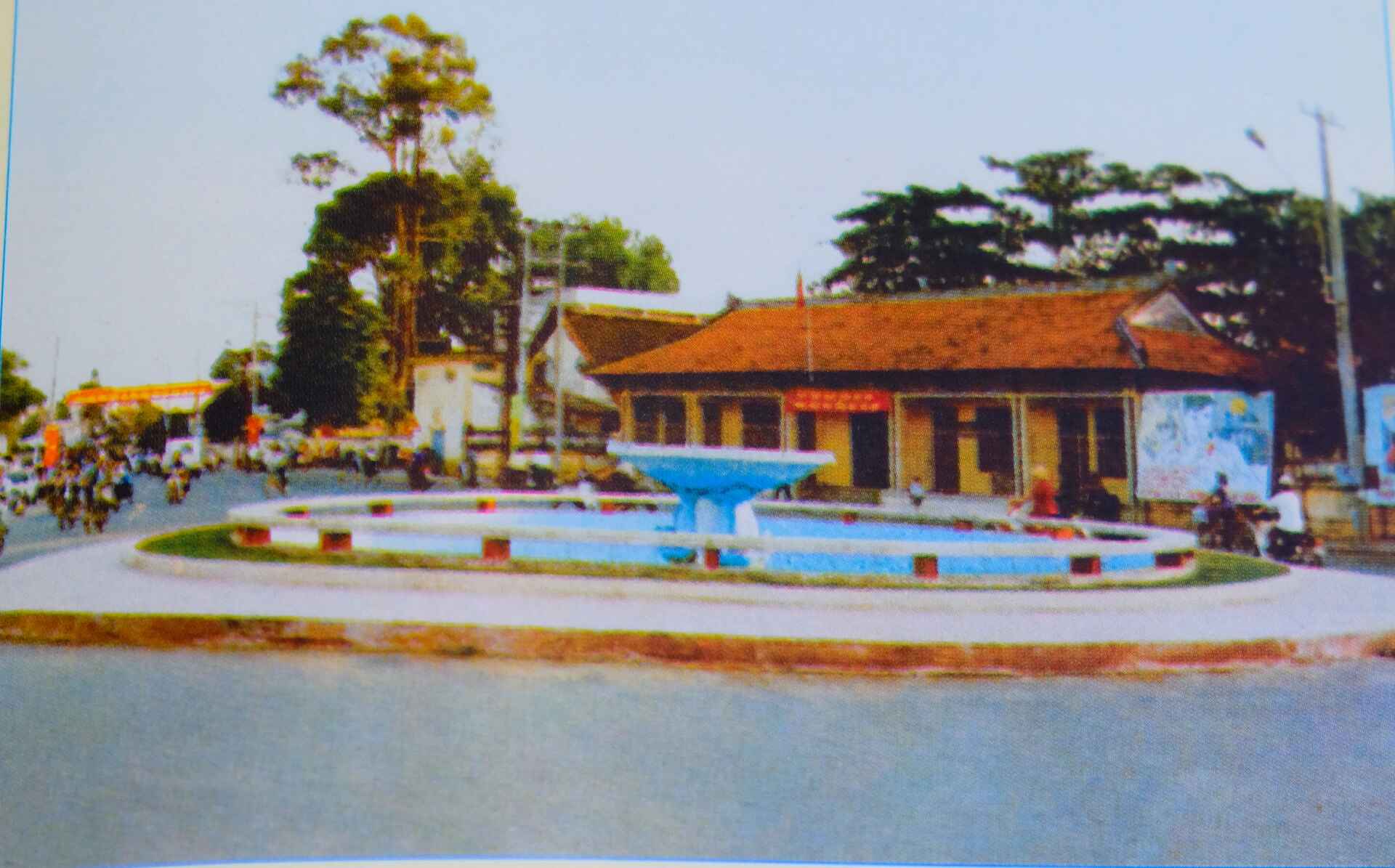
Today, this name has become part of history and remains in the memory of those who participated in and witnessed the historic events of the August Revolution in 1945 that took place there. That generation has mostly passed away, as nearly a century has gone by. Only subsequent generations, those born in the 1940s, 1950s, and 1960s, remain. For them as well, historical memories have gradually faded over time and with advancing age.
Eighty years ago, those “heaven-shaking, earth-moving” days that unfolded here are still recorded in the Party’s history: “On the early morning of August 24, 1945, under the mandate of the Uprising Committee (Bien Hoa province) and the leadership of grassroots Party cells, the Vanguard Youth and the Vanguard Women forces took control of the BIF Saw Mill, Bien Hoa Station, and most government offices in the provincial capital. In the communes, most village chiefs quit their jobs, and the puppet government apparatus in the communes virtually collapsed... That evening, at Tran Dien theater (Bien Hoa town), a large rally was held with the participation of hundreds of people. Comrades in the Uprising Committee delivered speeches, calling on the people to join the Viet Minh Front and participate in the uprising to seize power. At 4 a.m. on August 25, 1945, the first train of the day carried over 500 delegates, including many female delegates, from Bien Hoa Station to Saigon to participate in the seizure of power.
…On August 25, 1945, the victorious uprising in Saigon had a decisive impact on the uprisings in the southern provinces… On the morning of August 25, 1945, hundreds of people marched into the Bien Hoa Governor's Palace, raising the first red flag with a yellow star over the Provincial Governor’s mansion. A large crowd gathered in front of the building, cheering loudly. At noon that day, Provincial Governor Nguyen Van Quy and the heads of provincial offices handed over the government to the revolution.
 |
| Song Pho Square today |
Early on August 26, 1945, more than 10,000 people from Chau Thanh, Long Thanh, Tan Uyen, and Xuan Loc districts marched in an orderly manner to Song Pho Square to attend the inauguration ceremony of the provincial Provisional Revolutionary Committee. Leading the procession were the Vanguard Women, carrying flag banners and nulgar bamboo sticks, followed by thousands of women from across the countryside and towns, eagerly and enthusiastically joining the rally. The crowd cheered enthusiastically as Comrade Hoang Minh Chau, Chairman of the Uprising Committee, delivered a speech and announced the composition of the Revolutionary People’s Committee of Bien Hoa Province. Immediately afterward, the rally transformed into a parade spreading out to local areas to honor their strength. Throughout Bien Hoa, from towns to rural areas, factories to plantation posts, it truly became a grand festival day.” (History of the Women’s struggle movement in Dong Nai Province, 1930-2000)
During those August days, Song Pho Square truly awoke, stirred by relentless footsteps of farmers, workers, and intellectuals, who rose up to demand the right to live, freedom, and independence for the country under the leadership of the Party. Their feet were caked with mud, coal ash, and worn out by the sun and rain. Basalt mud of Long Khanh and Xuan Loc rubber plantations, gray soil of Long Thanh, alluvial soil along the banks of the Dong Nai River in Vinh Cuu, Long Thanh, Nhon Trach, ash-laden forest soil of Tan Uyen, Tan Phu, Dinh Quan… all mingled with grease and sawdust from the BIF Saw Mill. Alongside these, the slender footsteps of Bien Hoa students and teachers synchronized with thousands of footsteps of the uprising, gathering the revolutionary forces. This was the first magnificent and sacred awakening that had been aroused in the revolutionary movement of uprising and excitement.
The roundabout at Song Pho Square is not large, and the flow of vehicles and pedestrians is no longer as dense as that before, as many new roads and intersections have been built over the past several decades. Each time one passes by, there is a sense of nostalgia, recalling the bustling atmosphere of that historic August in 1945.
And at that moment, amid the unexpected joy and boundless excitement, no one could imagine or foresee that less than a month later, those same feet caked in mud and coal ash had to immediately march into a new battle to prevent the enemy from returning, a 9-year long and arduous resistance war, relying on their own strength to protect the young Republic, while maintaining independence and freedom. Then came another 21 years, 21 years of tearful separation, until peace and freedom returned when the flag of the National Liberation Front of South Vietnam was raised by a Bien Hoa resident on the flagpole of the governor's palace, fluttering proudly amid the thunderous footsteps and artillery vehicles of the liberation army.
By: Phuoc Long Giang
Translated by: Huyen Trang - Thu Ha


Thông tin bạn đọc
Đóng Lưu thông tin