
Dong Nai is preparing for a major transformation as it moves toward becoming a centrally governed city in the near future. With a new development stature and position, the future city of Dong Nai is expected to rank among the country’s leading growth poles, while evolving into a modern and highly livable urban center.
Affirming top-tier status in national rankings
Dong Nai currently covers an area of more than 12,700 sq.km and is home to nearly 4.5 million people. The province is endowed with a mild climate, stable natural conditions and a large expanse of natural forest. Its transport infrastructure is increasingly well-synchronized, featuring all five modes of transport, most notably Long Thanh International Airport, Phuoc An deep-water port, and a network of expressways under development.
 |
|
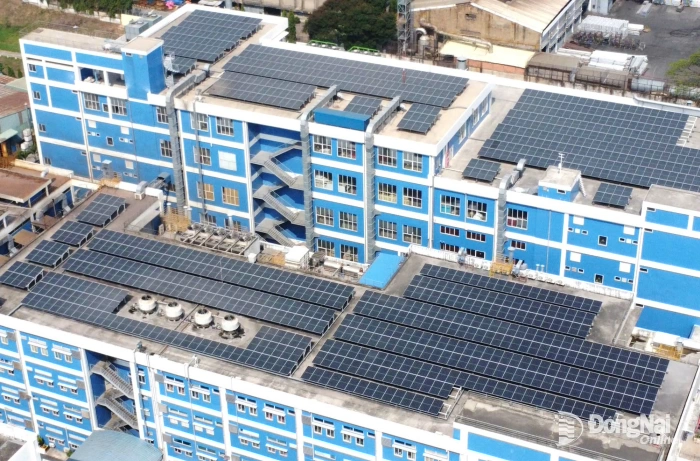
A project at Long Thanh High-Tech Industrial Park. Photo: Vuong The. |
In 2025, Dong Nai’s gross regional domestic product (GRDP) reached nearly VND678 trillion, marking a record growth rate of 9.63%. Notably, for the first time, state budget revenue exceeded VND101 trillion. With this economic scale, Dong Nai ranked fourth nationwide, behind Ho Chi Minh City, Hanoi and Hai Phong. To date, the province has attracted more than US$44 billion in foreign direct investment and recorded 115,000 registered private enterprises on the national business registration portal. These figures clearly reflect its strong development potential and significant room for further growth.
Moreover, Dong Nai, together with Ho Chi Minh City, lies at the heart of the Southeastern region and serves as a key intersection of multiple strategic economic corridors. From Dong Nai, connectivity routes extend to the Central Highlands, the South-central coast and the Mekong Delta, gradually shaping its role as a major trade gateway in southern Vietnam.
The province is home to a dense network of vital routes, spanning roads, rail, and air transport. The rollout of key projects such as Long Thanh International Airport, expressways, ring roads and seaports is opening up vast development space, thereby enhancing Dong Nai’s competitiveness and attracting strong investment inflows from both domestic and international sources.
In addition, Dong Nai is among the country’s largest industrial hubs, with dozens of efficiently operating industrial parks. Its economic structure has been shifting toward modernization, with industry and services taking the lead. Beyond investment attraction, the province is also pursuing sustainable development, prioritizing high-tech, environmentally friendly and high value-added industries. This approach enables Dong Nai to achieve rapid yet in-depth growth, steadily reinforcing its top-tier position in national rankings and laying a solid foundation for its goal of becoming a centrally governed city.
According to Associate Professor Dr. Tran Dinh Thien, former Director of the Vietnam Institute of Economics and a member of the Prime Minister’s Policy Advisory Council, strong infrastructure investment, particularly Long Thanh International Airport, will generate new momentum and strength not only for Dong Nai but also for the wider region and the country as a whole, reshaping Vietnam’s position in the global stage.
Unlocking growth drivers, building a modern and livable city
Alongside traditional growth drivers such as public investment disbursement, production, consumption and exports, Dong Nai has identified Long Thanh airport urban area, the Dong Nai riverside urban corridor, Hoa Lu border-gate economic zone, as well as expressway and urban railway systems as its key catalysts for socio-economic development.
According to Nguyen Van Ut, Deputy Secretary of the Provincial Party Committee and Chairman of the Provincial People’s Committee, Dong Nai is facing a historic opportunity to make a breakthrough and transform itself into a centrally governed city and a leading hub for industry, logistics and modern urban development. With renewed aspirations, vision and determination, the province will rise strongly to soon establish itself as a central governed city and a dynamic, modern and proud growth pole of the nation.
However, major opportunities also come with significant challenges. To realize its ambition, Dong Nai must fundamentally renew its development mindset, implementation approaches and governance model.
In particular, Chairman of the Provincial People’s Committee stressed that key economic priorities include building a new development model, transitioning from an “industrial province” to a “modern industrial–urban–service city,” and pursuing in-depth growth driven by science and technology, innovation and the digital economy.
Equally important is the need to make breakthroughs in strategic infrastructure, using transport, urban and logistics systems as leverage to create new development space and elevate Dong Nai’s position within regional and national linkages. At the same time, efforts must focus on building a modern, efficient and effective government that shifts from management to service delivery, placing citizens and businesses at the center while fostering a transparent, competitive and attractive investment environment.
The Resolution of the first Dong Nai Provincial Party Congress for the 2025–2030 term sets out the orientation of making Dong Nai a leading locality in economic development. Key priorities include aviation, high-tech industry, high-tech agriculture, logistics centers, science and technology, innovation and digital transformation.
Alongside urban restructuring, regional connectivity remains a critical factor. According to Dr Huynh Thanh Dien, from Nguyen Tat Thanh University in Ho Chi Minh City, Dong Nai needs to strengthen linkages with Ho Chi Minh City and neighboring provinces such as Tay Ninh and Lam Dong to ensure a harmonious division of roles for balanced regional development. The province should proactively seize opportunities to comprehensively restructure its investment ecosystem, from reviewing and adjusting industrial planning to simplifying licensing procedures, improving the legal framework and redesigning targeted incentive policies.
Through these efforts, Dong Nai will be well-positioned to form a strategic industrial growth pole, effectively connected to the southeastern region in the south and the Central Highlands in the North.
By Vuong The – Translated by M.Nguyet, Thu Ha


Thông tin bạn đọc
Đóng Lưu thông tin