
Dong Nai possesses significant conditions and opportunities to accelerate the development of its start-up and innovation ecosystem, particularly as the locality strives to become a centrally governed city.
 |
| Abraham Nguyen Quang Huy. |
Abraham Nguyen Quang Huy, Vice President of the National Startup Association and Chairman of 9S UNION (Global Economic Union), shared insights into the province’s potential and opportunities for fostering start-ups and innovation.
Innovation as a driver of Dong Nai’s rapid and sustainable growth
In the context of rapid advances in science and technology, especially as localities are stepping up the implementation of the Politburo’s Resolution No. 57-NQ/TW, what role do start-ups and innovation play in promoting socio-economic development?
At this stage, start-ups and innovation are no longer a movement but have become one of the core development capabilities of each locality. Resolution No. 57-NQ/TW identifies science and technology, innovation, and digital transformation as the foremost breakthroughs and primary drivers of national development. This means that any locality capable of turning knowledge into products, technology into productivity, and ideas into enterprises will move faster and achieve sustainable growth.
From a policy perspective, the support framework for start-ups and innovation has become increasingly clear. This includes the Law on Support for Small- and Medium-sized Enterprises (SMEs) ; Decree No. 80/2021/ND-CP on SME support, including innovative start-ups; Decree No. 210/2025/ND-CP amending Decree No. 38/2018/ND-CP on investment in innovative start-ups; Project 844 on the national innovative start-up ecosystem; Resolution No. 71/NQ-CP updating the action program to implement Resolution No. 57-NQ/TW; and Decree No. 249/2025/ND-CP on policies to attract experts in science, technology, innovation, and digital transformation.
Notably, in 2025, the National Assembly approved allocating 3% of total state budget expenditure to science, technology, innovation, and digital transformation. In my view, this spirit should be translated into concrete actions at the local level, ensuring real resources, effective mechanisms, and clear accountability for the innovation ecosystem.
How do you assess Dong Nai’s advantages and challenges in developing its innovation ecosystem?
Dong Nai has a solid foundation for breakthroughs in innovation. The province boasts a strong industrial base, well-developed logistics, effective regional connectivity, a large market scale, and a high capacity for technology absorption. In 2025, its GRDP grew by 9.63%, while growth reached 9.76% year-on-year in the first quarter of 2026. The province also holds strong advantages in attracting foreign direct investment (FDI).
In addition, Dong Nai is home to 88 innovative enterprises, 16 science and technology enterprises, six universities and affiliated campuses, 13 colleges, and around 60 vocational education institutions—forming a solid base for a modern start-up ecosystem.
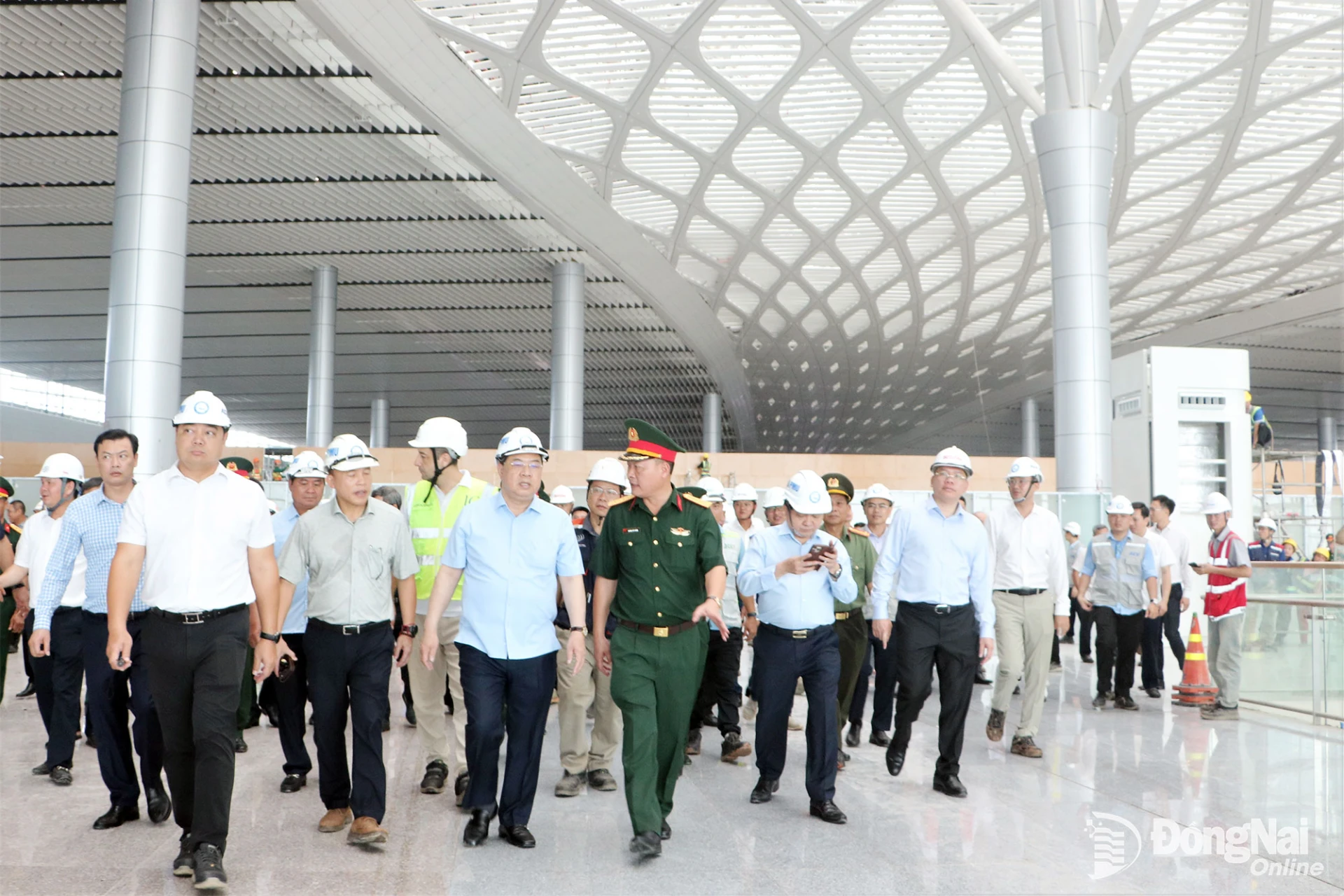
Dong Nai is now entering a new strategic phase. Once Long Thanh International Airport becomes fully operational, the province will not only gain improved transport infrastructure but also unlock new development space for aviation economy, logistics, technology, creative services, and start-up models capable of regional and global integration. Notably, on April 6, the Government approved the proposal to establish Dong Nai City.
Building on these foundations, I believe Dong Nai has the potential to emerge as a strong innovation and start-up hub in the region. However, to reach that level, the province must address its most critical challenge: effectively connecting industrial production, human resource training, data, capital, and markets into a truly functioning ecosystem. The province does not lack potential; what it needs most now is to transform that potential into collective strength. When its business community works in unity and synergy, the innovation ecosystem will become more robust, better resourced, and more sustainable.
 |
| Representatives of Lac Hong University introduce digital technology products at Techfest Dong Nai 2025. Photo: Hai Quan |
Toward outcome-based evaluation mechanisms
To promote sustainable start-up and innovation development, what key priorities should Dong Nai focus on?
– In my view, the most important shift is moving from a movement-based mindset to building a genuine ecosystem on innovative start-ups. Start-ups cannot grow through a few competitions or seminars; they are about sustainable development, grounded in real problems, real mechanisms, real capital, real experts, and real market outputs.
Dong Nai has taken a timely and appropriate step by establishing its Provincial Science and Technology Development Fund. According to its announced orientation, the fund will receive, manage, and allocate capital, including loans for projects applying scientific and technological research to production and daily life in service of socio-economic development. If operated effectively, it will become a crucial financial driver for innovation.
Abraham Nguyen Quang Huy
For Dong Nai, I proposed five priority areas. First, identifying key sectors such as smart industry, logistics technology, environmental technology, high-tech agriculture, new materials, and digital transformation for manufacturing enterprises. Second, developing data infrastructure, testing environments, and technology commercialization support centers. Third, investing in human capital, particularly engineers, technology advisors, and young founders. Fourth, supporting enterprises in intellectual property, standards, testing, and certification. Fifth, establishing evaluation mechanisms based on outcomes rather than the number of events.
I also commended Dong Nai’s proactive move to propose nine major science and technology, innovation, and digital transformation challenges to the Ministry of Science and Technology in 2025. This is a timely and appropriate approach, as an ecosystem can only grow stronger when key challenges are clearly identified to mobilize the participation of tech enterprises, scientists, and investors.
Ultimately, sustainable start-ups must progress from aspiration to capability, from capability to business models, and from models to markets. Any locality that helps start-ups overcome these three bottlenecks will nurture a new generation of enterprises capable of producing “unicorns,” leading the way and aiming for regional and global reach.
By H. Quan – Translated by M.Nguyet, Thu Ha


Thông tin bạn đọc
Đóng Lưu thông tin