
The year 2026 is widely viewed as a pivotal year for Vietnam’s economy, as it implements long-term high economic growth targets. This challenge requires the entire economy, as well as each locality and enterprise, to proactively develop solutions at an early stage.
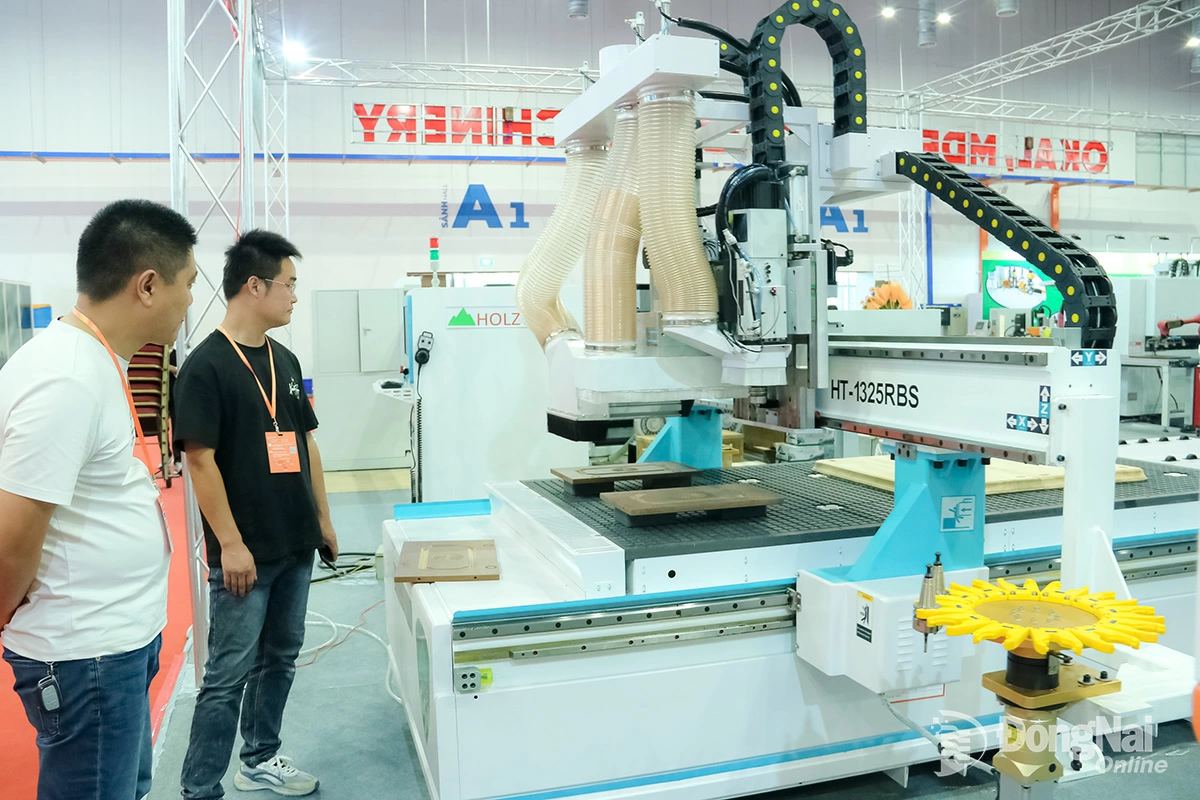 |
| Investment in machinery and technology is an inevitable requirement for today’s manufacturing sectors. Illustrative photo: Vuong The |
In the context of a streamlined domestic institutional framework and the emergence of international “green barriers,” the unique key lies in a shift in mindset. Enterprises need to move from a passive stance of waiting for policies to a proactive approach of experimentation and proposing business models aligned with their own development objectives.
Prospects driven by business confidence
The year 2025 was a period of strong growth for Vietnam, despite significant volatility in the global economy. GDP grew by 8.02 percent, while exports maintained strong momentum, driven by a commodity structure with a high share of electronics and export-oriented industries. Vietnam remained a stable destination for foreign investment. At the same time, trends such as the green economy, circular economy, and digital transformation became increasingly prominent, opening up new growth opportunities for domestic enterprises. In addition, public investment recorded a high disbursement rate, with fixed asset formation, particularly in infrastructure, showing clear growth compared to the previous year.
According to experts, to promote growth in 2026 and subsequent years, public investment will continue to play an important role, serving as a “foundation” for many sectors, especially construction, infrastructure, and supporting industries.
To adapt to long-term changes in global consumption trends, enterprises need to make a substantial shift from processing and assembly manufacturing to mastering advanced technologies and production processes, proactively controlling core technologies, and simultaneously improving the quality of their human resources.
Dau Anh Tuan, Deputy Secretary General and Head of the Legal Department at the Vietnam Chamber of Commerce and Industry (VCCI), stated that public investment plays a guiding role in mobilizing private-sector investment resources and attracting foreign capital into the economy.
The stability and development of the macroeconomy also create favorable conditions for individual industries and enterprises to focus on production and business activities.
In Dong Nai, according to assessments by the Dong Nai Provincial Statistics Office, many enterprises in the province have reported an increase in new orders, particularly in labor-intensive sectors such as footwear, garments, and electronic components. This endeavor has led to higher recruitment demand and contributed to increased activity in the industrial labor market. In the coming period, labor demand is forecast to continue rising, especially among export-oriented enterprises.
Results from the business trend survey of manufacturing and processing enterprises in the province in the fourth quarter of 2025 show that production and business operations continued to improve. More than 44.6 percent of enterprises assessed their business performance as better than in the previous quarter; nearly 35.4 percent considered it stable; and 20 percent reported ongoing difficulties. For the first quarter of 2026, business prospects are expected to improve, with 52.31 percent of enterprises anticipating better conditions, 33.85 percent forecasting stability, and only 13.85 percent expecting greater challenges. These results indicate growing enterprise confidence in the production and business outlook for the new year.
Proactively adapting to volatility
Building on the positive results of the past year, experts expect 2026 to continue to offer many new opportunities while requiring enterprises to adopt a more proactive, flexible approach. This year also marks the continuation of a new development mindset, with a focus on improving market-economy institutions, removing barriers to the private sector, and enhancing the effectiveness of governance. The prompt issuance and coordinated implementation of resolutions and policies within a short timeframe reflect a strong determination to bring about significant improvements in the business environment, thereby reinforcing enterprise confidence.
For local authorities, according to Nguyen Kim Long, Standing Vice Chairman of the Provincial People’s Committee and Head of the Provincial Steering Committee for Enterprise Support and Economic Development, the key task is to accompany and support enterprises. The province will continue to improve the investment and business environment, encourage innovation, and mobilize all resources for development. Accordingly, efforts will focus on reviewing and reducing administrative procedures, shifting from “pre-inspection” to “post-inspection,” and reducing compliance costs for citizens and enterprises.
From the enterprise perspective, according to Nguyen Duy Hung, Vice Chairman of the Dong Nai Import-Export Association, the global economy is growing; however, it remains subject to considerable volatility and uncertainty, particularly among major economies experiencing trade tensions. As Vietnam is highly dependent on exports, enterprises need to adopt diversified and flexible investment and business strategies, avoiding over-reliance on a single market that could lead to imbalance or passivity when volatility arises.
In addition to adapting to global volatility, enterprises are also focusing on the domestic market, particularly in processing industries. According to Vu Nhu Y, Deputy Director of Domilk Joint Stock Company (Long Thanh commune), the domestic market is currently undergoing a gradual process of “cleaning up.” Recent crackdowns by relevant authorities on smuggled goods, counterfeit products, and low-quality items, along with intense consumer backlash, have created opportunities for genuinely and responsibly produced goods to gain customer trust. At present, Domilk is implementing a strategy to expand its sales agency network and signing cooperation agreements with new partners to distribute its confectionery product lines to consumers nationwide.
By Vuong The – Translated by Thu Hien, Minho


Thông tin bạn đọc
Đóng Lưu thông tin