
The Southern key economic region is emerging strongly on the foreign direct investment (FDI) map, buoyed by new policy mechanisms, administrative reforms, and the growing presence of international investors in high-tech industries.
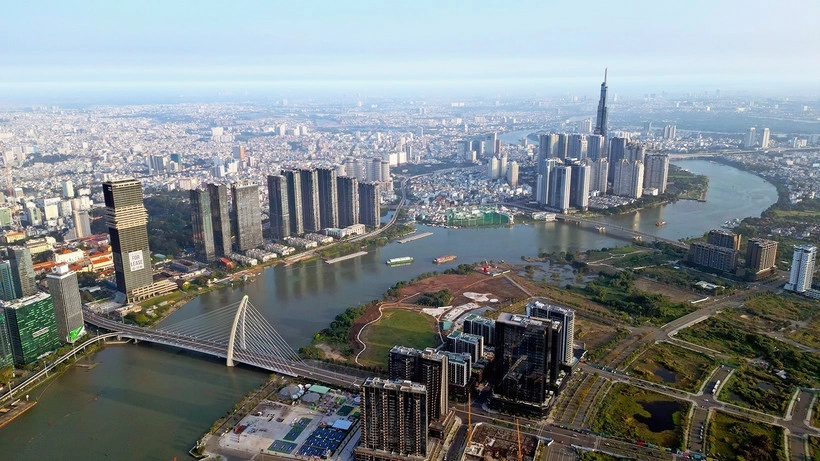 |
| Ho Chi Minh City – the country’s leading hub of economy, culture and tourism. (Photo: VNA) |
Boosting high-quality FDI inflows
According to the Foreign Investment Agency under the Ministry of Finance, Vietnam has so far attracted more than 44,000 FDI projects with total registered capital exceeding 525 billion USD. Investors come from 153 countries and territories, with the Republic of Korea leading the field, followed by Singapore, Japan and Taiwan (China).
In the first 10 months of 2025 alone, newly registered capital, adjusted capital, and capital contributions and share purchases amounted to 31.52 billion USD, up 15.6% year-on-year. Disbursed FDI reached 21.3 billion USD, an 8.8% increase. Vietnam’s trade is also expected to expand to 850 billion USD in 2025, placing the country among the world’s top 20 trading economies.
At the 2025 Southern Investment Connection Forum held recently in HCM City, Nguyen Anh Tuan, Deputy Director of the Foreign Investment Agency, said Vietnam is undergoing rapid modernisation and deepening international integration. While FDI remains a vital growth driver, the priority is now to enhance project quality, strengthen regional links and foster a transparent, efficient investment climate.
Tuan identified Australia as one of Vietnam’s most promising investment partners, noting its strong financial capacity, advanced technology and expertise in artificial intelligence (AI), data centres and research and development (R&D). He called on Austrade and Australian investment funds to engage more deeply in shaping HCM City’s International Financial Centre (IFC), and to work closely with the National Innovation Centre (NIC) and the municipal authorities to bolster the innovation ecosystem.
For Singapore, a global leader in logistics and industrial-park development, Tuan proposed three priority cooperation areas: linking shipping lines and distribution hubs to support Dong Nai’s supply chains; attracting smart logistics enterprises using advanced operational models; and drawing major infrastructure corporations to participate in developing Dong Nai’s free-trade zone (FTZ). Singapore’s involvement, he added, will help the province maximise its position as a regional trans-shipment hub.
Lai Xuan Dat, Deputy Director of the HCM City Department of Finance, stressed that the FTZ located in the former Ba Ria–Vung Tau area, now under HCM City management, will be a centrepiece of the region’s investment strategy. The FTZ will benefit from exceptional regulatory mechanisms, including city-level authority to establish or expand FTZ boundaries, land allocation and lease without auction for internal infrastructure projects, simplified procedures for foreign investors, and top-tier tax and investment incentives. These mechanisms, Dat said, will enable investors to optimise land use and project efficiency.
Strong interest from foreign businesses
Gan Yee Chun, representative of Coherent Vietnam, said the country is playing an increasingly important role in the group’s manufacturing strategy. In July 2025, Coherent completed a 127-million-USD plant in Nhon Trach 1 Industrial Park, a strategic investment to increase production of advanced materials and deepen the firm’s integration into global high-tech supply chains.
He said expansion plans stem from Vietnam’s improving policies on innovation, data and semiconductors, as well as rising production capacity in the South. However, he recommended more R&D incentives, stronger support for technology transfer and increased investment in specialised workforce training.
From a finance and services perspective, Steven Ho, senior deputy director at Cathay United Bank, said the Southern key economic region is well-positioned to remain Vietnam’s FDI powerhouse. The region hosts three major growth poles: HCM City, the nation’s largest financial, services and logistics hub; Dong Nai, a manufacturing centre with over 1,900 FDI firms across 59 industrial parks; and Tay Ninh, one of the top 10 provincial economies with nearly 14,000 ha of industrial zones and a 400-ha high-tech park under development.
Ho highlighted National Assembly Resolution 222/2025/QH15 establishing HCM City’s IFC, which will underpin Vietnam’s efforts to align its financial environment with international standards through preferential tax, ownership, accounting and labour policies.
He added that the centre will help channel new investment flows into strategic sectors such as high-tech, fintech, green finance and AI, while major infrastructure projects, including Long Thanh International Airport and the Cai Mep–Thi Vai port cluster, will further strengthen the region’s competitive edge./.
Source:VNA


Thông tin bạn đọc
Đóng Lưu thông tin