
On the morning of December 23, the Department of Agriculture and Environment held a communication conference to raise awareness and promote environmental awareness among fisheries sector production activities. The event was held under the theme: "Joining hands to minimize waste in agricultural production, especially fisheries production in Dong Nai province in 2025."
The conference attracted a large number of representatives from cooperatives, cooperative groups, farms, and farmers involved in the production, cultivation, and exploitation of aquatic products in the province.
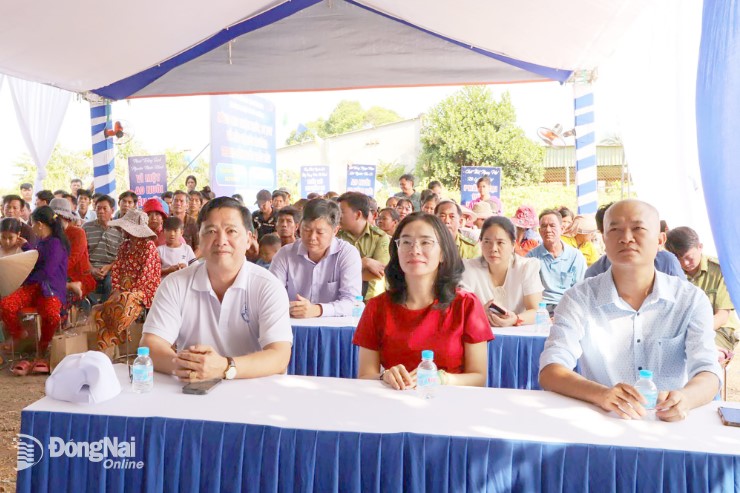 |
| The conference attracts a large number of representatives from cooperatives, cooperative groups, farms, and farmers. Photo: B. Nguyen |
Intensive and semi-intensive aquaculture in Dong Nai province is experiencing strong growth, with significant potential across nearly 90,000 hectares of water surface, including the Dong Nai River and La Nga River systems. The area dedicated to pond-based aquaculture spans almost 9,900 hectares, comprising approximately 8,300 hectares for freshwater aquaculture and roughly 1,600 hectares for brackish water farming. Additionally, there are nearly 1,300 aquaculture rafts and over 5,200 cages in operation.
In 2025, the province’s total aquatic output is projected to exceed 82,500 tons, comprising nearly 76,100 tons from aquaculture and over 6,400 tons from fishing. The production value is expected to surpass 3.1 trillion VND. Furthermore, there are 20 lakes across the province currently used for aquaculture and fishing, with a combined area of nearly 51,500 hectares.
 |
| Deputy Director of the Department of Agriculture and Environment of Dong Nai province, Nguyen Van Thang, speaks at the conference. Photo: B. Nguyen |
In environmental control and monitoring, the Sub-Department of Livestock and Fisheries maintains a network of regular environmental monitoring in key aquaculture zones. The province has piloted a recirculating aquaculture system and Biofloc technology. These technologies enable water reuse and reduce the volume of wastewater discharged directly into the natural environment by up to 80–90 percent.
Conservation and regeneration of aquatic resources are carried out regularly and effectively with the participation of various departments, localities, organizations, and individuals. In 2025, more than 500,000 fingerlings were released into river basins across the province. This activity not only helps restore fish populations but also contributes to improving water quality by restoring the balance of the ecosystem.
However, the development of the aquaculture and fisheries sector is facing significant challenges. These stem from waste generated by urban areas, residential zones, industrial parks, and agricultural activities; waste from aquaculture and fishing operations themselves; and difficulties in implementing practical environmental protection in livestock and aquaculture practices.
 |
| Deputy Director of the Department of Agriculture and Environment of Dong Nai province, Nguyen Van Thang, and forces from the Provincial Sub-Department of Livestock and Fisheries launch a cleanup campaign at the fish market in the floating village area of Suoi Tuong hamlet, Tri An commune. Photo: B. Nguyen |
Group of solutions: Replacing environmentally polluting aquaculture materials with new, eco-friendly alternatives; expanding the "biosecure farming" model; encouraging production facilities to adopt waste treatment processes using biogas and biological products to convert waste into organic fertilizer...
By Binh Nguyen – Translated by Quoc Dung, Minho


Thông tin bạn đọc
Đóng Lưu thông tin