
Logistics is considered the “lifeblood”, and a connecting thread of the economy. Vietnam’s logistics service industry, including that of Dong Nai province, is developing rapidly, driven by local and national advantages, the expanding scale of the economy, and deep international integration.
 |
| Cargo handling at Phuoc An Port (located in Phuoc An commune), the largest seaport in the province. Photo: Pham Tung |
Despite its great potential, the logistics service industry still faces bottlenecks in infrastructure, supporting service facilities, development scale, and mechanisms and policies. Removing these bottlenecks will help businesses tackle cost challenges through cooperation and by enhanced internal capacity.
A spearhead in economic development
According to statistics from the Vietnam Logistics Business Association (VLA), Vietnam currently has more than 40,000 enterprises operating in the logistics sector. These include small- and medium-sized domestic companies, international logistics corporations investing in Vietnam, and traditional transport service providers transitioning toward integrated logistics services. Vietnam ranks first among ASEAN countries in the number of logistics service providers licensed by the U.S. Maritime Administration and 11th among the world’s top 50 emerging logistics markets, according to Agility’s 2022 ranking.
Logistics has increasingly emerged as a key service industry within the national economic structure. As Vietnam’s economy continues to expand and production, trade, and import–export activities with global partners grow, the logistics service industry has also grown and made significant contributions. Each year, Vietnam’s logistics sector maintains a relatively high growth rate of 14–16%, contributing about 4–5% to the national GDP.
According to Tran Thanh Hai, Deputy Director of the Import–Export Department under the Ministry of Industry and Trade, logistics services serve as the “connecting thread” of the economy. An economy can only develop synchronously and efficiently when the logistics chain operates seamlessly. Over time, logistics has become an increasingly vital component of business operations across nearly all types of goods and services.
Despite its high growth rate and vast development potential, the logistics sector still faces several bottlenecks. In many localities, infrastructure for logistics activities as well as the connectivity between commercial, transport, and information technology infrastructure remains underdeveloped, limiting the sector’s overall efficiency. As a result, service costs remain high, the quality of certain services is still limited, which partly reduces the competitiveness of Vietnamese goods.
Nguyen Duy Hung, Vice Chairman of the Dong Nai Import–Export Association and Director of Hung Thinh Phat Co., Ltd. (Tam Hiep ward), noted that most Vietnamese enterprises in the logistics sector are small or medium-sized. Capital resources, experience, management capacity, information technology application, and workforce quality at most enterprises have yet to meet the requirements of international operations. Limitations in logistics infrastructure, transport costs, and issues related to mechanisms and policies remain key challenges that must be addressed to further promote the development of this service industry.
According to the Department of Industry and Trade, Dong Nai aims that by 2050, its logistics sector will establish itself as a global logistics center, featuring closely connected systems and infrastructure that generate maximum synergistic value. The province plans to develop a multimodal transportation network along with high-quality logistics services, built upon a foundation of modern regional and provincial logistics centers.
Dong Nai accelerates logistics infrastructure development
Within the national landscape, Dong Nai ranks among the leading localities in logistics services, thanks to its large number of industrial parks and the presence of key national transportation infrastructure projects that have been and are being developed in the province. Among them, Long Thanh International Airport is considered a “magnet” attracting investment from domestic and international enterprises and corporations to Dong Nai.
Building on these major advantages, logistics enterprises believe that Dong Nai has strong development potential and that policies should be introduced to further enhance the role of logistics services in the province’s economy.
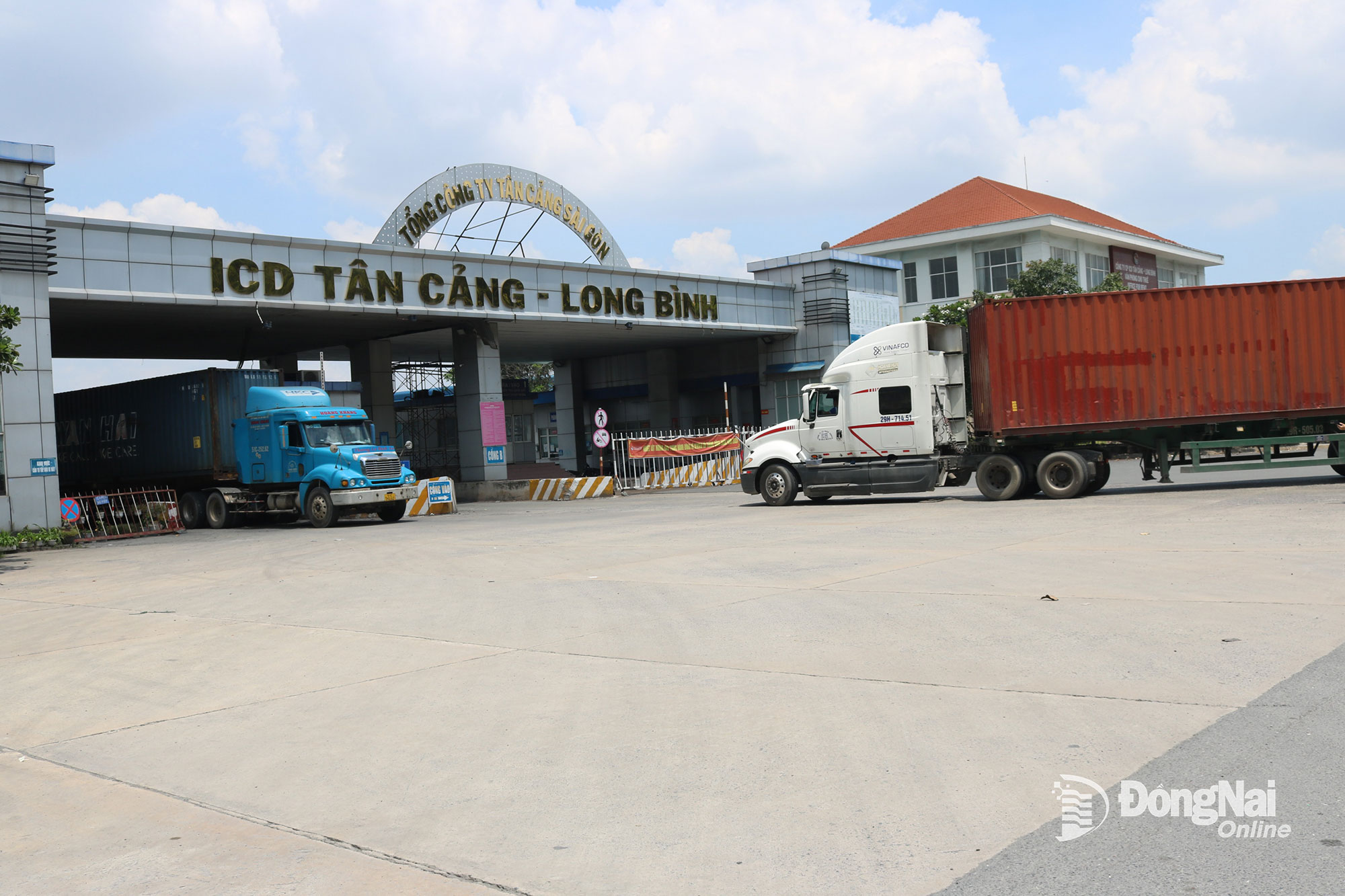 |
| Logistics operations at Tan Cang – Long Binh Inland Container Depot (ICD). |
Phan Anh Tuan, Director of Tan Cang Long Binh Joint Stock Company, said that Dong Nai should identify logistics services as a key economic sector, a spearhead in its development strategy for the period up to 2030, with a vision toward 2045. The businesses hope that the government will accelerate administrative reforms in logistics management, moving toward digitalization and smart processes aligned with international standards.
In recent years, Dong Nai has been orienting and planning for the logistics service industry to advance toward modernization, with concentrated and highly specialized logistics zones. The province is expected to develop four logistics centers, forming an advanced logistics hub network serving leading domestic and international manufacturers. These centers will particularly leverage the advantages of Long Thanh International Airport and major nearby transport infrastructure projects.
Recently, the Department of Industry and Trade and logistics enterprises held a meeting to prepare for the establishment and the first congress of the Dong Nai Logistics Association. The congress set to establish the association is expected to take place in December 2025.
According to Tran Duong Hung, Deputy Director of the Department of Industry and Trade, Dong Nai’s Logistics Infrastructure Development Project is being adjusted to align with the regional planning following the administrative merger of Dong Nai and Binh Phuoc. To ensure alignment with regional planning and reinforce its coordinating role, enterprises and the Dong Nai Logistics Association need to build a development path associated with local strengths, strengthen connections between businesses and government, and provide policy recommendations to the provincial government for the development of a modern logistics system linked to the regional and national production supply chain.
By Vuong The – Translated by Dang Huyen, Thu Ha


Thông tin bạn đọc
Đóng Lưu thông tin