
From November 12 to 15, a delegation led by Do Phuoc Dung, Chairman of the Dong Nai Cooperative Alliance, is conducting a study tour in Ca Mau to learn from several models of collective economic and cooperative development.
The delegation includes leaders and specialists from departments and units under the provincial Cooperative Alliance, officials responsible for collective economic affairs in relevant provincial agencies and sectors, as well as directors of seven cooperatives across Dong Nai province.
 |
| The delegation poses for a photo at Bon Bon Minh Duy Cooperative. Photo: Hoang Cu |
As part of the working trip, the delegation visited several exemplary models in Ca Mau province, including the Bon Bon Minh Duy Cooperative in Hung My commune, which primarily engages in the production and processing of bon bon (Typha orientalis, also known as bulrush). The cooperative has developed its signature three-star OCOP pickled bon bon product, created jobs for local women, and helped promote the value of clean agricultural products. Through product diversification based on bon bon, the cooperative generates an annual income of around VND 100 million per hectare, contributing to improved livelihoods for its members.
 |
| The delegation poses for a photo at the Dat Phuong Nam Community Ecotourism and Services Cooperative. Photo: Hoang Cu |
The delegation visited the Dat Phuong Nam Community Ecotourism and Services Cooperative in Dat Mui commune. With the advantage of a diverse and abundant ecosystem, particularly Ca Mau Cape National Park, which UNESCO has recognized as a World Biosphere Reserve, Ca Mau province has favorable conditions for developing green tourism and community-based ecotourism models. The cooperative has nine members and a charter capital of 2 billion VND. Local households utilize the surrounding waters for aquaculture, offering distinctive dishes characteristic of the riverine region. Households engaged in community-based tourism have also invested in building guest accommodations, allowing visitors to stay overnight and participate in local experiential activities.
 |
||
|
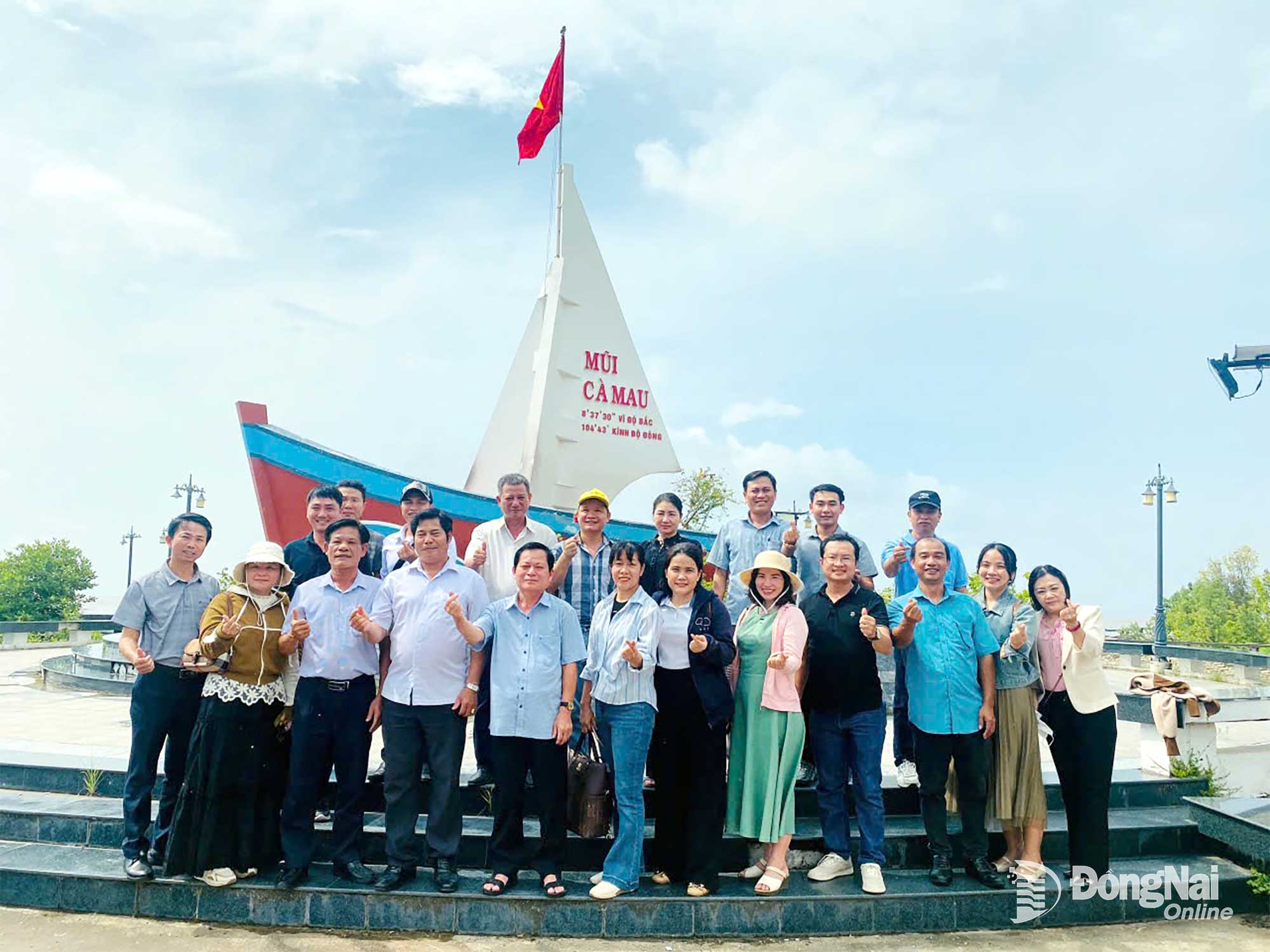
Through exchange activities and field visits, the trip is designed to support cadres and civil servants in improving the effectiveness of management and administration; flexibly applying preferential policies to support cooperative operations; implementing effective and well-performing models for the development of the collective economy and cooperatives; and drawing on practical lessons from the study tour to further advance the collective economic sector. These efforts aim to enhance the value and ensure the sustainable development of the collective economy and cooperatives in the time ahead.
By Hoang Cu – Translated by Thu Hien, Minho


Thông tin bạn đọc
Đóng Lưu thông tin