
Since the administrative merger on July 1, 2025, Vietnam has established new "super-provinces" with exceptional economic scales, population sizes, and development potentials. Among them, the new Dong Nai province, formed through the merger of the former Binh Phuoc and Dong Nai provinces, now ranks among the nation’s leading localities in terms of population, land area, and economic scale.
After operating its new government apparatus for more than two months, Dong Nai is entering a phase of strategic definition. The province aims to leverage synergies from its combined resources, identify and rectify bottlenecks, and methodically convert its latent potential into a driving force to become one of Vietnam's four largest economic hubs, trailing only Ho Chi Minh City, Hanoi, and Hai Phong.

 |
From traffic gridlock to economic engine
Endowed with a strategic location at the crossroads of key economic zones (the Southeast, South Central Coast, Central Highlands, and the Mekong Delta), Dong Nai possesses all the hallmarks of a frontier-inland nexus. Its considerable potential lies in sustainable industrial development, high-tech agriculture, border-gate trade, logistics, and modern services linked to the Long Thanh International Airport, a network of river ports, the IDC inland container depot, and smart urban areas.
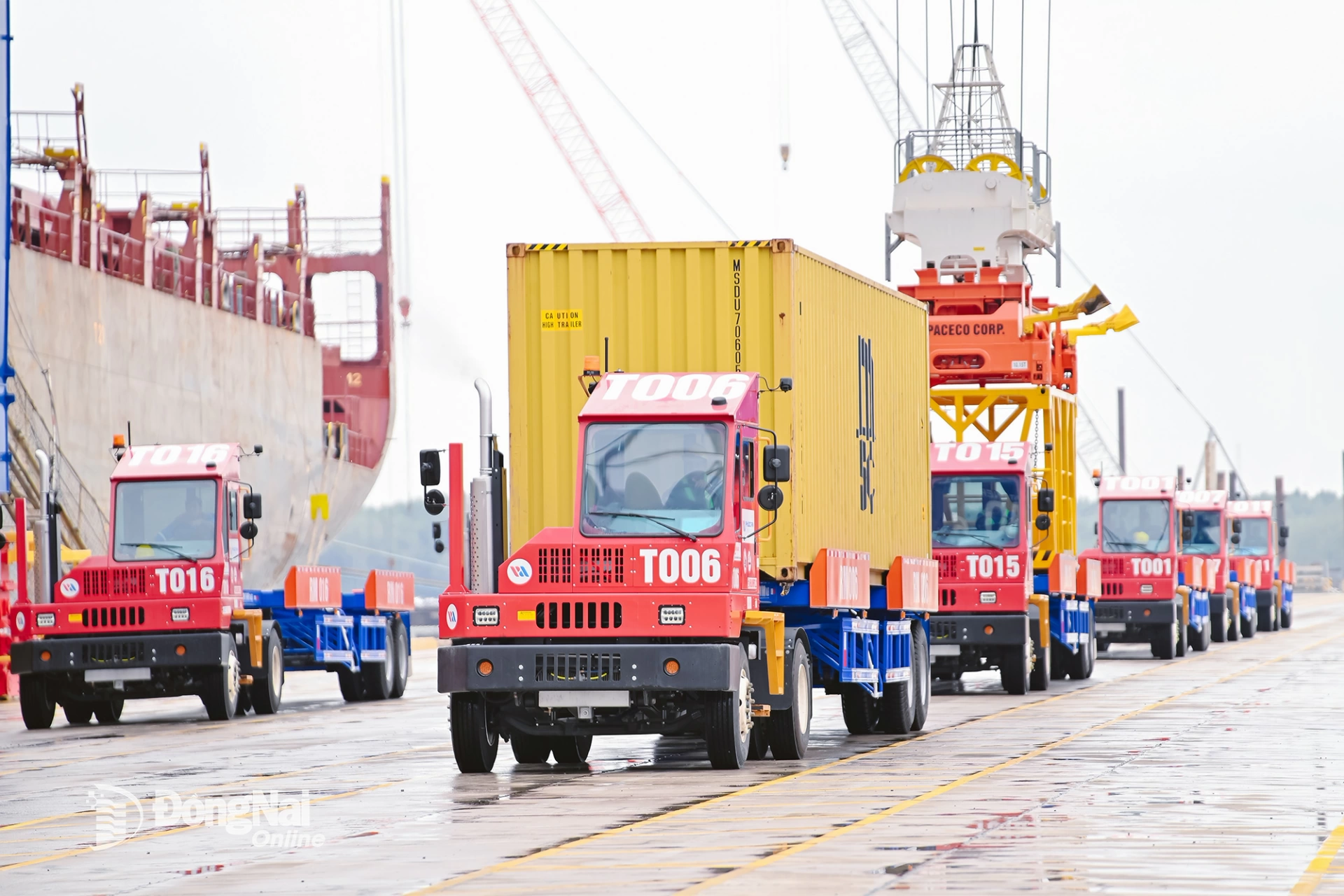
According to experts, Dong Nai boasts a diverse, multimodal transport network, encompassing air, road, rail, and waterways, with Long Thanh Airport positioned as Vietnam’s future international aviation gateway and Phuoc An Port designated as a major national seaport. However, viewed as a whole, the province’s transportation infrastructure remains a persistent bottleneck that has long hindered its development.
Dr. Tran Du Lich, Member of the National Monetary Policy Advisory Council and the Dong Nai Provincial Socio-Economic Advisory Group, believes that to capitalize on its potential and strengths thoroughly, the province must prioritize investment in a transport system connecting Dong Xoai to Bien Hoa. This undertaking would enable the effective development of the vast northern region of the province. At the same time, Dong Nai is advancing its advantages in aviation and seaports linked to border gates. The early development of a railway line from Ho Chi Minh City to the border gate, along with an expressway to Chon Thanh, would provide strong momentum for the province’s growth.
Recognizing that identifying bottlenecks is the first step toward breakthrough development, the Dong Nai provincial Party Committee and administration have declared 2025 as the year of infrastructure investment, aiming to lay a solid foundation for double-digit economic growth. Determined leadership has been matched by decisive action. Today, Dong Nai is likened to a “mega construction site,” with 10 expressway projects and an extensive network of provincial roads already completed, underway, or set to begin construction.
 |
At major transport projects such as Ho Chi Minh City Ring Road 3, the Bien Hoa–Vung Tau Expressway, and connector routes to Long Thanh Airport, Cai Mep–Thi Vai Port, industrial parks, and urban areas, contractors are working around the clock, operating in three shifts, four crews, pushing through sun and rain to accelerate construction progress.
In the northern area, the Ma Da Bridge project, aimed at improving intra-provincial connectivity, is progressing on schedule, with more than 70% of the required land already handed over to the construction unit. A similar sense of urgency is evident at the Gia Nghia–Chon Thanh and Ho Chi Minh City–Thu Dau Mot–Chon Thanh expressway projects, where investors and local authorities are racing to complete the inventory and assessment of affected houses and land-attached assets by the end of September. They are also striving to finalize compensation and site clearance by 2025, in line with the directives of the provincial leadership.
In addition to accelerating the implementation of ongoing key transport projects, the province will prioritize developing infrastructure plans to expand connectivity into the former Binh Phuoc area. This strategy aims to capitalize on its vast land potential, thereby opening up new opportunities for socio-economic development. The objective is to transform this latent “potential” into a tangible “competitive advantage” for attracting investment and generating stable budget revenue for the province.
Ho Van Ha, Member of the Provincial Party Committee and Vice Chairman of the Dong Nai People's Committee.
This focus on unclogging land clearance bottlenecks has stimulated public investment disbursement, creating a ripple effect on economic growth. In August 2025 alone, Dong Nai disbursed nearly VND 4.8 trillion. Cumulatively, public investment disbursement has exceeded VND 13.5 trillion, achieving over 36% of the annual plan. These concerted efforts are yielding results: over the first seven months of the year, the province's economy posted impressive growth figures, including a trade surplus of $4.4 billion and a Gross Regional Domestic Product (GRDP) growth rate of over 8% year-on-year, placing it among the nation's leaders.
Dismantling administrative hurdles
 |
Building on its inherent advantages, Dong Nai has boldly set a 10% economic growth target for 2025. Achieving this requires the entire political system, business community, and citizens to accelerate efforts, foster innovation, and coordinate with even greater synchronisation and precision in the remaining months of the year.
A fundamental solution receiving particular emphasis from provincial leaders is enhancing the capacity of the civil service and accelerating administrative reforms to create a more streamlined mechanism for serving citizens and businesses.
In Bu Dang commune, the local government's proactive establishment of a mobile public administration service centre has been particularly well-received. Beyond the efficient handling of paperwork, the cheerful and friendly attitude of the civil servants has made a positive impression on the businesses and the general public.
Nguyen Thanh Tung, Chairman of the Bu Dang Commune People's Committee, stated that the new administration is service-oriented. It is essential for the government to proactively engage with the people and businesses, treating them as valued clients.
“Beyond the prompt and proper handling of administrative procedures in line with people's expectations, officials' visits to the grassroots are essential for listening to the opinions, concerns, and aspirations of both citizens and businesses,” said Nguyen Thanh Tung. “Based on that input, the commune's leadership will direct relevant departments to provide advice and promptly address the issues raised. This responsiveness is also one of the key criteria we use to assess the performance of our civil servants.”
At the Dong Phu Commune Public Administration Service Center, where civil servants handle hundreds of documents each day for residents and businesses, occasional delays in processing are unavoidable. However, rather than offering vague assurances as in the past, the new commune leadership now requires any civil servant who misses a deadline to issue a written apology, explaining the reason for the delay and requesting understanding.
"We have proactively advised the Commune People's Committee to adopt the practice of sending apology letters for any delayed files, regardless of subjective or objective causes," said Mr. Ngo Sy Quyen, Deputy Director of the centre. "We also call or even meet citizens in person to apologise, and by doing so we aim to enhance a spirit of service and accountability."
The province’s determined efforts in administrative reforms and comprehensive digitalization, along with its commitment to professionalism, transparency, and efficiency, have yielded tangible results. As of the end of August 2025, Dong Nai ranked 3rd out of 34 provinces and cities nationwide on the National Public Service Portal's index for serving people and businesses, with a score of 85.75. The province is also a top national performer in attracting foreign direct investment (FDI), securing 219 new projects with a total registered capital of over $1.8 billion.
In a related effort, the provincial People's Committee has recently issued a plan to implement a "Friendly Government" model based on the "4 Asks, 4 Always, and 5 No's" approach across all its communes and wards. The "4 Asks" are: to greet, to apologise, to thank, and to request permission. The "4 Always" are: always smile, always be gentle, always listen, and always help. The "5 No's" are: no authoritarianism or harassment; no bureaucracy, indifference, or irresponsibility; no corruption, waste, or vested interests; no sycophancy, solicitation, or deceit; and no abuse of power while performing official duties.
The provincial People's Committee has directed all communes and wards to publicly disclose the phone numbers of local leaders and staff, from the Party Committee Secretary and Deputy Secretary to the Chair, Vice Chair, and commune-level civil servants. The directive also requires the public posting of all administrative procedures and the establishment of feedback channels, such as suggestion boxes at government offices or their digital equivalents on official websites and social media platforms. These measures aim to provide citizens with a direct means of evaluating how effectively officials handle public inquiries and administrative procedures.
By X.T – Translated by Thien Kim, Minho


Thông tin bạn đọc
Đóng Lưu thông tin