
Dong Nai province’s Bom Bo commune is positioning community-based tourism development not only as a strategy to boost local economic growth but also as a solution to foster community cohesion, preserve cultural heritage, and protect the ecological environment. This orientation is set within the broader development strategy of the Southeast region, aligned with key transport infrastructure and the global trend of green and sustainable tourism.
In recent years, Dong Nai has allocated hundreds of billions of VND from the state budget and mobilized social resources to upgrade inter-communal and inter-district roads across the province. These routes will connect directly to both the Bien Hoa – Vung Tau and Ben Luc – Long Thanh expressways.
Synchronized infrastructure will help Bom Bo make a breakthrough in tourism
Vice Chairwoman of Bom Bo Commune People’s Council Tu Thuy Hanh said: “In the past, visitors found it difficult when travelling to Bom Bo due to narrow and degraded roads. Now, with the new transport system, it takes less than two hours from Bien Hoa and under three hours from Ho Chi Minh City to reach and experience Bom Bo. This will be a major driver for the commune to make a community-based tourism breakthrough.”
Also according to Vice Chairwoman of Bom Bo Commune People’s Council, experience from Phuoc Thai commune (former Long Thanh district) shows that thanks to infrastructure investment, economic growth reached 13-14% annually, while budget revenues rose nearly 12.5% per year in the 2020–2024 period. Based on this, Bom Bo is confident it can achieve similar growth if infrastructure and services are fully developed.
Bom Bo boasts natural forest ecosystems, traditional agriculture, and the cultural life of the S’tieng ethnic people. These are core advantages to develop local experiential tourism products.
The models being encouraged include: community homestays, where residents upgrade traditional houses to welcome guests and serve local specialties such as bamboo rice, Thut soup, and Can wine; agricultural tourism, allowing visitors to join rice planting, cashew harvesting, coffee picking, and cocoa processing; and cultural-historical tourism, leveraging gong cultural space, traditional festivals, in association with resistance war relics in Bom Bo.
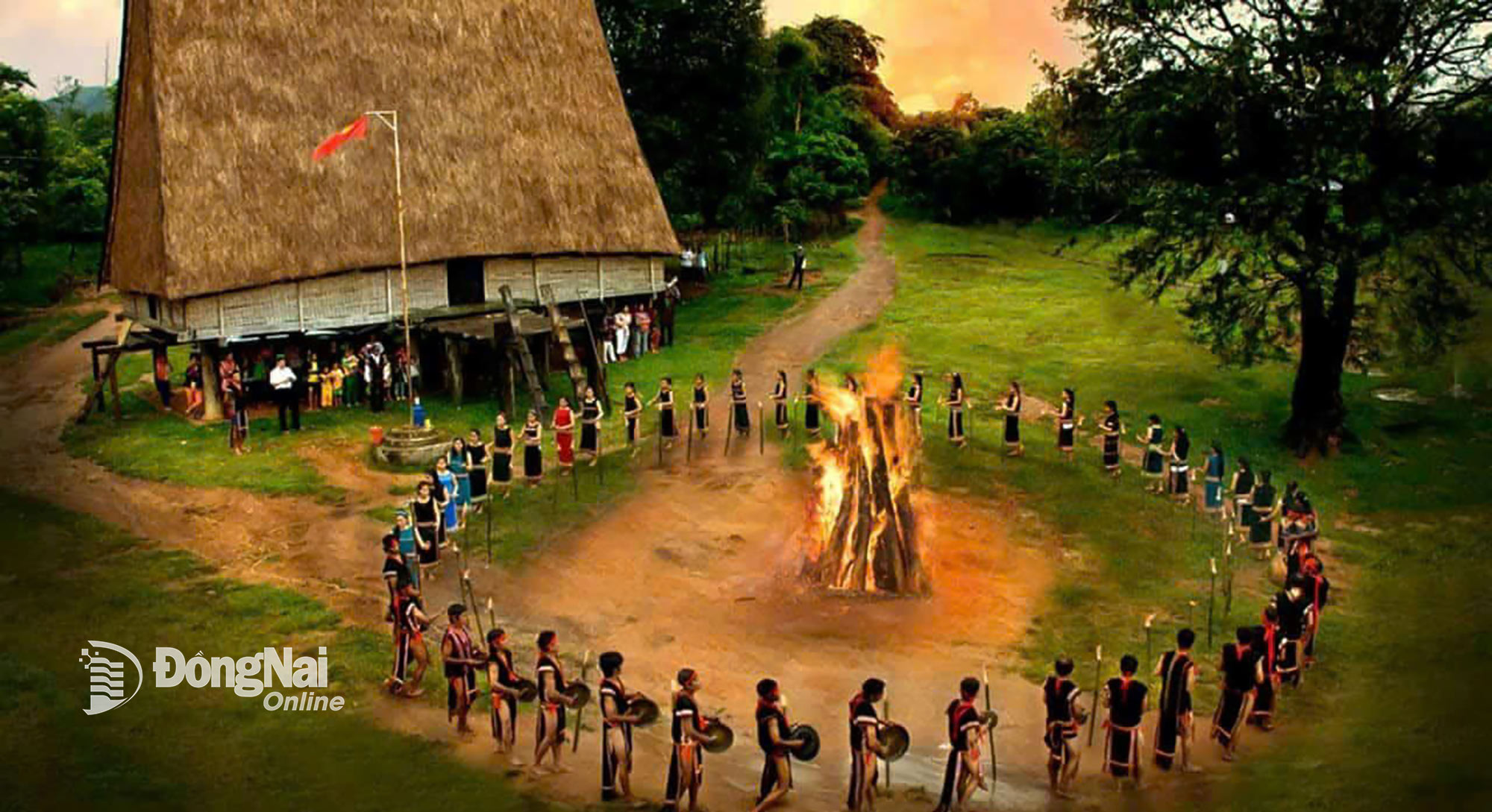 |
| Gong festival of the S’tieng ethnic people. File photo |
Community-based tourism can only be sustainable when local people truly benefit from it. In Bom Bo, the Dong Nai People’s Committee has directed the development of a “Green–clean–healthy tourism” set of criteria applied to participating households and cooperatives. Among them: 100% of homestays must treat waste and wastewater, at least 60% of culinary ingredients used to serve visitors must come from local agricultural products, and 30% of souvenir products must be locally made.
A major challenge is local limited service skills and management capacity. Therefore, Bom Bo commune is cooperating with the Department of Culture, Sports and Tourism to organize training courses on skills of welcoming international guests, food safety and hygiene, cultural behavior, and heritage preservation. At the same time, digital transformation is seen as a key solution. A project to build the Bom Bo tourism portal, integrating an online booking system, digital maps, and a 24/7 customer support chatbot, is being implemented with a total investment of VND 12 billion.
Member of the Provincial Party Committee, Party Secretary and Chairman of People’s Council of Bom Bo Commune Vu Long Son emphasized: “We aim that by 2027, 70% of homestays and service facilities in Bom Bo will join digital platforms, making it easier for visitors to access and book services. This is how we ensure rural residents are not left behind in the digital tourism trend.”
Attracting investment and providing financial support
To encourage local people to confidently participate in community-based tourism, initial capital is a decisive factor. The Dong Nai People’s Committee has instructed the Vietnam Bank for Social Policies and the Bank for Agriculture and Rural Development to open preferential credit packages worth about VND100 billion for households to help them build homestays, develop catering services, and produce handicrafts.
Another strength of Bom Bo is the OCOP (One Commune, One Product) program, an important platform for local tourism development. Currently, Bom Bo has five products certified with three-star OCOP standards, such as S’tieng Can wine, honey-roasted cashew nuts, and pure cocoa. Linking OCOP with tourism allows residents not only to sell products but also to create on-site production–consumption experiences.
With a comprehensive development strategy, Bom Bo aims to become a highlight of community-based tourism in Dong Nai by 2030, with concrete results: annual visitors increasing from 12,000 now to 60,000–70,000 by 2030; expected revenues of VND 150–200 billion per year; and 90% of tourism establishments applying waste management and renewable energy solutions, contributing to building a “green–clean–beautiful” Bom Bo.
In order to make Bom Bo community tourism develop rapidly yet sustainably, multiple groups of core solutions must be implemented in sync. First, transport infrastructure must be upgraded to ensure smooth connectivity with key expressways and Long Thanh International Airport, creating favorable conditions to attract tourists.
Furthermore, building a distinctive community tourism model is crucial, linked to homestays, eco-agriculture, and promotion of S’tieng cultural identity. This is not only a tourism product but also a way to preserve and spread traditional values.
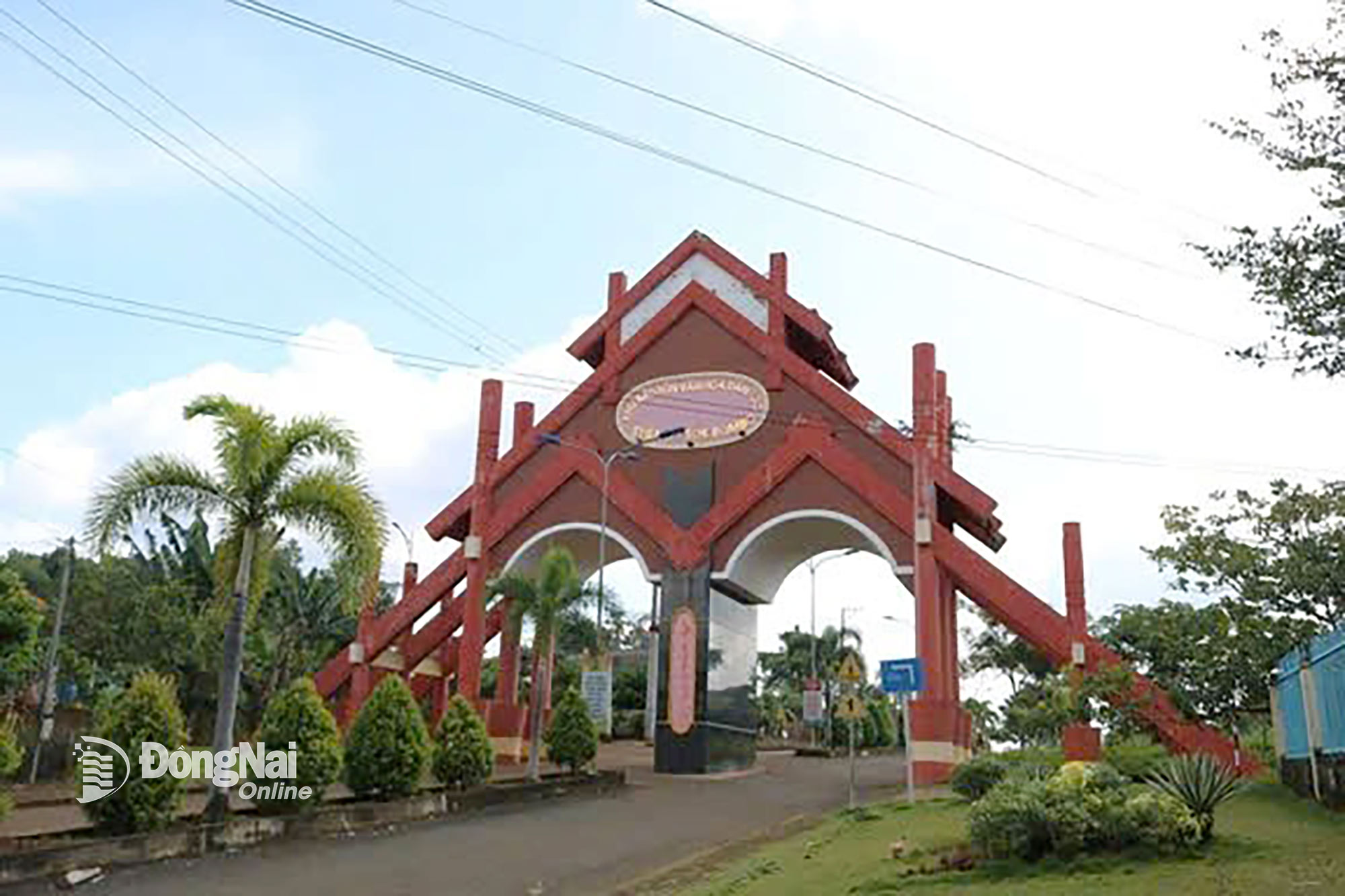 |
| S’tieng ethnic cultural preservation area at Bom Bo hamlet. Photo: Hoang Giap |
Bom Bo community-based tourism is facing a major opportunity to become a rapid yet sustainable development model, provided it leverages local strengths, learns from successful models, and stays committed to cultural and ecological preservation.
The road ahead will not be easy, but with the consensus of local authorities, residents, and businesses, Bom Bo can certainly become a community tourism highlight of Dong Nai, contributing to the province’s increasingly prosperous, modern, and civilized development.
By: Huu Cong – Hanh Thuy
Translated by: M.Nguyet-Thu Ha


Thông tin bạn đọc
Đóng Lưu thông tin