
In the first half of 2025, Dong Nai’s socio-economic performance showed positive and fairly comprehensive progress across various sectors. Among the highlights, state budget revenue exceeded expectations, reaching over VND33 trillion, an impressive increase of 31% compared to the same period in 2024.
Building on this momentum, Director Nguyen Toan Thang of the Dong Nai Tax Department shared with Dong Nai Newspaper the department’s direction for tax administration, budget collection, and communication of tax policies during the second half of 2025.
 |
| Director Nguyen Toan Thang of the Dong Nai Tax Department |
Reporter: How do you assess the revenue results and the key factors behind Dong Nai’s state budget performance in the first six months of 2025, especially in the context of ongoing tax relief policies?
Mr. Nguyen Toan Thang: In Jan-June, Dong Nai collected nearly VND33 trillion in state budget revenue, fulfilling 67% of the target set by the National Assembly and 63% of the estimate assigned by the provincial People’s Council. Despite implementing a wide range of tax support policies, including extensions, exemptions, and reductions, the province still recorded robust revenue growth both compared to the plan and year-on-year.
To achieve these results, the Dong Nai Tax Department implemented a series of targeted measures to strengthen revenue management. Specifically, the department prioritized supporting businesses through active policy rollout. At the same time, enforcement was tightened through enhanced inspection and timely handling of violations. The department also applied synchronized solutions such as urging the collection of collectible tax debts, enhancing VAT refund monitoring, particularly for high-risk enterprises, to ensure legal compliance in refund disbursement.
Moreover, Dong Nai’s local economy continued to recover and grow steadily in the first six months of this year. Many businesses maintained or expanded operations and secured contracts through year-end. Several key sectors recorded strong growth, including food processing, tobacco production, leather goods, and furniture manufacturing. Notably, the province also saw a surge in applications for land-use conversion involving large plots of high-value land owned by individuals, contributing significantly to the increase in budget revenue.
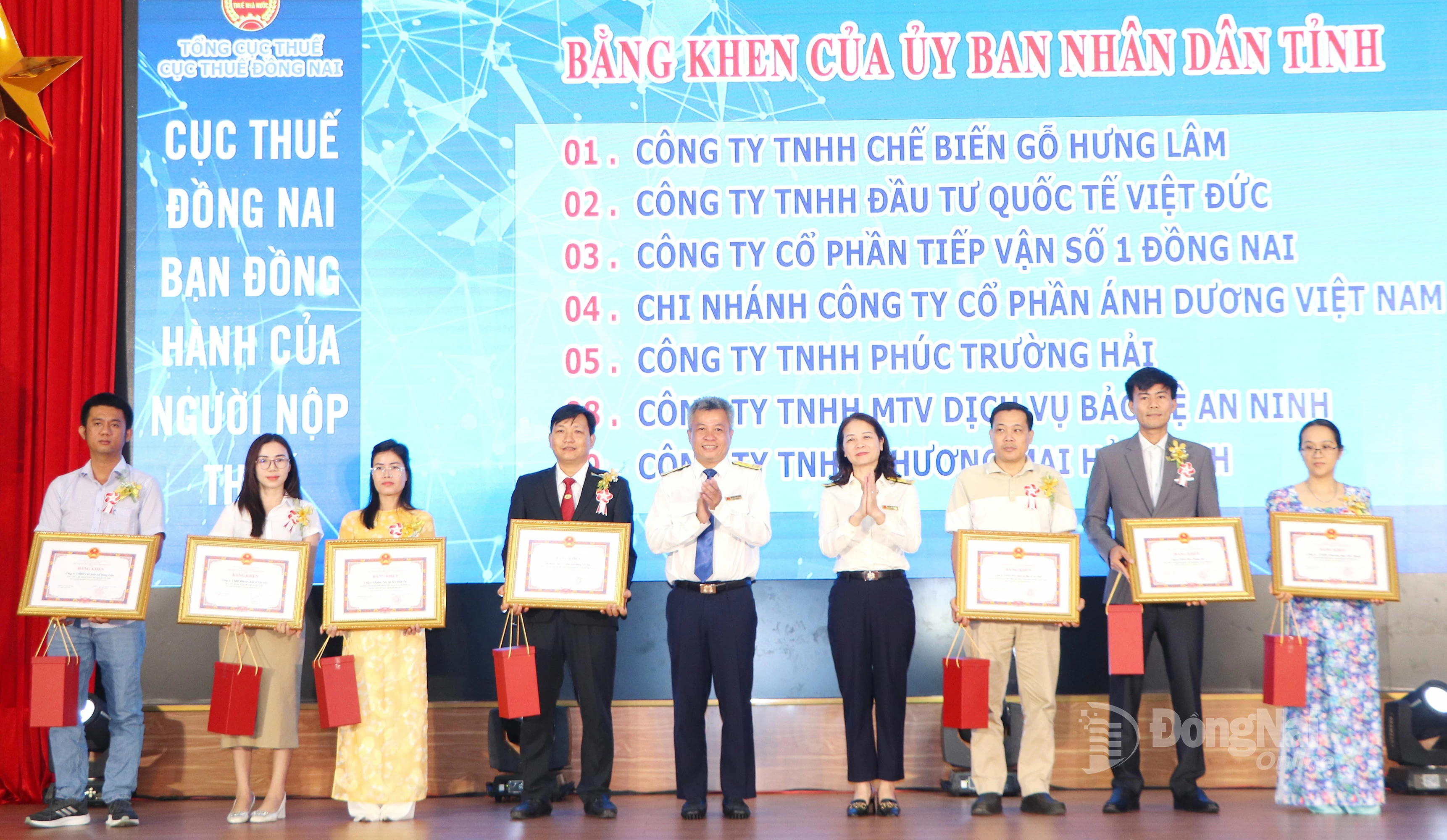 |
| Dong Nai Tax Department honors top taxpayers of 2024. |
Reporter: As several new tax regulations took effect in July 2025, how has the tax sector handled implementation, supervision, and management?
Mr. Nguyen Toan Thang: A range of new tax regulations came into effect in July 2025, including the amended Law on Value-Added Tax (2024); new rules on tax declaration and payment for e-commerce activities; the use of personal identification numbers in place of tax codes in certain cases; and the requirement for electronic invoices generated by cash registers to be connected to the tax authorities.
These new policies aim to enhance institutional integrity, improve transparency, and curb revenue loss, while also offering opportunities for the tax sector to modernize and boost management efficiency.
Rapid policy shifts present significant challenges. These include the need for continuous IT system updates and the pressure to effectively communicate and support taxpayers. In response, the tax department has proactively upgraded capacity through staff training, digital transformation, and administrative simplification. Most importantly, we are committed to listening to taxpayer feedback to make timely adjustments and closely coordinate with relevant agencies to strengthen overall revenue management.
Reporter: How do you evaluate taxpayers' adaptation to the new regulations, and what advice would you offer?
Mr. Nguyen Toan Thang: Recently, taxpayers, particularly household businesses, have shown marked improvements in awareness and compliance. Upon learning about upcoming tax changes, many took the initiative to declare and pay taxes on time, and to adopt electronic invoicing systems.
However, a segment of taxpayers remains hesitant, either due to limited digital skills or a reluctance to adapt. To address this, the tax department has actively provided support and guidance to ease the transition.
The tax sector urges all taxpayers, especially household businesses, to take responsibility for staying updated on new regulations. Timely and accurate tax declaration and payment are essential. Full compliance with e-invoicing requirements, especially those connected to the tax authority’s system, is key to ensuring transparency and legal safeguards. By fulfilling tax obligations, taxpayers not only fulfill legal duties but also foster a fair and healthy business environment.
Reporter: What solutions has the tax department put forward to ensure the state budget revenue target for 2025 is met?
Mr. Nguyen Toan Thang: To ensure smooth public service delivery under the new administrative model, and in line with the two-tier local government structure, Dong Nai’s tax department has proactively implemented various support measures. The focus remains on helping taxpayers fulfill their obligations efficiently.
In the second half of 2025, the department will prioritize improving tax administration by further advancing administrative reforms; enhancing inspection and audit activities; strengthening tax debt management and enforcement; and improving oversight of e-commerce and digital platform business activities. We will also ensure proper implementation of tax-related provisions across all areas.
Additionally, we are reviewing all potential revenue sources across sectors and taxpayer groups to optimize revenue collection and prevent losses. The department is also ramping up communication efforts, urging businesses and household enterprises subject to the cash register-based electronic invoicing mandate to fully comply, in line with guidance from the Ministry of Finance and the government.
Reporter: Thank you for your insights.
Reported by N. Lien


Thông tin bạn đọc
Đóng Lưu thông tin