
The latest report of the General Statistics Office shows that Vietnam's trade surplus in the first two months of 2014 was estimated at US$244 million, 1.2% of total export revenue.
The latest report of the General Statistics Office shows that Vietnam’s trade surplus in the first two months of 2014 was estimated at US$244 million, 1.2% of total export revenue.
 |
Export revenue during the period totaled US$21.1 billion, outstripping the aggregate import value of US$20.8 billion.
In another encouraging development, the export revenue of domestic enterprises rose by 13.2% over the first two months of 2013, outpacing the 11.8% rise posted by foreign-invested enterprises.
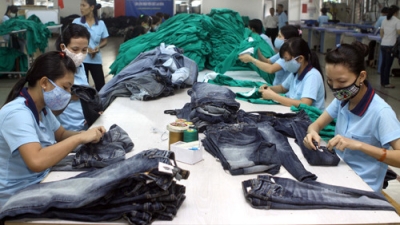
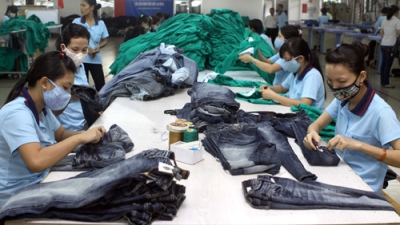
Mobile phones, garments, footwear, seafood and timber all made strong gains.
Last year, the export sector was a bright spot, and this momentum continued in the first two months of 2014, which is a good indication for the broader economy.
Closer analysis suggests, however, that many commodities that were formerly key exports have been on the decline.
Coffee dropped by 16.9% during the period and rice declined by 2.3%, while rubber and cassava fell by 39.6% and 24.9%, respectively.
Mobile phones remained the leading export industry in January-February, which are assembled using imported components, offering little added value to the economy.
These trade figures cannot be considered sustainable, as the foreign sector recorded a surplus of US$2.09 billion while domestic enterprises continued to net a deficit.
Export growth is sustainable only when exported products have high added value. Most exporters still have to import machines and materials as inputs to their production.
The efficiency of exports is not expected to improve significantly so long as the domestic auxiliary industry continues to struggle to find a way forward.
On the bright side, free trade negotiations with partners in ASEAN, the Asia-Pacific region and the EU have the potential to open new great opportunities for Vietnam’s exporters.
However, these opportunities will become challenges if Vietnamese producers fail to source their materials locally and meet requirements on product origins as part of the terms of these trade agreements.
(Source:Nhan Dan)


